
Why Most Airbnb Hosts Let Small Damage Slide
Ask a crowd of Airbnb hosts whether they file a claim for every broken glass and the answer is almost always no. Here is the reasoning behind that shrug, and what it reveals about hosting as a business.

Key takeaways
- Weigh the replacement cost against the time, effort, and review risk before pursuing a small damage claim.
- Budget for minor breakage and keep spare items ready for quick replacements.
- Set a damage claim threshold in advance that reflects your nightly rate.
- Document items' condition before stays so you have evidence if you need to pursue a claim.
Ask a room full of Airbnb hosts whether they file a claim every time something breaks, and the answer you hear is surprisingly uniform. Slide. Swallow it. It is the cost of doing business. When this question was put to a large community of hosts, dozens answered in a word or two, and the pattern was hard to miss. The overwhelming majority let small damage go.
That might sound like passivity, but the hosts who answered this way were rarely careless. They were running a calculation, and it is worth understanding why it keeps coming out the same way.
The Five Dollar Glass and the Five Star Review
One host framed the entire debate in a single comparison. A wine glass costs about five dollars. A review that slips below five stars could cost far more than that over the life of a listing. Bringing up a tiny loss risks a much larger one, so she would rather absorb the glass and keep the rating. Plenty of others echoed the logic. Chase a guest over a few dollars, one host warned, and you should expect a poor review in return.
What makes this reasoning powerful is that it does not depend on the host being generous or relaxed. It depends on how the platform works. Reviews are permanent, public, and visible to every future guest, while a broken glass is private and replaceable. When the downside of raising an issue lasts longer than the issue itself, silence starts to look like the rational choice.
Retaliation Is the Real Risk
The hosts who had tried the opposite approach were the most persuasive voices on this point. One described chasing a guest who left with a streaming remote, charging for the replacement, and receiving a review she is convinced was payback for holding the guest accountable. Another said that every claim she ever made was followed by a one star review, a pattern consistent enough that she rethought her approach entirely.
It is worth noticing what these stories do and do not say. They do not say the claims were unfair. They say that being right and being rewarded are different things in a review system, and that hosts have learned this the hard way. The risk of filing is rarely the claim itself. It is what happens afterward, in a space the host cannot edit.
Wear and Tear Is a Business Expense, Not a Surprise
Another reason hosts shrug at small damage is that many of them have already priced it in. Several described setting aside a fixed share of each booking for breakage and small replacements, treating those costs the way a restaurant treats spoiled produce. One host who owns a laundromat pointed out that most stains come out in the wash anyway. Another observed that in two years of hosting, her own cleaning had damaged more than every guest combined.
Others simply engineered the problem away. Inexpensive towels that become cleaning rags once stained, spare glassware in a cupboard, backups of anything likely to break. When replacement is cheap and instant, a broken item stops being an incident and becomes a line on a restocking list. The less a loss costs you in time and emotion, the less reason you have to turn it into a conflict.
Where the Line Gets Drawn
None of this means hosts never charge. The same community included people who bill a flat fee for any broken plate, hosts who charge double the replacement cost as a deterrent, and many who set a personal threshold. One absorbs anything under twenty five dollars. Another only files above one hundred, while noting that a threshold only makes sense relative to what you charge per night. A host with a low nightly rate has less room to absorb a loss than one earning several times as much.
Guest behavior shapes the line too. A host who eats most costs said she treats guests differently when they hide damage rather than mention it, and she says so in her review of them. A guest who sends an apologetic message right away, on the other hand, earns goodwill that no claim could buy. Honesty, for many hosts, matters more than the item itself.
The Proof Problem
There is one more reason the shrug is common, and it has nothing to do with generosity. Filing a claim usually means proving that the damage happened during the stay, not before it. One host learned that lesson after a claim she expected to be simple turned into a dispute she could not win, because she had no record of the item's condition beforehand. Many hosts discover this requirement only after they need it.
That makes small claims especially unattractive. They demand the same documentation as large ones, carry the same retaliation risk, and return far less money. For a ten dollar item, the effort alone can outweigh the reward.
What the Pattern Tells You
If you step back, the community's answer is less about forgiveness than about proportion. Hosts are matching their response to the size of the problem and to the cost of raising it. Small, replaceable losses get absorbed. Larger ones, the kind that affect the next check-in or involve real money, get documented and pursued.
The deeper lesson is about consistency. The hosts who described the least stress were not the ones who always charged or always forgave. They were the ones who decided their rule in advance and stopped relitigating it every time something broke. A calm, pre-decided policy protects your sleep as much as your margin.
If you are tired of feeling frustrated by every chipped mug, the question worth asking is not whether guests should pay. Most hosts agree they should. The more useful question is whether this particular fight is worth what it will cost you in reviews, time, and peace of mind. For most small items, the hosts in this conversation concluded it is not.
Keep reading
Airbnb optimization specialist, Superhost, and founder of one of the largest Airbnb host communities.
Continue Reading
Chosen for you from The Optimization Journal.
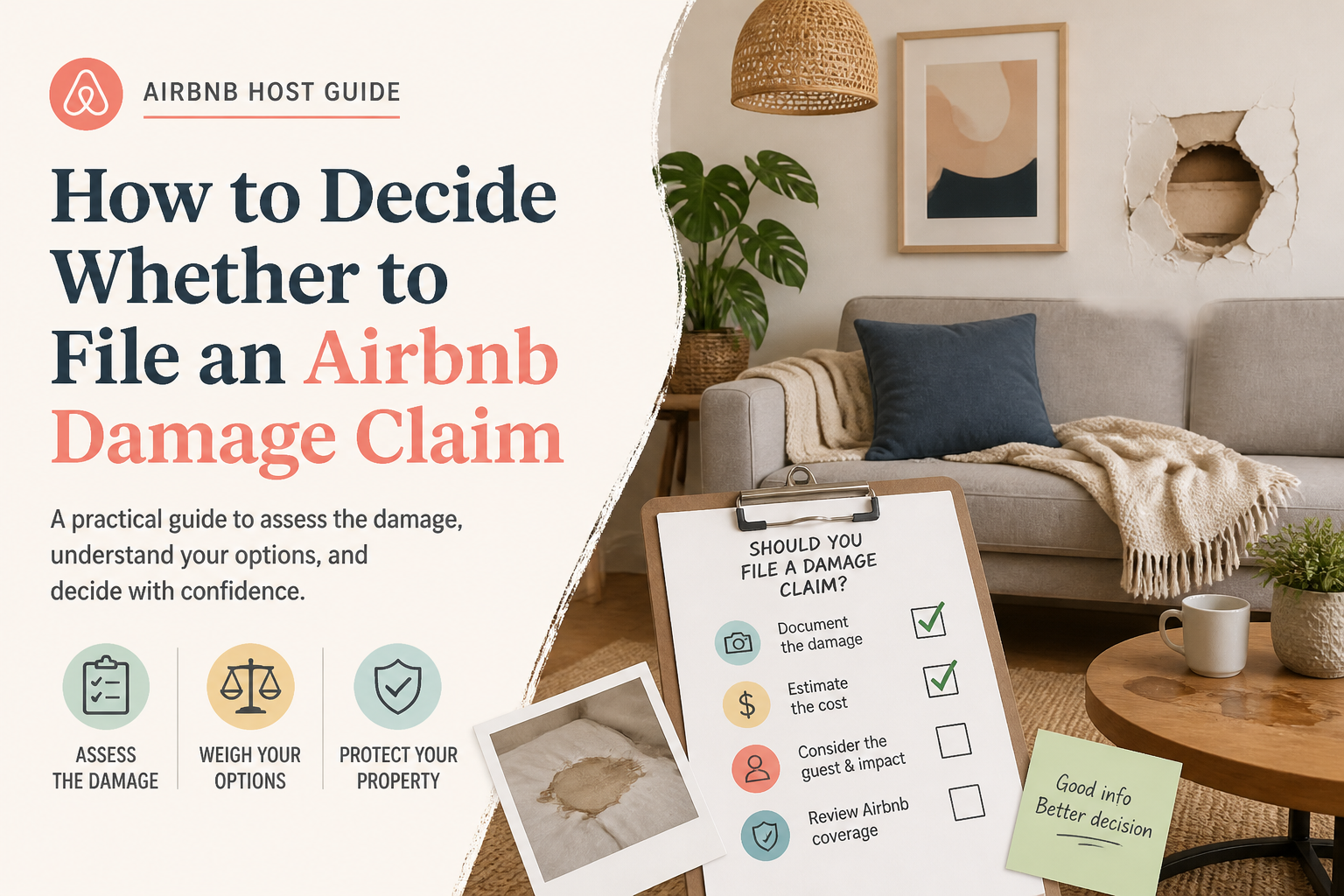 How to Decide Whether to File an Airbnb Damage Claim
A practical way to decide in advance which damage you will absorb and which you will pursue, so you stop agonizing every time something breaks.
5 min read AirCover Versus Security Deposits: The Real Trade-Offs Hosts Should Understand
Both approaches work for different hosts in different situations. What makes the difference is not which one you choose but whether you understand what each one actually does and does not do.
5 min read How to Build a Property Protection System That Actually Gives You Peace of Mind
Peace of mind in hosting comes from having a clear path to recovery before something goes wrong, not from figuring it out under pressure after it already has.
5 min read What a Reply to a Bad Airbnb Review Is Really For
Should you answer a bad review or let it sit? Hosts are split, but most agree on one thing: the reply is written for the next guest, not the one who complained.
5 min read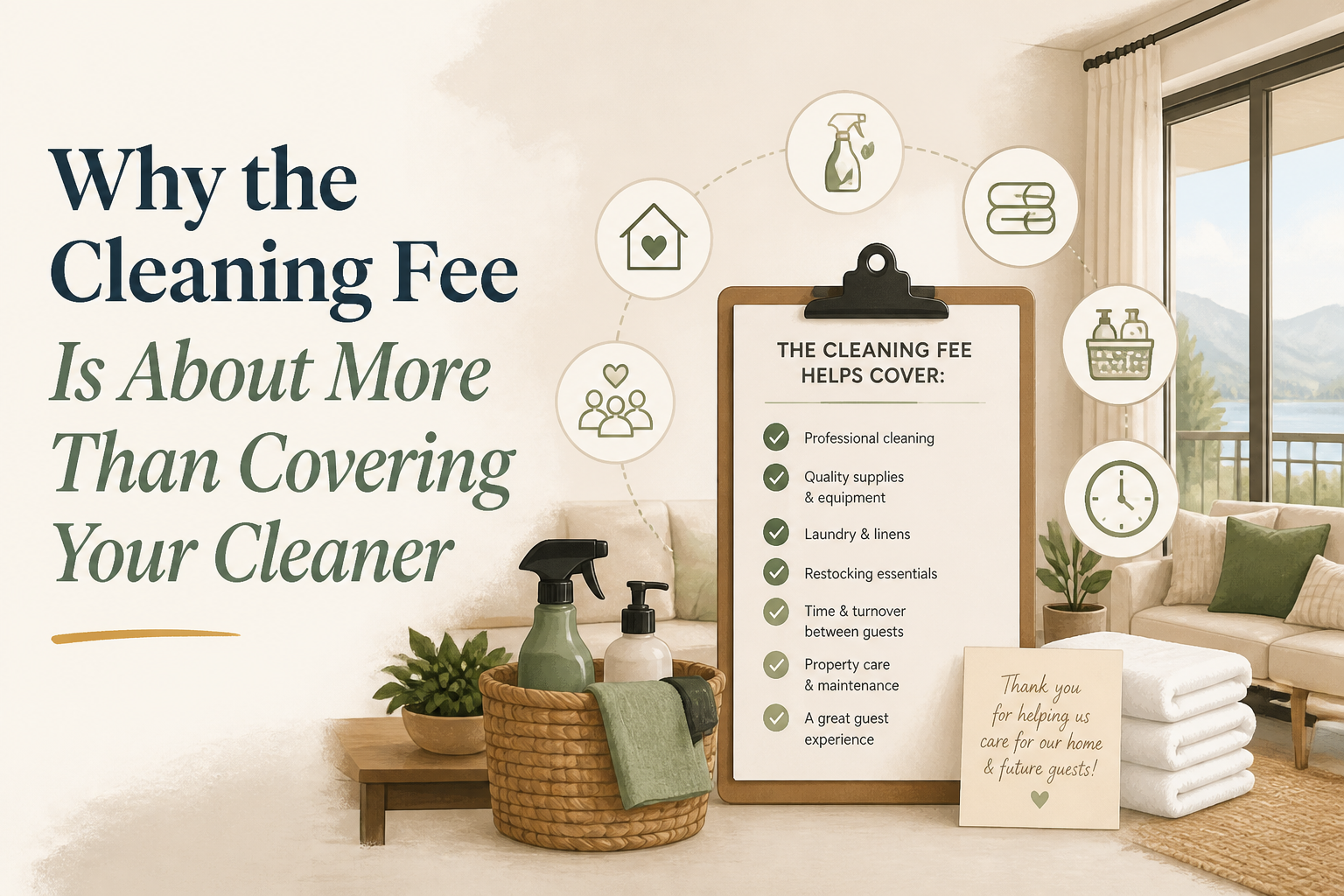 Why the Cleaning Fee Is About More Than Covering Your Cleaner
The cleaning fee question touches platform mechanics, guest psychology, dispute protection, and how guests compare your listing to the hotel down the road. The decision is worth thinking about carefully.
4 min read