
Why the Cleaning Fee Is About More Than Covering Your Cleaner
The cleaning fee question touches platform mechanics, guest psychology, dispute protection, and how guests compare your listing to the hotel down the road. The decision is worth thinking about carefully.
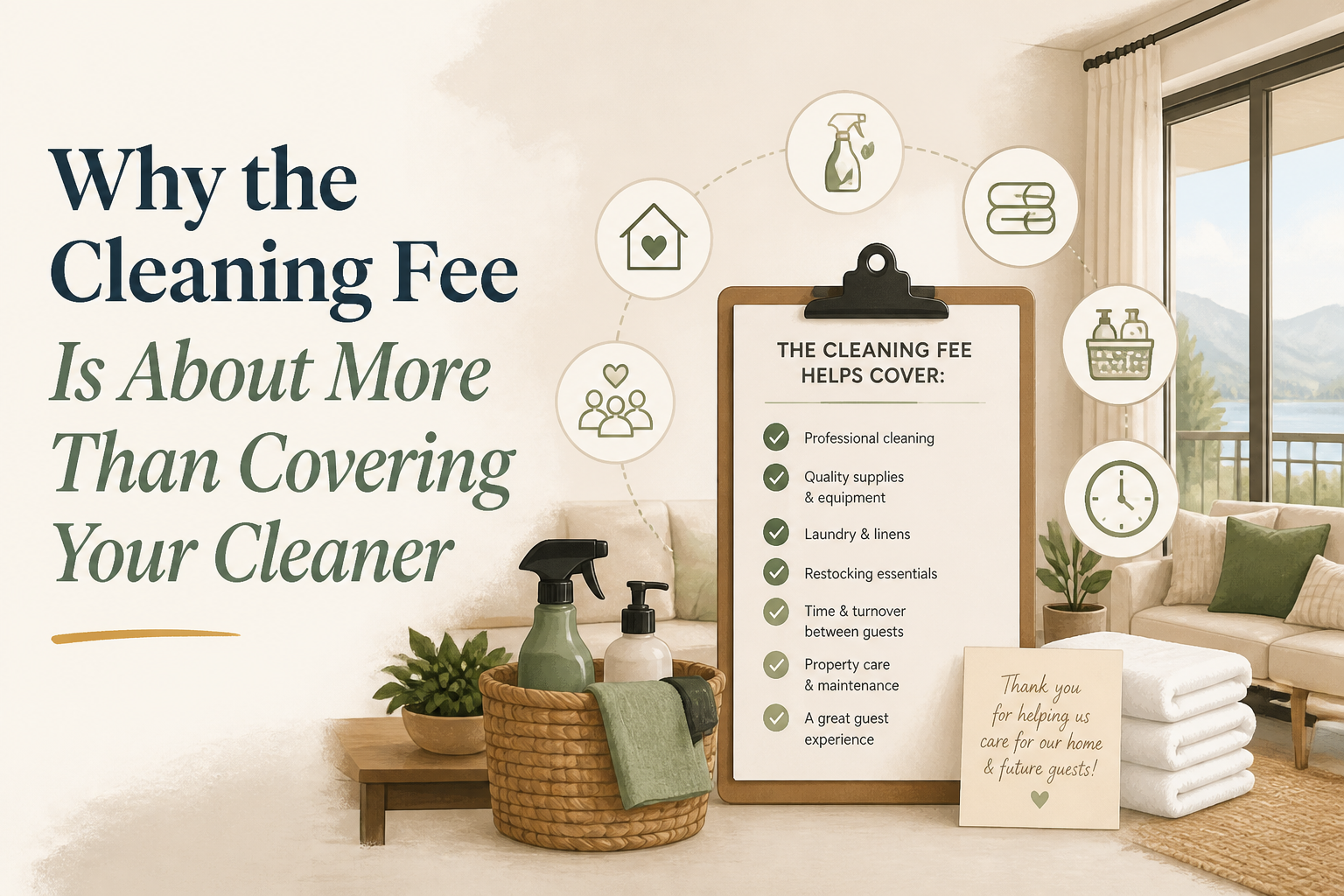
One host described the calculation plainly. His property takes twelve hours to clean. The cleaner charges thirty-five dollars an hour. The actual cost of a turnover is well over four hundred dollars. His cleaning fee is one hundred and eighty-five dollars.
He is not trying to profit from the fee. He is managing a gap between what cleaning actually costs and what guests are willing to see on a checkout screen. Set the fee too high and guests arrive with expectations that no home can reliably meet. Set it at zero and a different question arises: does the guest assume something about the quality of the clean?
That tension, between covering real costs, managing guest expectations, and competing on the platform, is what makes the cleaning fee decision more interesting than it appears.
What total-price display changed
Airbnb now displays the full cost of a stay, including cleaning fees and taxes, from the first search result. The era of attracting guests with a low nightly rate and revealing the cleaning fee only at checkout has ended. Guests compare listings on total cost, which changes what the fee decision actually means.
The old strategy, low nightly rate plus high cleaning fee, made a listing look competitive in the nightly rate column while padding margin in the fee column. That worked when guests discovered the fee at checkout. It does not work when the fee is visible from the first search result. Today, a listing with a sixty-dollar nightly rate and a two-hundred-dollar cleaning fee competes on the same total-cost basis as a listing with an eighty-dollar nightly rate and no cleaning fee. The guest sees the total, and the total is what they compare.
This does not eliminate the case for a separate cleaning fee. It changes the strategic context for the decision.
The platform protection case for a separate fee
One dimension of the cleaning fee question that most hosts do not know about until they need it: when a guest complains about the cleanliness of a property and contacts the platform, the typical response is to refund the cleaning fee. If there is no cleaning fee, the platform may instead refund a portion of the first night's nightly rate.
The cleaning fee functions as a buffer that protects nightly income from being the first thing touched in a dispute. A host with a separate cleaning fee who faces a cleanliness complaint has a defined component of the total that the platform can refund without affecting the nightly rate. A host with no cleaning fee exposes the nightly rate to the same resolution.
This is not a reason to inflate the cleaning fee beyond your actual costs. But it is a reason to ensure the fee exists and is set at a number that reflects the real cost of the clean, so that any refund comes from a component that genuinely covers cleaning rather than from your nightly income.
Why some hosts build it in anyway
The hosts who fold cleaning costs into the nightly rate tend to operate in markets where a separate fee creates competitive disadvantage, or they manage their own cleaning and view it as an operating cost rather than a pass-through expense.
In markets where the primary competition is hotels, a separate cleaning fee reads as a short-term rental quirk rather than a legitimate cost. Guests in those markets have been trained by hotel pricing to expect a single room rate. A cleaning fee on top creates friction that a competitor without one does not create. In those markets, building the cleaning cost into the nightly rate and advertising no cleaning fee can be a genuine competitive advantage.
The tax dimension also came up in the host community. A separate cleaning fee is easier to track and report accurately than cleaning costs embedded in a nightly rate, which can simplify accounting considerably. One host mentioned that she added a cleaning fee specifically because it made her tax reporting more straightforward. That is an operational reason rather than a guest-facing one, but it is real.
The expectation problem with high fees
The hardest part of the cleaning fee decision is the expectations it creates. One host named this directly: set the fee high enough to genuinely reflect the cost, and guests arrive with an implicit standard that is very difficult to meet reliably. A one-hundred-and-eighty-five-dollar cleaning fee signals hotel-level perfection. A missed spot behind the toilet or a slightly dusty lampshade that would pass without comment at a zero-fee listing becomes a complaint at that price point.
This is not a reason to charge less than your actual costs. It is a reason to invest in cleaning quality that matches what the fee implies. If you charge for a premium clean, deliver a premium clean consistently enough that guests feel the fee was earned rather than extracted.
The guest behavior observation that complicates everything
One host made an observation that contradicts conventional wisdom in interesting ways. In her market, almost no competitors charge a cleaning fee. She does not charge one either. And over the year she has been hosting, she has found that guests tend to leave the property in noticeably better condition than she has heard from hosts who do charge. Her theory: guests who have not paid a separate cleaning fee feel more personal responsibility for leaving the space tidy.
She acknowledges her sample is limited. But the pattern is consistent enough in her experience to be worth noting. The cleaning fee is not just a financial instrument. It sends a signal to guests about who is responsible for the state of the property at checkout, and that signal has behavioral consequences that are worth factoring into the decision alongside the economics.
Airbnb optimization specialist, Superhost, and founder of one of the largest Airbnb host communities.
Continue Reading
Chosen for you from The Optimization Journal.
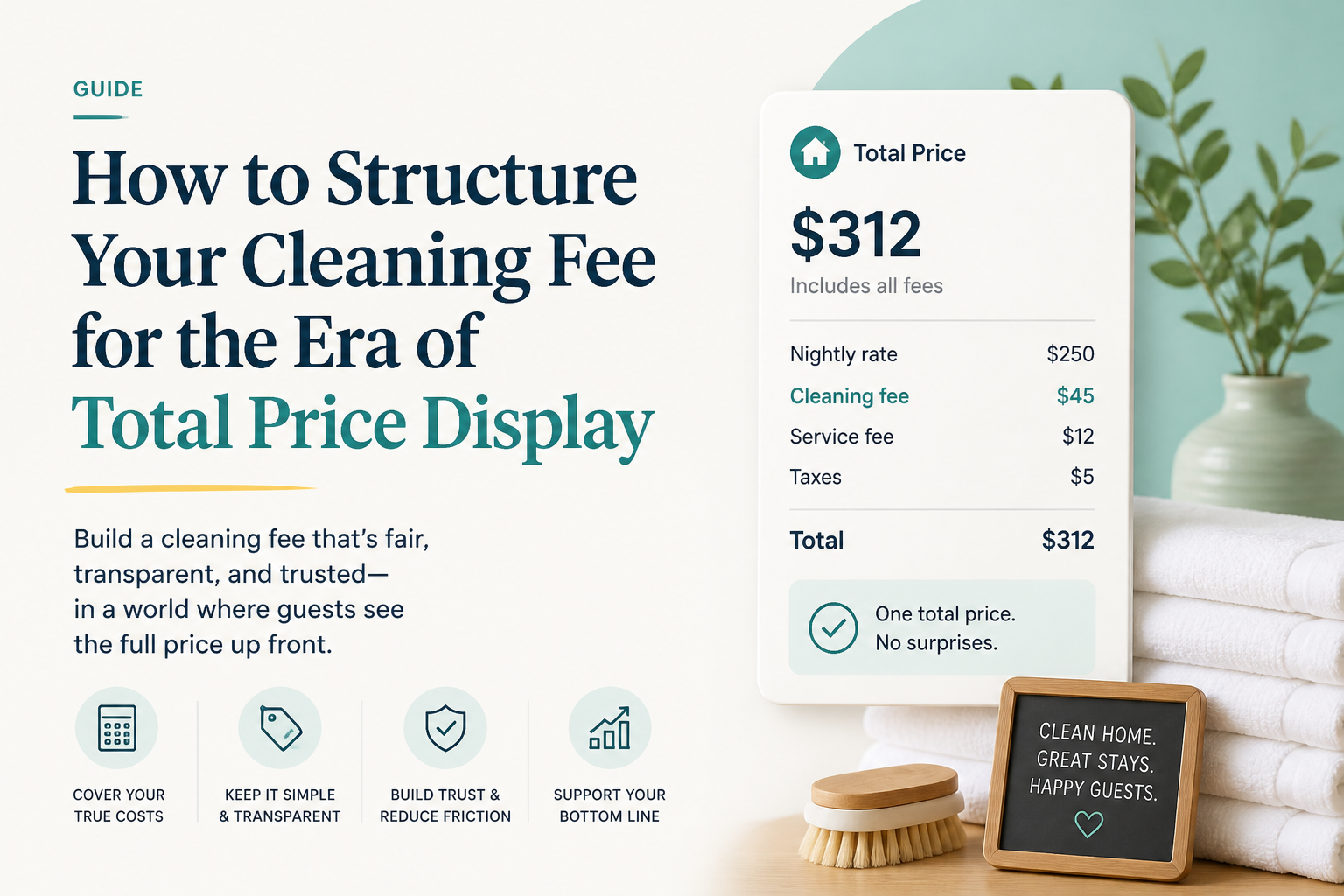 How to Structure Your Cleaning Fee for the Era of Total Price Display
Guests now see your total cost including cleaning fees from the first search result. Here is how to set your cleaning fee structure in a way that works with that reality rather than against it.
4 min read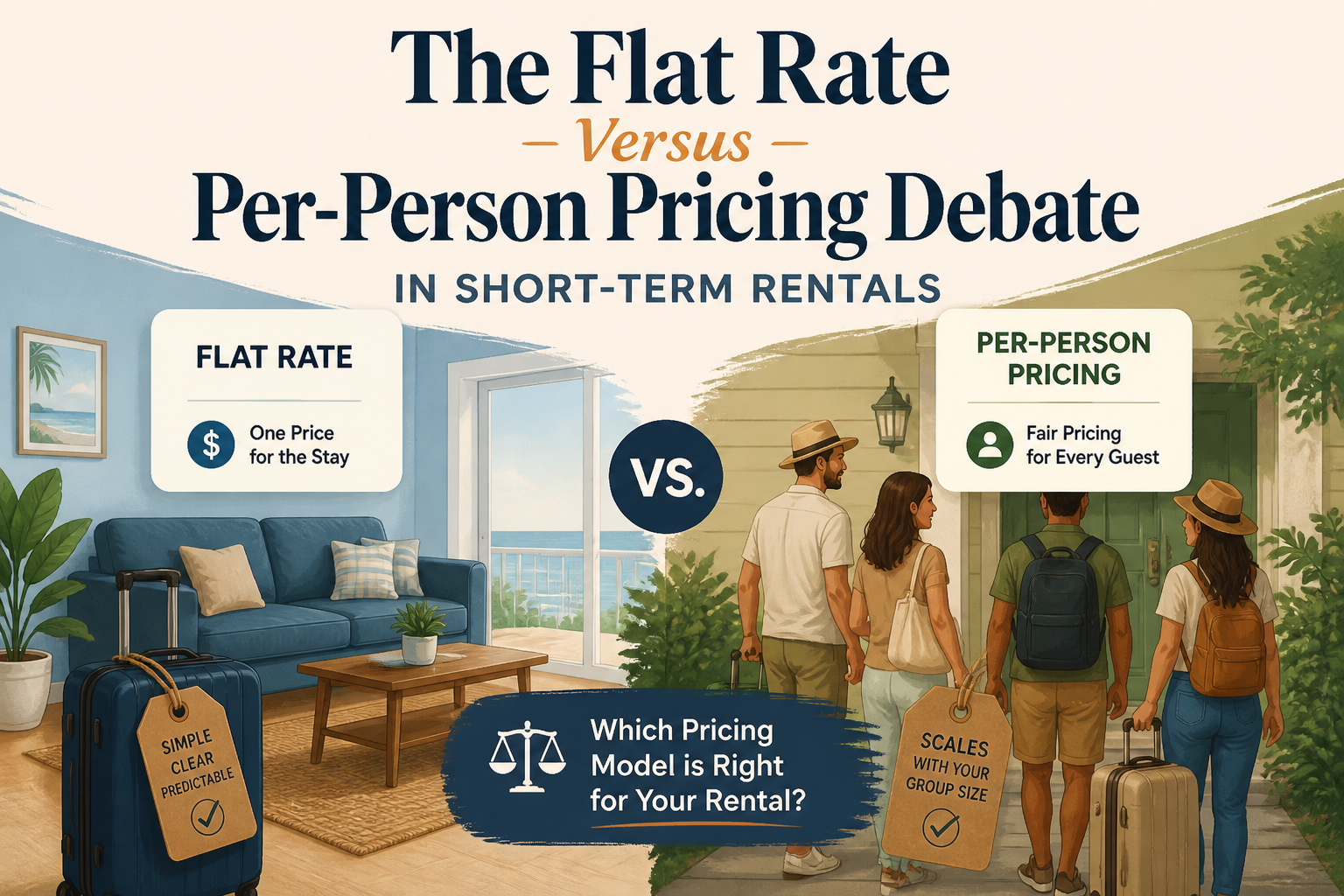 The Flat Rate Versus Per-Person Pricing Debate in Short-Term Rentals
When one person pays the same nightly rate as eight, is that fair? When a solo guest cannot afford a space that costs as much as it does for a full group, is that fair? The pricing question is more interesting than it first appears.
5 min read How to Choose and Implement a Guest-Count Pricing Strategy for Your Rental
The right pricing structure for your vacation rental depends on your property size, your market, and how much verification overhead you are willing to manage. Here is how to find the right fit.
4 min read Early Check-In and Late Checkout: Should You Charge or Offer It Free?
A hotel in Las Vegas charged one host $40 to check in early and $65 to check out late. She went home and changed her listing policy immediately. Here's the debate that followed.
5 min read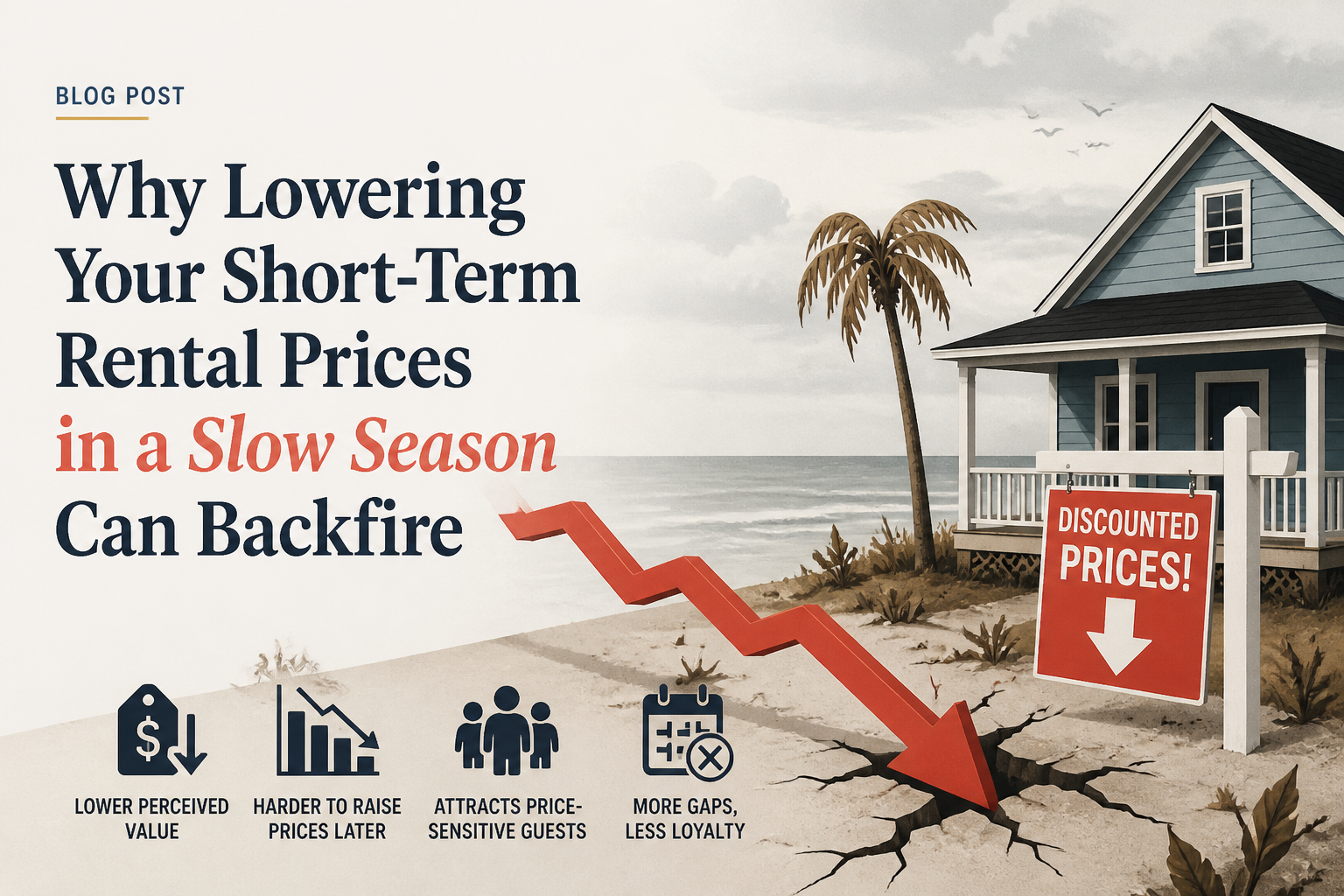 Why Lowering Your Short-Term Rental Prices in a Slow Season Can Backfire
She dropped her rates when the calendar slowed. The bookings came. And the quality of the guests who arrived dropped noticeably. She raised the prices back. She has not dropped them again.
4 min read