
2 Airbnb Settings That Can Improve Visibility — and Still Cost You Money
A more open calendar and Airbnb’s newer discount tools may help your listing get seen. But more visibility does not automatically mean more revenue. Here’s how I would think about both.
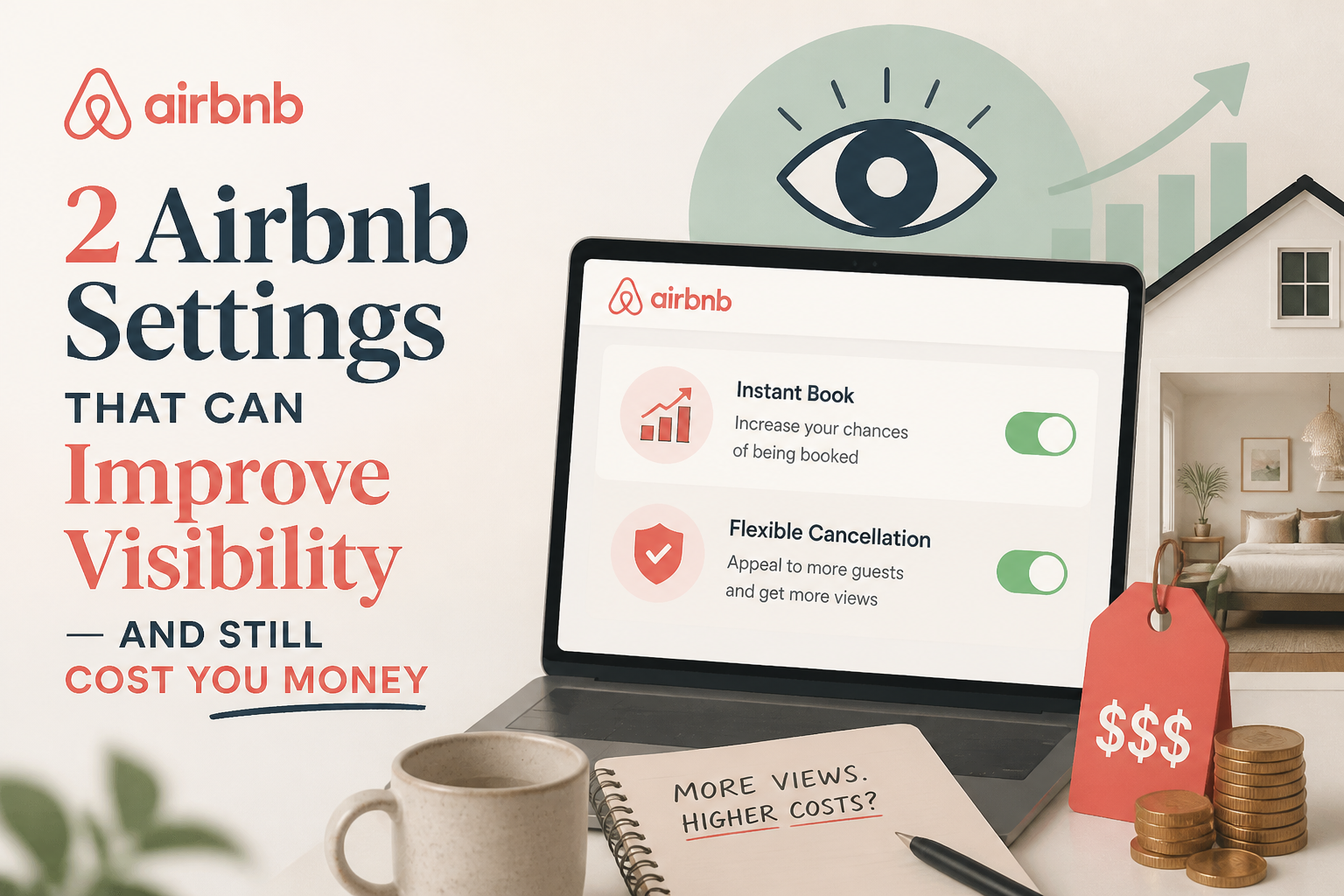
There are two Airbnb settings getting a lot of attention right now:
- Keeping more of your calendar available
- Using Airbnb’s newer discount features
Both may help your listing get more visibility.
But that does not automatically mean you should turn everything on.
Visibility is only useful if the bookings it produces make financial sense.
This is where I think hosts need to separate Airbnb’s goals from their own.
1. A More Open Calendar Can Mean More Visibility
The logic is simple.
If a guest searches for dates and your property is not available, your listing cannot appear for that search.
More available dates create more opportunities to be shown.
The information being shared with hosts is that guests are booking roughly 47.6 days in advance on average.
So, at minimum, you need to make sure your booking window is not unnecessarily preventing those guests from finding you.
But I personally do not like blindly opening a calendar extremely far into the future.
There is another side to it.
If you open a high-demand period too early and your future pricing has not been set correctly, you can sell some of your best dates too cheaply.
You got the booking.
Airbnb got the booking.
But did you get the right revenue?
That is the question.
Availability Should Be Intentional
Your booking window should match your property and your market.
If guests normally book your type of property months in advance, restricting the calendar too much can obviously hurt you.
But opening everything without first thinking about future rates can hurt too.
Before opening more dates, I would check:
- Are future rates already set correctly?
- Are peak periods priced differently?
- Are important events accounted for?
- Are minimum stays appropriate for those dates?
- Are there owner stays blocking valuable periods unnecessarily?
That last one matters especially for property managers.
If an owner blocks a long personal stay during a high-demand period, see whether some of those dates could be moved into a slower week instead.
Again, this is not about maximizing availability at any cost.
It is about making availability intentional.
2. Airbnb Wants Hosts Using Its New Features
The second point is something I have believed for a long time.
If a platform introduces a new feature, pay attention.
Think about what happens on social media.
When a platform launches something new, it wants adoption.
It gives users reasons to try it.
Airbnb is no different in that respect.
If they create a new tool or pricing feature, there is usually a reason they want hosts using it.
The Top Rated Guest discount is a good example.
The information Airbnb has shared is that using it can help visibility and occupancy.
That makes it worth understanding.
But I still do not particularly like the discount itself.
Never Turn On a Discount Without Doing the Math
The danger is that hosts see:
“This may help my ranking.”
And immediately turn it on.
But discounts can stack.
So before doing anything, you need to understand what the guest will actually pay and what you will actually receive.
If you already have another promotion, a weekly discount, a monthly discount, or an early-booking discount, adding another discount without checking the final price can quietly give away a lot of revenue.
Your base price therefore matters.
If you decide the additional visibility is worth testing, configure your pricing first so the final discounted amount still makes sense.
The Algorithm Is Not Your Revenue Manager
This is the bigger lesson behind both of these settings.
Airbnb has an incentive to create more bookable inventory.
It has an incentive to make attractive prices available to guests.
It has an incentive to increase conversion.
Those are perfectly logical goals for the platform.
But you have another responsibility.
You need to protect the economics of your property.
A setting can be good for visibility and bad for revenue at the same time.
A discount can generate more bookings while lowering profitability.
A wider calendar can produce an early reservation while causing you to sell a peak date too cheaply.
That is why I would never look at an Airbnb recommendation in isolation.
My Rule
When Airbnb introduces something that may help visibility, I pay attention.
I do not ignore it.
But I also do not blindly follow it.
I ask:
- What does Airbnb gain from this?
- What do I gain?
- What does it cost me?
- Can I configure my listing so I get the visibility benefit without unnecessarily sacrificing revenue?
Use the algorithm.
Just do not let the algorithm run your business.
Airbnb optimization specialist, Superhost, and founder of one of the largest Airbnb host communities.
Continue Reading
Chosen for you from The Optimization Journal.
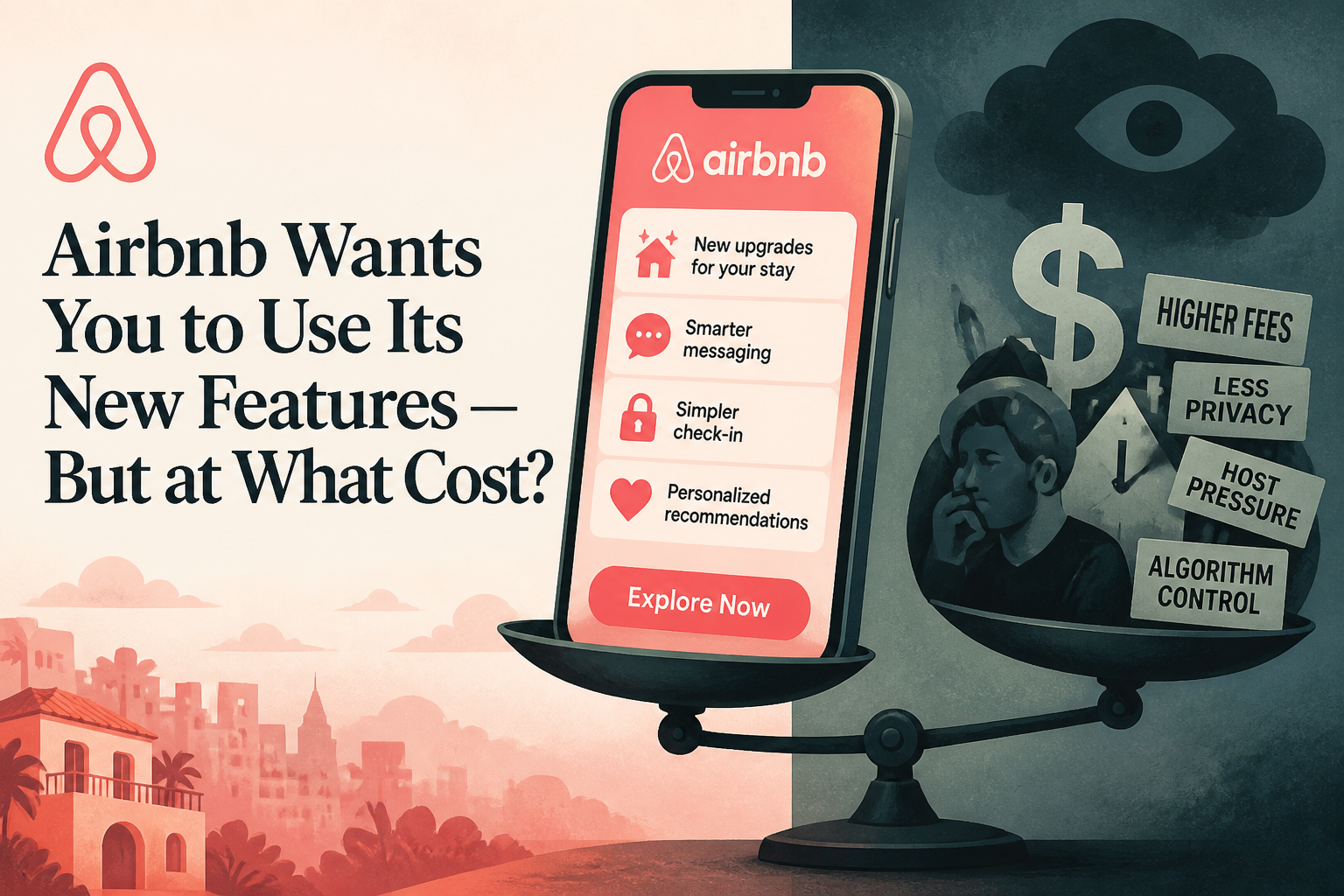 Airbnb Wants You to Use Its New Features — But at What Cost?
Airbnb may reward hosts who adopt new tools and discounts, but more visibility does not automatically mean more profit.
1 min read How to Audit Your Airbnb Listing Before Changing Your Price
When bookings slow down, many hosts immediately lower the rate. Sometimes that is the right move, but sometimes the problem is somewhere else in the listing. Before discounting, I prefer to figure out whether the issue is visibility, conversion, or actually price.
5 min read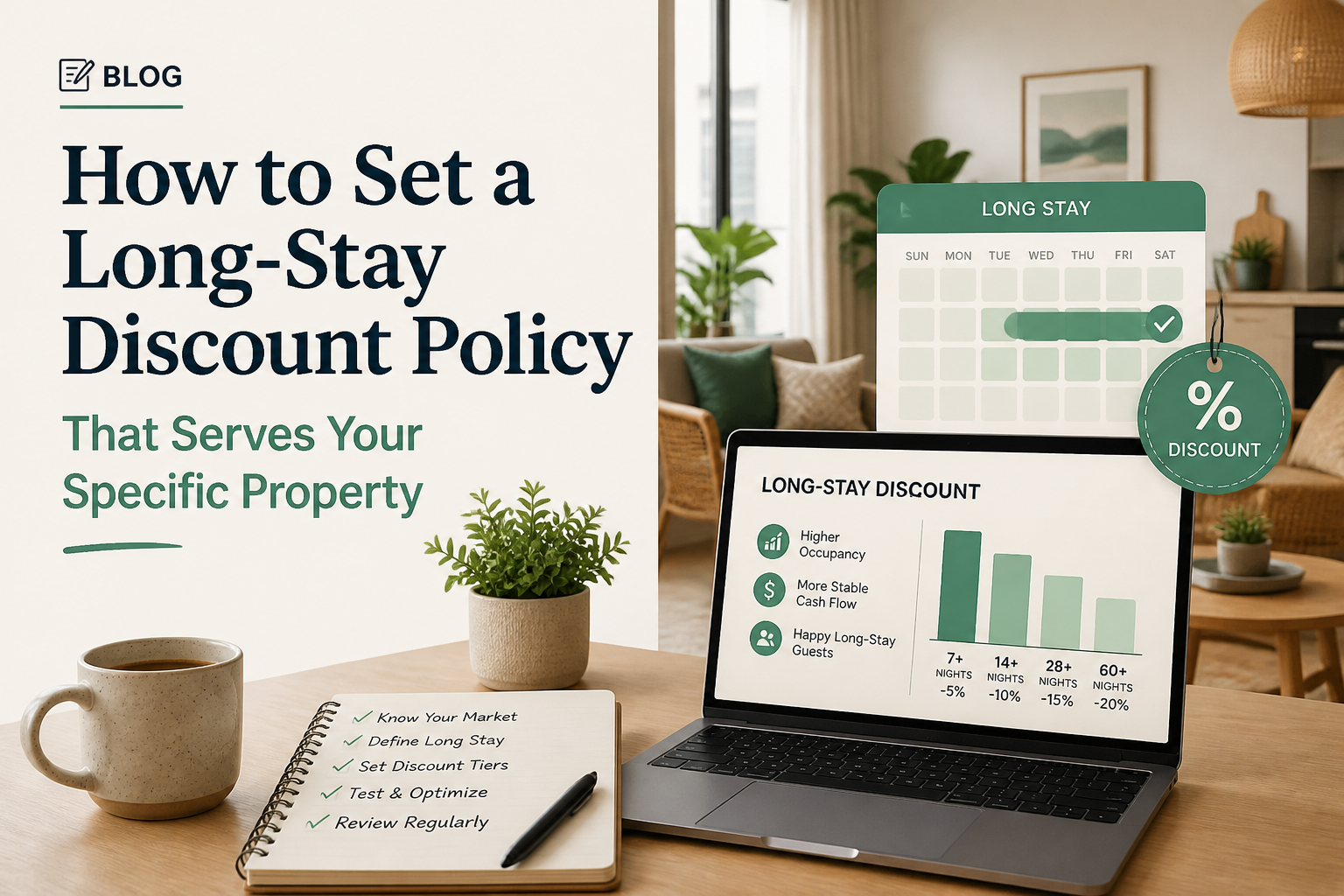 How to Set a Long-Stay Discount Policy That Serves Your Specific Property
A long-stay discount that makes sense for one host can cost another host money they did not know they were giving away. Here is how to figure out which situation you are in.
4 min read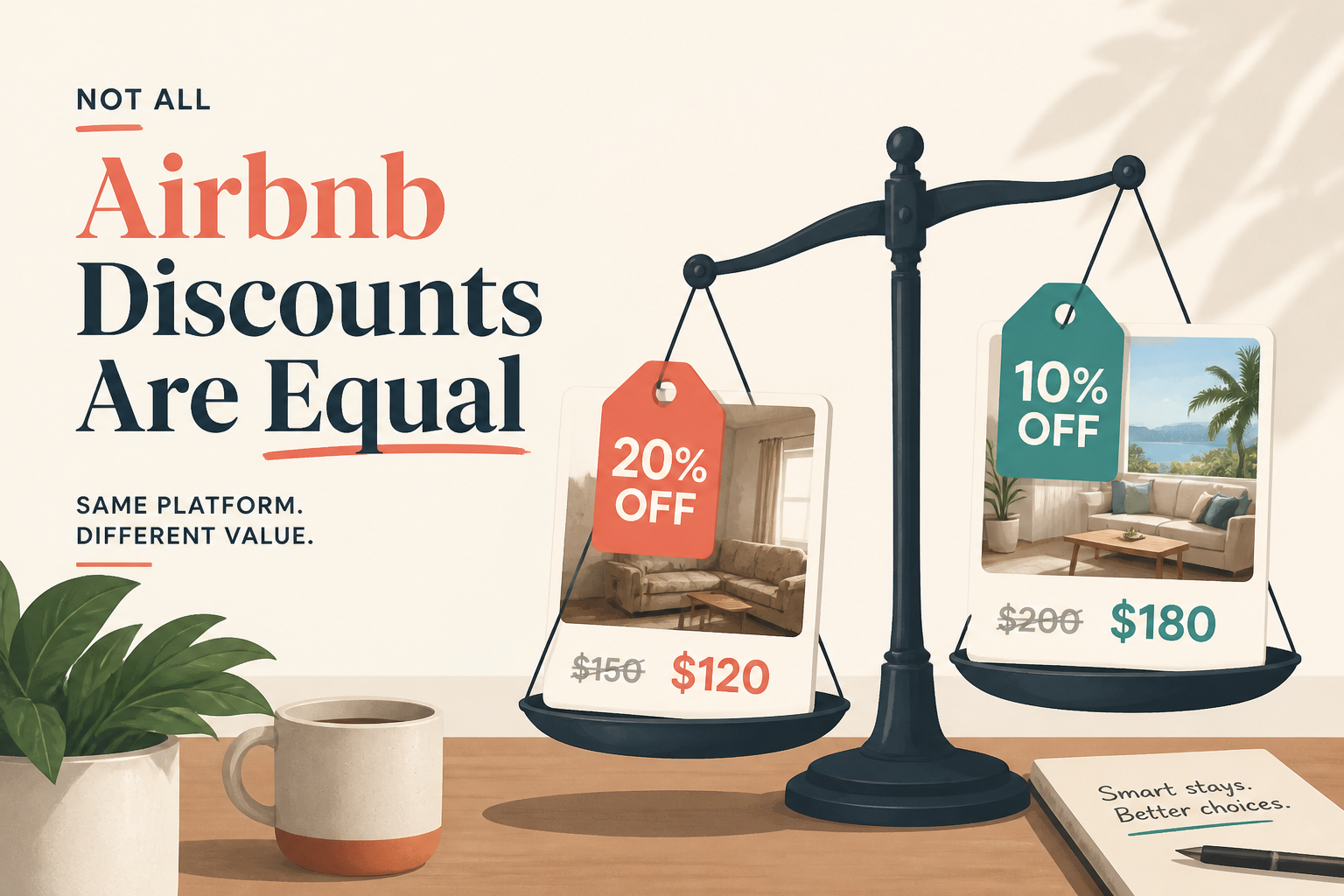 Not All Airbnb Discounts Are Equal
The percentage you choose can affect how Airbnb presents your discount. Hosts should understand the thresholds before giving away revenue.
1 min read How to Use Minimum Night Settings to Maximize Your Airbnb Revenue
Your minimum stay setting is one of the most powerful levers in your listing — and most hosts set it once and never revisit it. Here's how to use it more strategically.
5 min read