
How to Set a Long-Stay Discount Policy That Serves Your Specific Property
A long-stay discount that makes sense for one host can cost another host money they did not know they were giving away. Here is how to figure out which situation you are in.
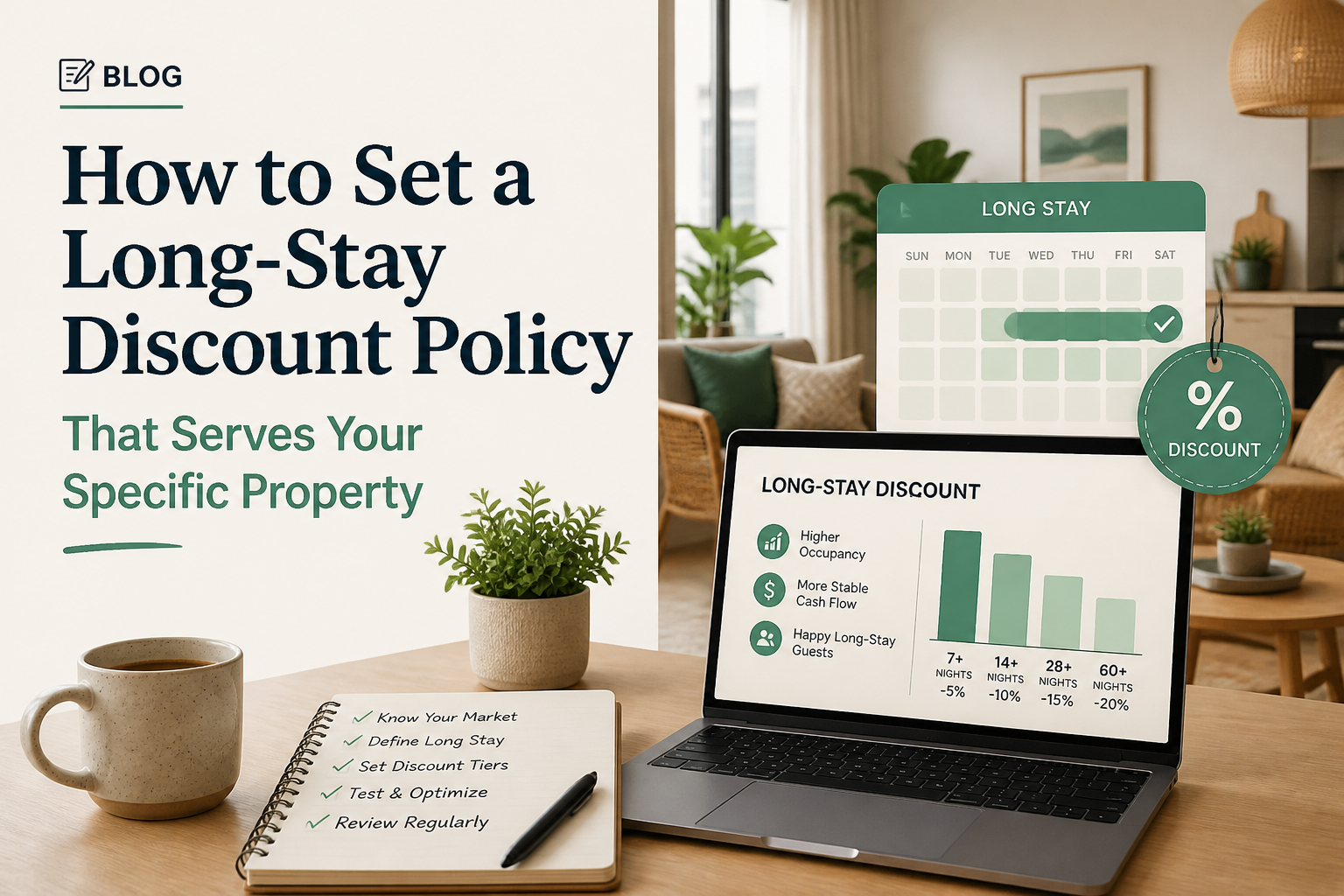
A long-stay discount is a policy decision, not a platform default. The fact that most hosting platforms offer a discount setting does not mean every host should use it. Here is how to figure out what the right approach is for your specific property and how to implement it if discounts make sense.
Start with your turnover cost
The financial case for offering long-stay discounts is built entirely on the cost of turnovers. Before you can decide whether a discount makes economic sense for your listing, you need to know what a turnover actually costs you.
Add up the cleaning fee or the time you spend cleaning yourself, the laundry cost, the supplies used each time, and any coordination or logistics involved. That is your fixed cost per booking, regardless of how many nights the guest stays. Now calculate your average nightly rate after platform fees.
If a longer stay eliminates two or three turnovers, the money saved on those turnovers represents real margin. The question is whether the discount you are offering costs less than the turnovers it saves. If your turnovers cost fifty dollars each and a weekly booking eliminates two weekend turnovers, your discount can be up to a hundred dollars across the week, or roughly fifteen to twenty percent of a week-long stay, before you are giving away more than you are saving.
Do this calculation with your actual numbers, not with round figures. The result will tell you whether discounts are financially supportable for your specific operation.
Check your calendar for gap patterns
Look at your booking history and identify how often you have gaps of three to five days between bookings that remain empty. These gaps represent revenue that is already lost under your current approach. A longer booking that extends through one of these gaps, possibly at a modest discount, converts lost nights into earned revenue.
If gap nights are a significant pattern in your calendar, a discount policy aimed at attracting the bookings that would fill them is worth testing. If your calendar fills consistently without gaps, you may not need a discount at all: demand is absorbing your availability at full price, and the discount would simply reduce margin on bookings you would have received anyway.
Define your discount tiers before you set them
If discounts make sense for your property, decide on clear, specific tiers before you set them in the platform. Common structures include ten percent off for stays of seven nights or more, and twenty percent off for stays of twenty-eight nights or more. The specific percentages matter less than the fact that they are based on your economics rather than on what sounds like a reasonable number.
Set the tiers to reflect where the real savings actually occur. If a two-night stay and a seven-night stay have identical turnover costs to you because your property is always cleaned by the same team at the same rate, a weekly discount is less justified than if a seven-night stay eliminates three separate turnovers.
Automate the discount rather than negotiating it
One of the clearest conclusions from hosts who offer long-stay discounts is that the discount should be posted transparently and applied automatically through the platform, rather than negotiated case by case in response to guest requests.
When the discount is automatic and visible in the listing, guests see the rate for their chosen dates without needing to ask. There is no back-and-forth, no room for the request to expand into a negotiation, and no guest who arrived expecting a deal that does not appear on their invoice. The rate is the rate.
More importantly: having a clear, published discount removes the invitation to negotiate further. One host noted that she declines any request for an additional reduction beyond what is already posted in the listing, regardless of the reason given. The published discount is the discount. That boundary, communicated clearly and applied consistently, is the policy that protects her from the guest who sees a discount and reads it as a starting point.
Exclude your peak dates
If you operate in a market with significant seasonal demand variation, consider whether your discount policy should apply uniformly year-round or only during periods when you need the additional incentive to attract longer stays.
During peak season, when your calendar fills readily and every night has significant value, a discount for longer stays may be giving away margin on bookings you would have received at full price. During shoulder season or slow months, the same discount may be the difference between an empty calendar and a full one.
Setting seasonal discount tiers through your platform's pricing rules or through a channel manager lets you apply this logic automatically without manually managing discount settings as demand shifts.
The annual review that most hosts skip
Once you have set a discount policy, review it annually against your actual data. Did the discounted stays produce better or worse occupancy than the same period the prior year? Did the discount attract a guest profile consistent with what you want? Did removing or adding a discount tier have the effect you expected?
The hosts who have the clearest, most confident positions on long-stay discounts are the ones who have done this review. They know whether their discount is working because they have checked. The ones who are still guessing have not.
Airbnb optimization specialist, Superhost, and founder of one of the largest Airbnb host communities.
Continue Reading
Chosen for you from The Optimization Journal.
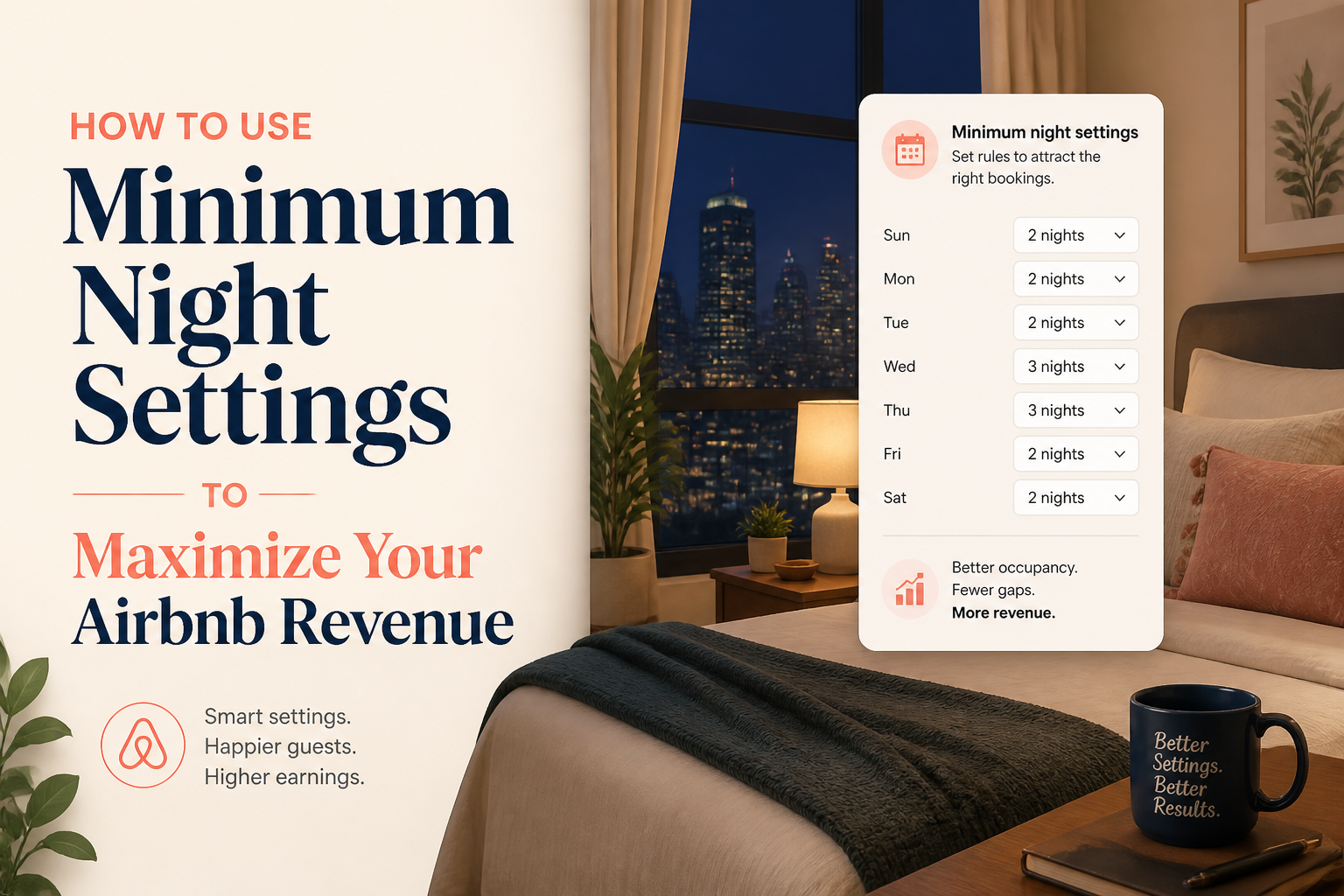 How to Use Minimum Night Settings to Maximize Your Airbnb Revenue
Your minimum stay setting is one of the most powerful levers in your listing — and most hosts set it once and never revisit it. Here's how to use it more strategically.
5 min read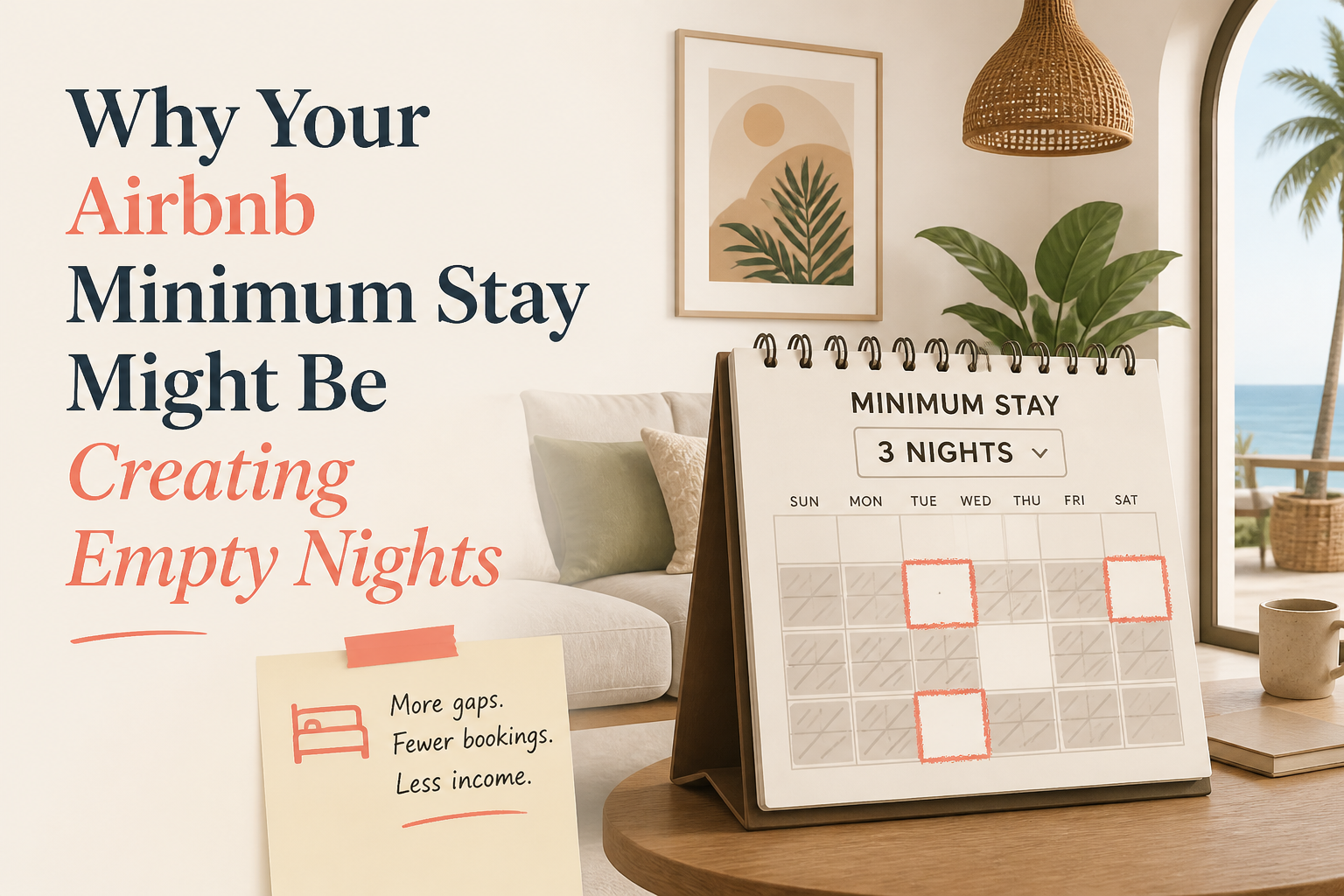 Why Your Airbnb Minimum Stay Might Be Creating Empty Nights
Minimum-stay rules can protect your calendar, reduce turnovers, and help you avoid low-value reservations. But the same rule can also create gaps that become nearly impossible to book. The trick is knowing when to hold your minimum and when the calendar is telling you to adjust it.
5 min read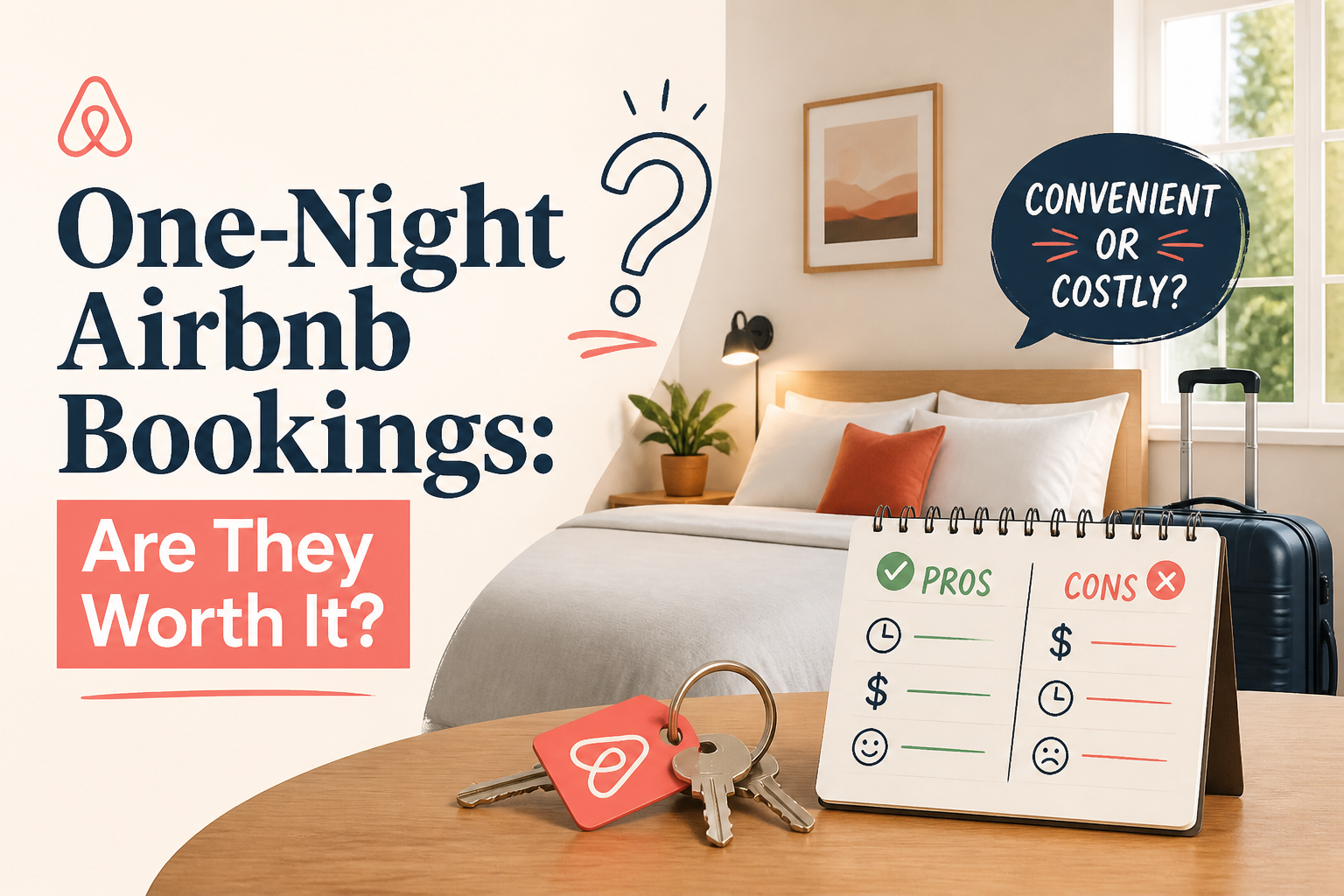 One-Night Airbnb Bookings: Are They Worth It?
The nightly rate looks fine. The cleaning fee is included. Then you run the actual numbers — and everything changes. Here's what experienced hosts have figured out about one-night stays.
6 min read How Check-In Flexibility Becomes One of Your Best Hospitality Tools
The gesture that costs you nothing can be worth more than any amenity you add to your listing. Here's how to make check-in flexibility work in your favor.
5 min read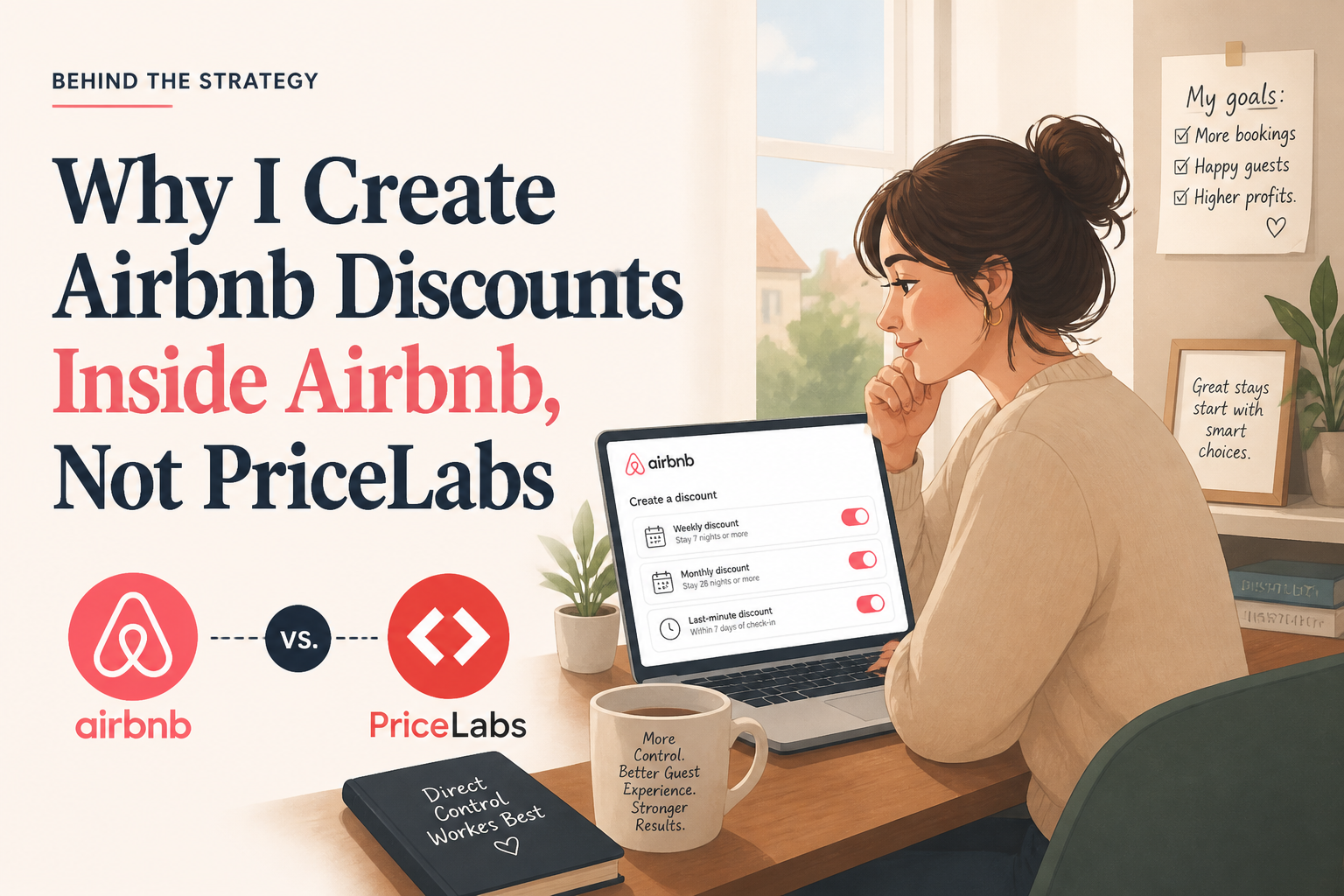 Why I Create Airbnb Discounts Inside Airbnb, Not PriceLabs
A host asked a question in our Facebook group yesterday about discounts and PriceLabs, and it got me thinking. I use dynamic pricing, but when I want to offer an additional discount to Airbnb guests, I prefer creating it inside Airbnb. The underlying rate can continue to fluctuate, while Airbnb gets the opportunity to actually merchandise the discount.
7 min read