
How to Accept Same-Day Airbnb Bookings Without the Chaos
Same-day bookings can fill gaps and generate real extra income — if you have the right systems in place. Here's exactly what those systems look like.
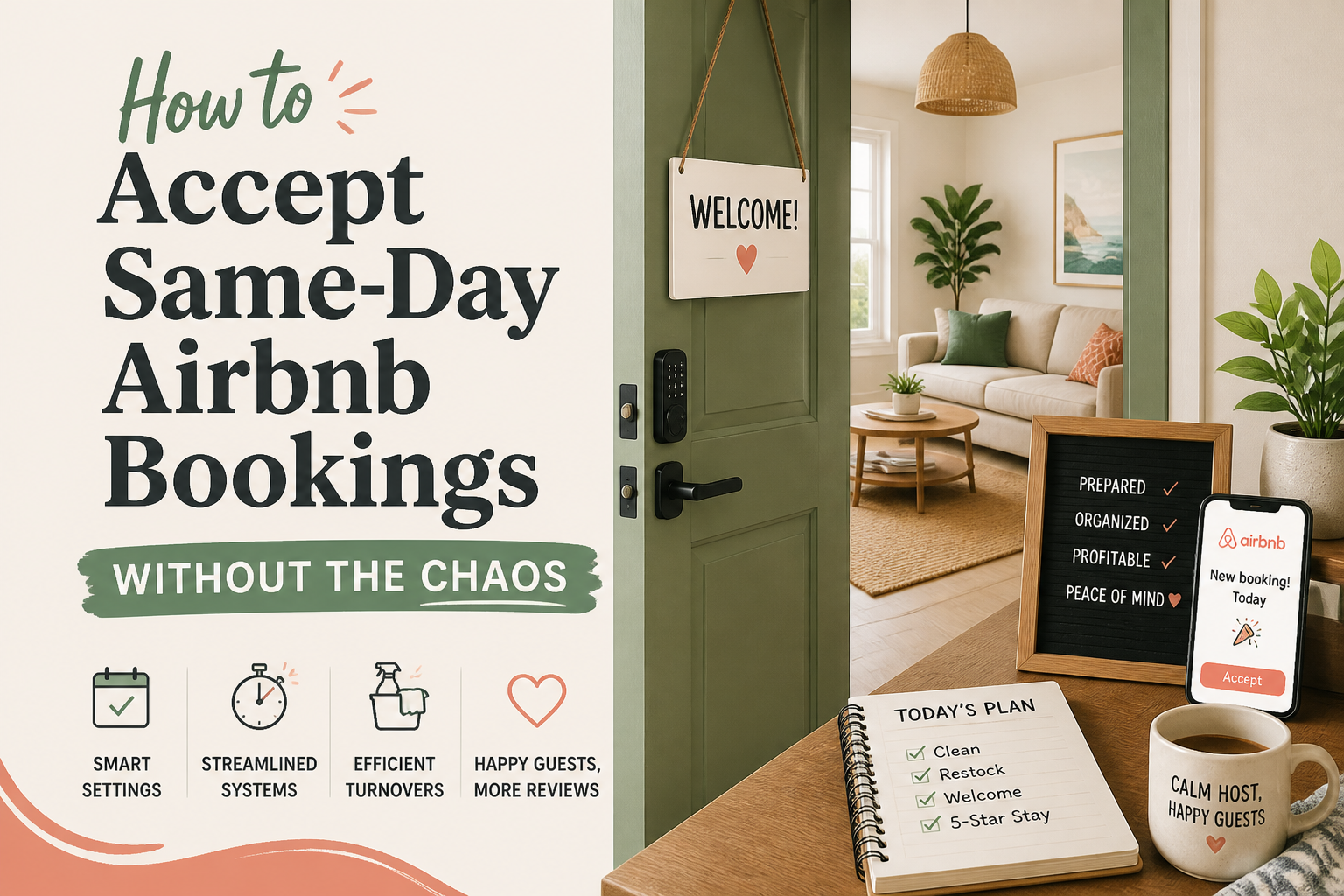
Same-day bookings have a reputation among hosts that they do not entirely deserve. For some hosts they are a reliable source of extra income and consistently easy guests. For others they are the source of their worst hosting experiences. The difference between those two outcomes is almost never the guests themselves. It is whether the host had any systems in place before the booking arrived.
The hosts who block same-day bookings entirely are often responding to a real experience: a booking that arrived when they were not prepared, from a guest they did not have time to evaluate, for a property that was not quite ready. Those experiences are genuine and they are worth taking seriously.
But the response to a systems problem is rarely to close the door on the revenue entirely. It is to build the systems that make the revenue manageable. Here is what those systems look like for the hosts who have figured them out.
Set a Cutoff Time and Stick to It
The single most effective change a host can make to bring same-day bookings under control is establishing a cutoff time, after which no same-day bookings are accepted, and applying it consistently.
The right cutoff time varies by property and by how much lead time you actually need to prepare. For a host who handles their own cleaning and has a smart lock, a cutoff of noon or 2pm may be plenty. For a host who relies on a cleaning team that needs scheduling notice, the cutoff might need to be earlier in the morning to give the team time to get there.
The important thing is that the cutoff is set in advance, not decided on a case-by-case basis when a booking arrives. A booking that comes in at 11am for a 3pm check-in feels very different from a booking that arrives at 10pm for a midnight arrival. The cutoff time draws that line clearly so you never find yourself making that judgment call in real time.
Airbnb allows you to set a preparation time and a booking window that together achieve this effect. Several hosts who describe their same-day booking experience as smooth and profitable credit the cutoff time as the single change that made the difference.
Use Smart Locks and Automated Access
The operational challenge that makes same-day bookings stressful for many hosts is access. Arranging a key handoff, coordinating a physical meeting, or manually generating and sending access codes for a guest who booked an hour ago is time-consuming and creates a real margin for error.
Smart locks with automated code generation remove most of that friction. When a booking is confirmed, the system generates a unique access code for that guest's stay and sends it automatically. The host does not need to be physically present, does not need to manually send anything, and does not need to coordinate timing with the guest beyond the standard check-in instructions that go out as part of the automated booking flow.
For hosts who have not yet made this change, same-day bookings genuinely are harder to manage than they need to be. For hosts with smart locks already installed, a same-day booking at 10am for a 4pm check-in requires almost no additional effort beyond what any other booking requires. The technology turns a logistical challenge into a non-issue.
Keep the Property in a State of Readiness
Same-day bookings are most stressful when they arrive and the property is not ready. A host who cleaned after the last guest and left the property fully prepared for the next one can accommodate a same-day booking with minimal disruption. A host who was planning to clean tomorrow is in a very different position when a booking arrives tonight.
Hosts who accept same-day bookings consistently tend to maintain their properties in a state of continuous readiness between stays rather than cleaning immediately before the next confirmed arrival. That habit requires more discipline between bookings but makes same-day availability genuinely practical rather than theoretically possible.
It also protects against the specific problem several hosts described: a same-day booking arriving when the property was not quite ready, resulting in a guest who encountered something they should not have or a host who had to rush a preparation that was visible in the guest's experience. A property that is always ready for a guest does not have that problem.
Apply Extra Screening to Same-Day Requests
The guests who cause the most problems with same-day bookings tend to share certain characteristics: they are local, they are booking for one night, and their explanation of why they need the property is vague or absent. That combination is not guaranteed to produce a bad outcome, but it appears frequently enough in the experiences of hosts who have had bad same-day experiences to be worth treating as a signal.
A pre-booking message that asks about the purpose of the stay and who will be there takes thirty seconds and filters a meaningful percentage of the bookings most likely to cause problems. Guests with straightforward reasons answer easily. Guests who were planning something they did not mention tend to either reveal it or cancel.
Some hosts apply their full standard screening process to same-day bookings, requiring ID verification and a security deposit in addition to the pre-booking question. One host who does this described her same-day guest experience as consistently excellent across three years of hosting. The additional friction filters the problem bookings before they become problems.
Know When to Close the Calendar Instead
Same-day availability is not something that has to be permanently on or permanently off. Several hosts described blocking the calendar on specific days when they know their availability to manage a booking is limited: busy personal days, travel, situations where the cleaning team is unavailable, or periods when back-to-back bookings make a same-day addition genuinely unworkable.
One host blocks the calendar on any day when she has plans that would make it difficult to handle messaging, access codes, and any issue that might arise during the stay. Rather than maintaining a permanent policy in either direction, she manages availability actively based on her own schedule. On days when she can fully manage a same-day booking, the calendar is open. On days when she cannot, it is closed.
That approach requires more active calendar management than a fixed policy. But it captures the revenue on the days it is genuinely available without creating the risk of a booking arriving on a day when the host is not in a position to handle it properly.
Same-day bookings are not inherently good or bad. They are an opportunity that requires specific systems to capture safely. Hosts who have those systems tend to find them profitable and manageable. Hosts who try to manage them without systems tend to find them stressful and eventually stop accepting them. The systems are not complicated. They just need to be in place before the next booking arrives.
Airbnb optimization specialist, Superhost, and founder of one of the largest Airbnb host communities.
Continue Reading
Chosen for you from The Optimization Journal.
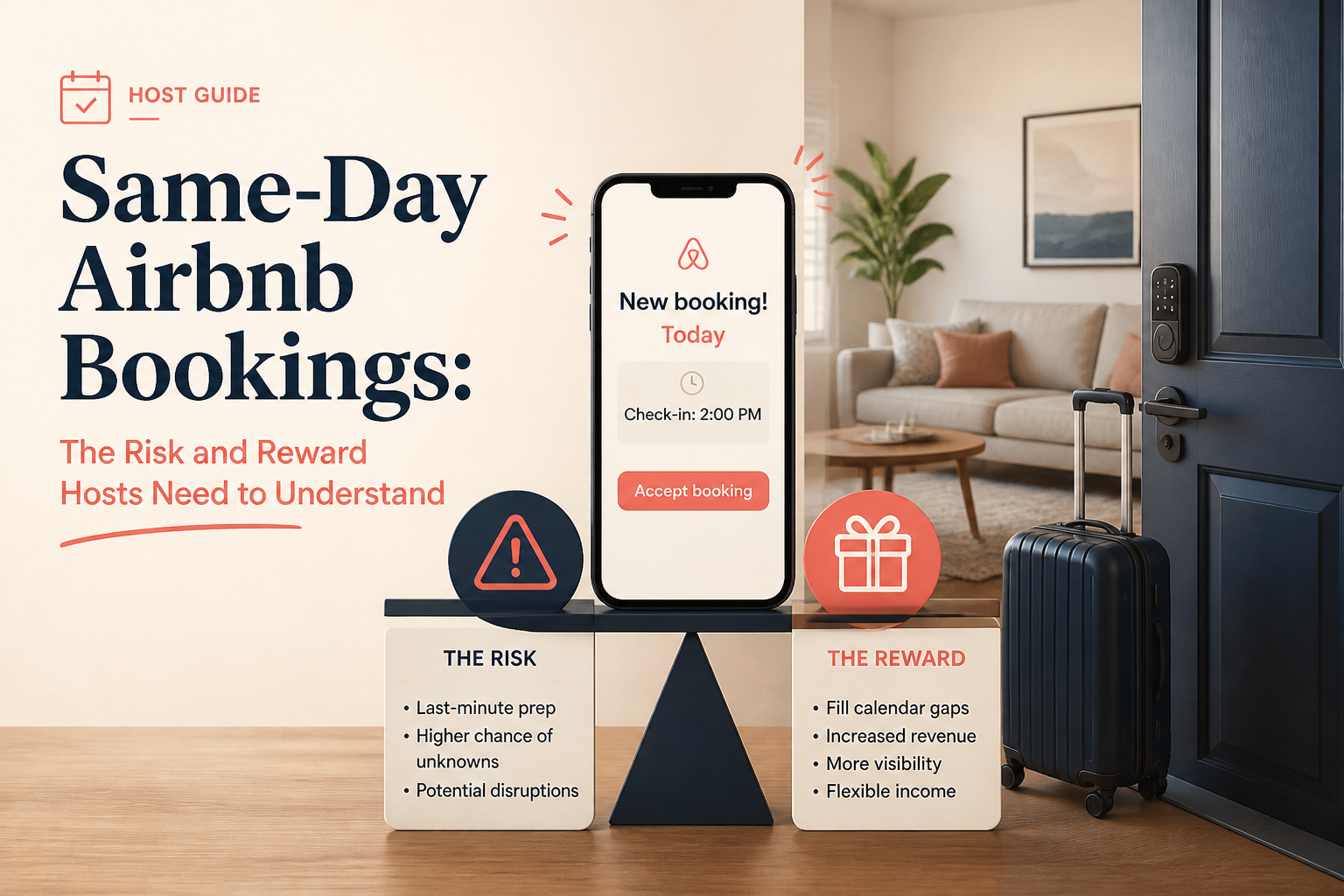 Same-Day Airbnb Bookings: The Risk and Reward Hosts Need to Understand
Two hosts. Same situation. Completely opposite experiences. The difference between them was not luck — it was systems.
6 min read How Check-In Flexibility Becomes One of Your Best Hospitality Tools
The gesture that costs you nothing can be worth more than any amenity you add to your listing. Here's how to make check-in flexibility work in your favor.
5 min read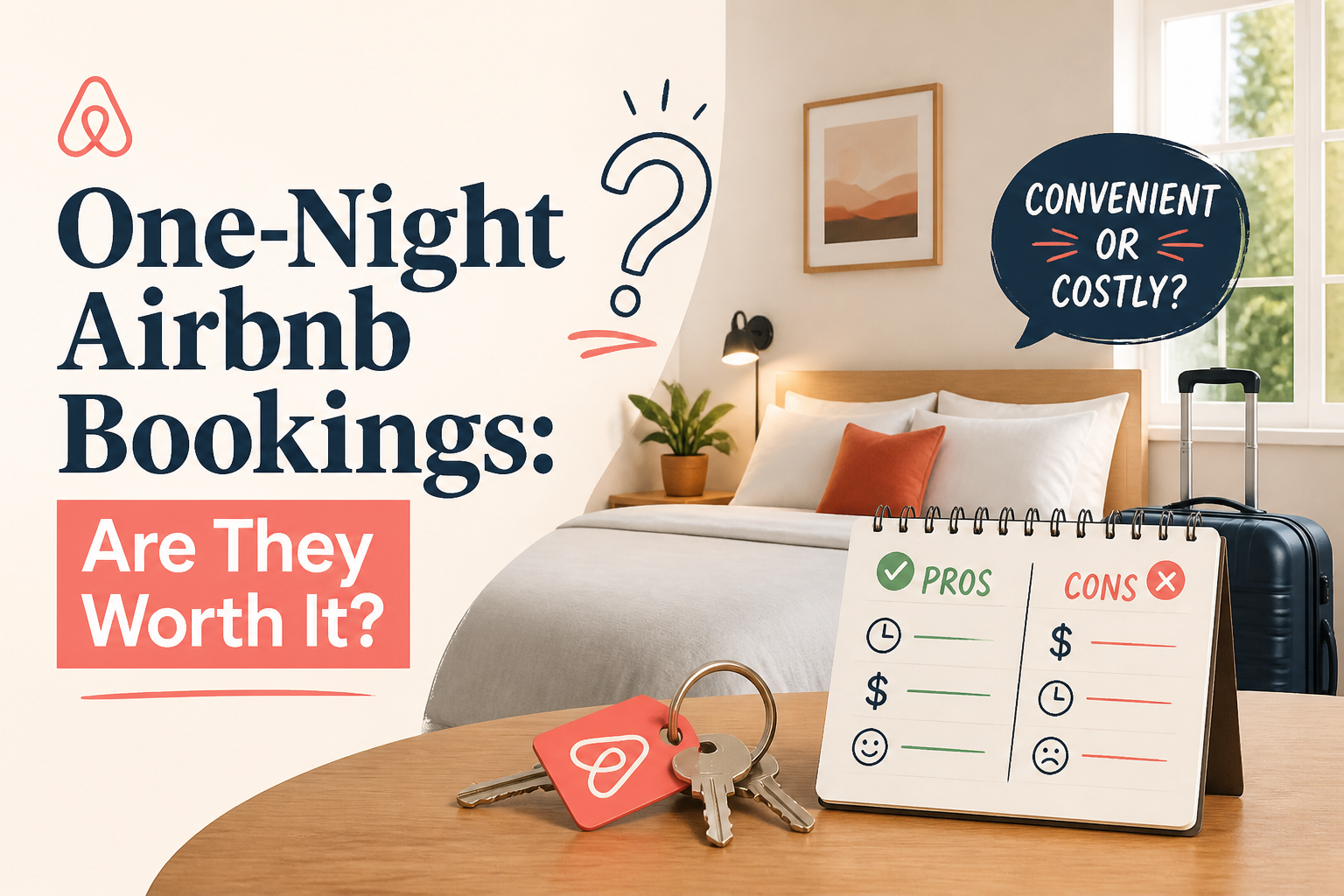 One-Night Airbnb Bookings: Are They Worth It?
The nightly rate looks fine. The cleaning fee is included. Then you run the actual numbers — and everything changes. Here's what experienced hosts have figured out about one-night stays.
6 min read How to Make a Pet-Friendly Airbnb Actually Work
Allowing pets is a business decision, not just a gesture of goodwill. The hosts who get it right have built specific systems around it. Here's what those systems look like.
5 min read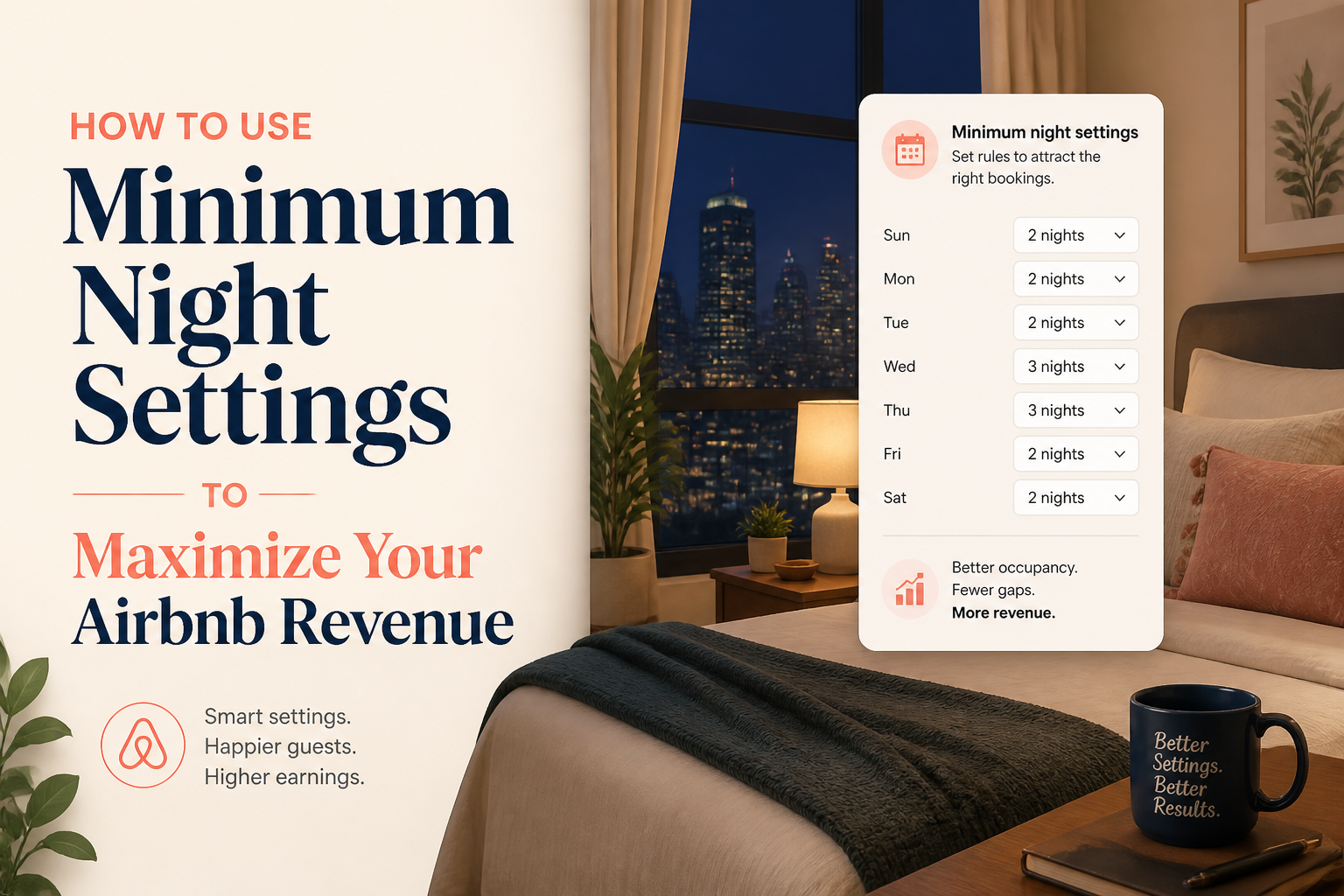 How to Use Minimum Night Settings to Maximize Your Airbnb Revenue
Your minimum stay setting is one of the most powerful levers in your listing — and most hosts set it once and never revisit it. Here's how to use it more strategically.
5 min read