
One-Night Airbnb Bookings: Are They Worth It?
The nightly rate looks fine. The cleaning fee is included. Then you run the actual numbers — and everything changes. Here's what experienced hosts have figured out about one-night stays.

It starts simply enough. A guest requests one night. The nightly rate looks reasonable. The cleaning fee is included in what they pay. You confirm the booking and move on.
Then you actually run the numbers.
The cleaner charges the same whether a guest stays one night or seven. The laundry takes the same time. The communication, the access code setup, the checkout inspection: all of it happens regardless of how long the guest was there. By the time you subtract the real cost of turning the property over, the one-night booking that looked fine on screen may have become a wash. Or worse, a small loss dressed up as income.
That is the math problem at the heart of the minimum night debate. And it is why the question of whether to accept one-night bookings divides experienced hosts so sharply.
The Case for Accepting One-Night Stays
A meaningful group of hosts accepts one-night bookings without hesitation, and several of them make a compelling argument for doing so.
The most direct version of that argument is occupancy. A night that sits empty earns nothing. A one-night booking that covers the cleaning cost and generates a small margin is better than zero, particularly when it fills a gap between longer stays that would otherwise go unfilled. The math problem, in other words, is only a problem if the alternative to the one-night booking is a longer stay. If the alternative is an empty calendar, the calculation looks very different.
The guest profile also matters more than many hosts account for. One-night guests who are passing through to somewhere else, attending a nearby event, or stopping along a hiking route tend to be among the lowest-impact guests a host encounters. They arrive, sleep, shower, have coffee, and leave. They use the kitchen minimally if at all. They spend most of their time somewhere other than your property. The wear on the space is often less than a multi-night guest who settles in and actually lives there for a few days.
One host who runs a cottage on a tourist trail described one-night stays as a strong earner specifically because she handles her own cleaning and the location naturally draws passing travelers who need exactly one night of comfortable rest before continuing their journey. The economics work because her costs are low and the demand is consistent. For her, refusing one-night bookings would mean turning away the majority of her market.
The Case for a Minimum Stay Requirement
The hosts who require two nights or more are equally clear about their reasoning, and the argument is almost always the same: the fixed cost of a turnover does not scale down for shorter stays.
One host put it in a single sentence that captures the core of the argument: it costs her more to clean than she earns from a one-night booking. That sentence does a lot of work. It is not a complaint about guests or a preference for longer stays. It is a straightforward statement about unit economics that applies to any host whose cleaning costs exceed the margin on a single night after fees.
Property size amplifies this significantly. A host with a three-bedroom property pointed out that washing all the bedding, towels, and linens for every room after a single night of use is simply not a reasonable use of resources relative to what that night earns. A host with a four-bedroom house said that cleaning is costly and time-consuming and that breaking even on one night is practically impossible given the scale of what a turnover requires.
Several hosts who removed one-night availability from their calendar reported no meaningful impact on their overall occupancy. The longer-stay guests they were already attracting simply filled the space. The one-night guests moved on to other listings, which, as more than one host observed, is exactly where they belong if they do not make financial sense for your property.
The Middle Ground Most Experienced Hosts Settle Into
The most common position among hosts who have been doing this for more than a year or two is not a fixed rule in either direction. It is a flexible approach that uses minimum nights as a tool rather than a policy, adjusting based on the calendar, the season, and the specific gap being filled.
Several hosts describe a tiered approach: a three-night minimum during peak season to maximize revenue per turnover, a two-night minimum as the general baseline, and one-night availability reserved for gaps in the calendar that would otherwise sit empty. That last category, sometimes called orphan nights, represents the most defensible use case for one-night bookings. A single night between two longer bookings that cannot be extended earns something rather than nothing, and the cleaning has to happen anyway for the next guest.
Airbnb's smart minimum stay setting automates part of this. Hosts can set their standard minimum while allowing the platform to open single-night availability automatically in calendar gaps where a longer booking is no longer possible. Several hosts describe this as the feature that resolved the tension between wanting a minimum stay and not wanting to leave gap nights empty indefinitely.
Pricing Is the Variable Most Hosts Get Wrong
One of the clearest findings from hosts who have thought carefully about one-night bookings is that the economics depend almost entirely on how the stay is priced, and most hosts who accept one-night bookings are not pricing them correctly.
If a one-night booking carries the same nightly rate as a three-night booking, the host is absorbing the full fixed cost of the turnover against a single night of revenue. The cleaning fee helps, but for many properties it does not close the gap entirely. The margin on a one-night stay at a standard nightly rate is often thinner than it appears on the booking confirmation.
Hosts who have found one-night bookings genuinely profitable tend to charge a premium for them. One host prices single-night stays at one and a half times her standard nightly rate. Another charges a higher nightly rate for short stays while keeping the cleaning fee consistent so the economics balance regardless of length. The premium filters guests who are not genuinely committed to the stay and ensures that the host is compensated for the disproportionate cost of a short turnover.
The lesson from the hosts who have worked this out is simple: if you are going to accept one-night bookings, price them as what they actually cost to serve. Not as a discount on a longer stay, but as a premium product with a real cost structure behind it.
The Question Worth Asking Before You Decide
Before you set a minimum night policy, or revisit the one you already have, the most useful question is not what other hosts are doing. It is what a one-night turnover actually costs you, and how that compares to what a one-night booking actually earns.
If you have never done that calculation for your specific property, your current policy is based on an assumption rather than a number. The assumption might be right. But running the actual math tends to produce a much clearer answer than any amount of community discussion about what hosts in other markets with other properties and other cost structures have decided to do.
Airbnb optimization specialist, Superhost, and founder of one of the largest Airbnb host communities.
Continue Reading
Chosen for you from The Optimization Journal.
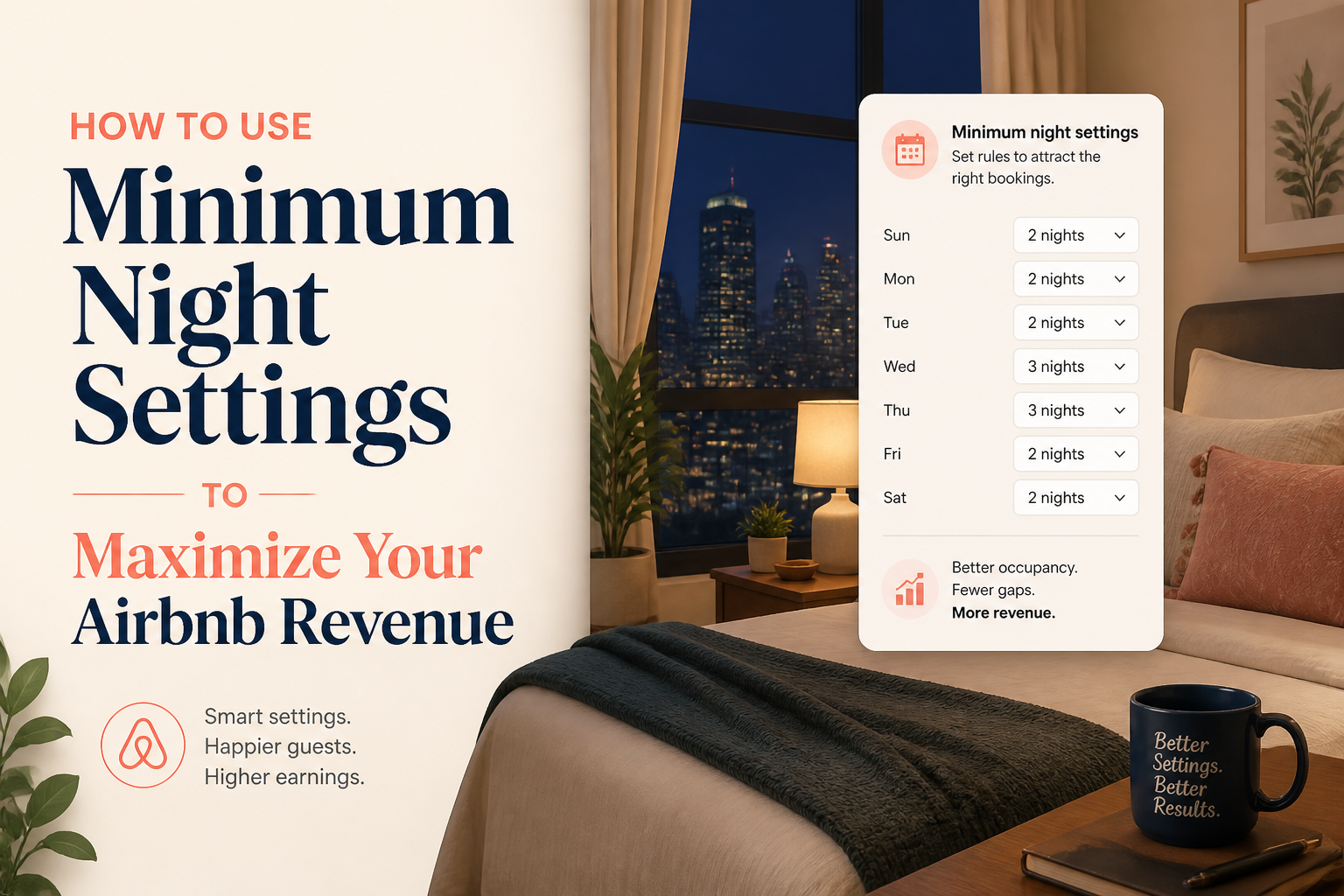 How to Use Minimum Night Settings to Maximize Your Airbnb Revenue
Your minimum stay setting is one of the most powerful levers in your listing — and most hosts set it once and never revisit it. Here's how to use it more strategically.
5 min read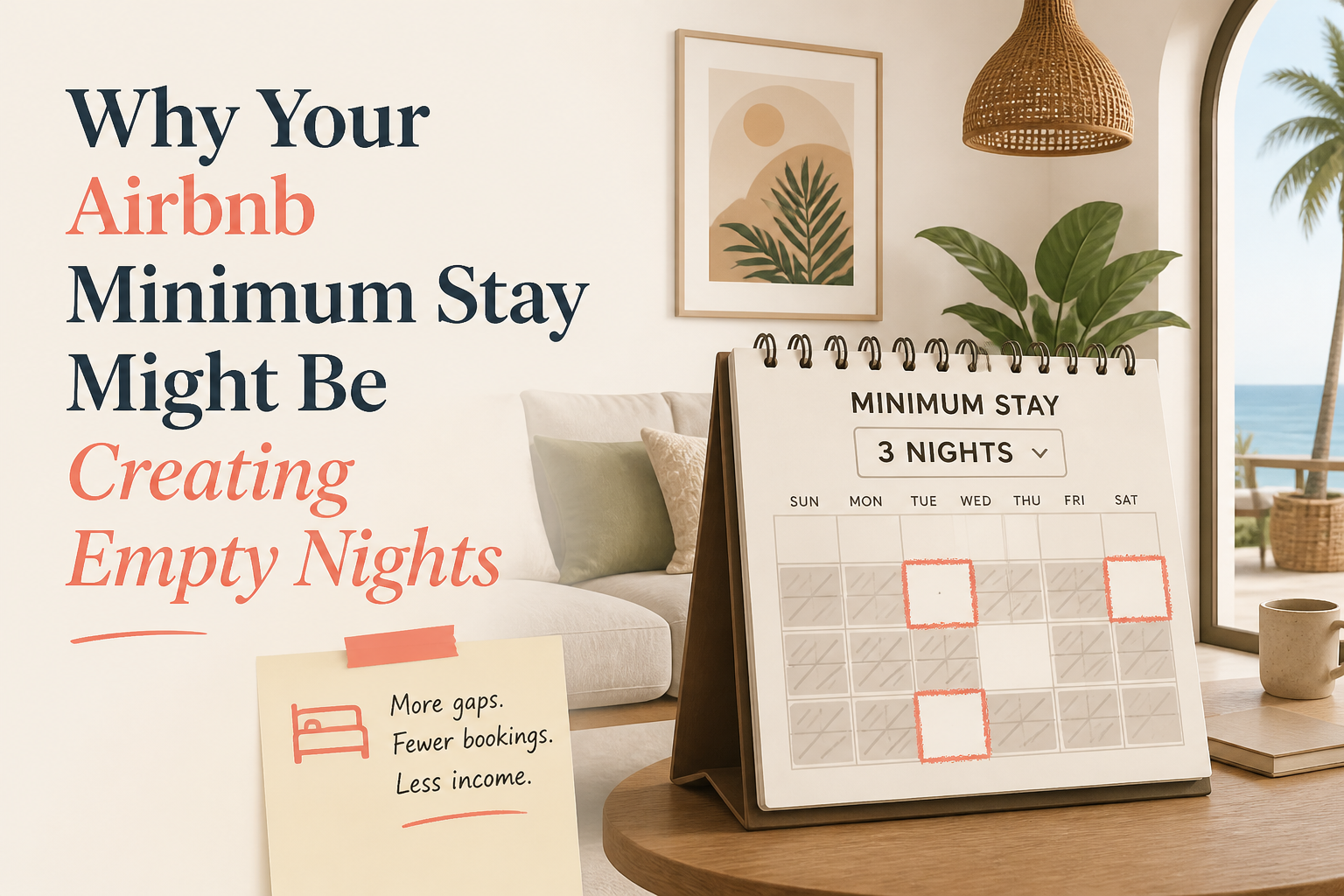 Why Your Airbnb Minimum Stay Might Be Creating Empty Nights
Minimum-stay rules can protect your calendar, reduce turnovers, and help you avoid low-value reservations. But the same rule can also create gaps that become nearly impossible to book. The trick is knowing when to hold your minimum and when the calendar is telling you to adjust it.
5 min read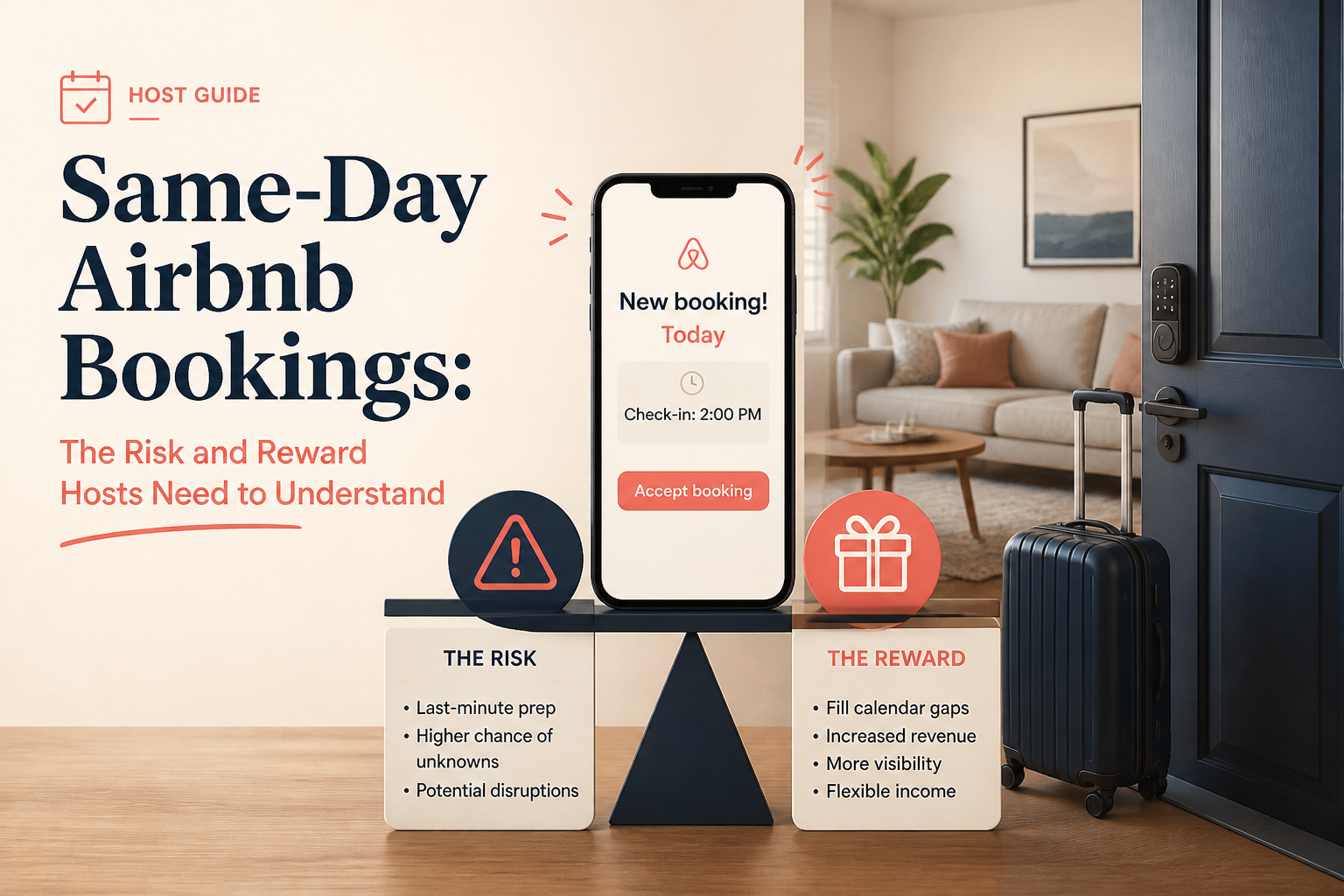 Same-Day Airbnb Bookings: The Risk and Reward Hosts Need to Understand
Two hosts. Same situation. Completely opposite experiences. The difference between them was not luck — it was systems.
6 min read What Are Orphan Nights on Airbnb and How Do You Fill Them?
Orphan nights are small gaps in your Airbnb calendar that become difficult or impossible to book because of the reservations around them. They are easy to miss, but over time they can quietly reduce occupancy. Here is how to identify them and decide what to do.
6 min read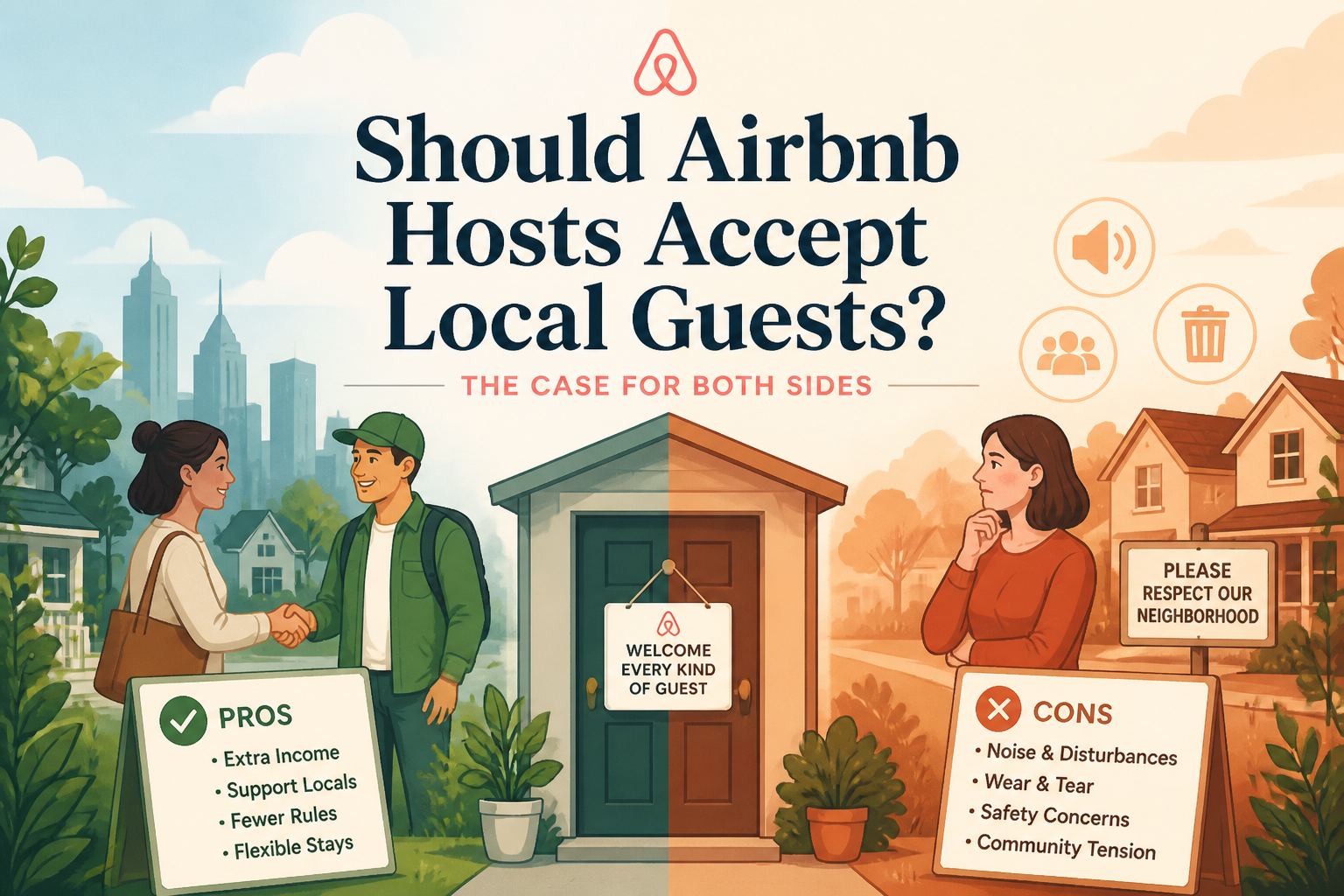 Should Airbnb Hosts Accept Local Guests? The Case for Both Sides
Few hosting decisions divide opinion more sharply than whether to accept guests who live nearby. Here is what hosts on both sides have learned from experience.
5 min read