
How to Screen Local Airbnb Guests Without Blocking Them Completely
A blanket no-locals policy costs you real revenue. A blanket yes leaves you exposed. Here's how experienced hosts find the middle ground.

The instinct to block all local guests is understandable. A same-city booking raises an obvious question: if they live nearby, why do they need your place? And the answer to that question is sometimes something you would rather not deal with.
But a blanket no-locals policy has a real cost. It removes a segment of demand that, for many hosts, represents a reliable and often underappreciated source of bookings: overflow guests for family events, people navigating temporary housing situations, attendees of local weddings and concerts who need a place to stay rather than a long drive home at midnight.
The hosts who navigate this best are not the ones who say yes to everything or no to everything. They are the ones who have built a clear, consistent process for evaluating local bookings before they confirm them. The process is not complicated. But it makes a significant difference.
Start by Asking Why
The single most effective screening tool for local bookings costs nothing and takes thirty seconds. Before confirming, send a short message asking what brings them to the area and who will be staying.
Guests with legitimate reasons answer this question easily and directly. A family whose relatives are visiting from out of town and need overflow space. Someone whose home is being renovated and needs a few nights somewhere comfortable. A local attending a wedding who does not want to drive home afterward. These answers make immediate sense. They are specific, they explain the situation, and they give you confidence in the booking.
Guests with something to hide tend to respond very differently. Vague answers. Pushback on why you are asking. A sudden cancellation. None of those outcomes are bad for you. In each case, you have avoided a booking that was likely to cause problems, before anything went wrong.
One host who uses this approach routinely described it simply: you find out what you need to know, and the guests who were never going to be straightforward remove themselves from the process before you have to.
Pay Attention to the Booking Pattern
A local booking made three weeks in advance for a long weekend reads very differently from a local booking made the same afternoon for one night. Both involve someone nearby. The risk profile is not the same.
Advance bookings from local guests tend to be planned and purposeful. The guest thought about where they needed to stay, searched the platform, found your listing, and decided it was the right fit. That kind of booking rarely causes problems.
Last-minute local bookings deserve more scrutiny. Not because every one of them is suspicious, but because the pattern of someone nearby booking with very short notice for a very short stay fits the profile of a guest looking for a venue rather than accommodation. Adding a minimum advance notice requirement, or simply being more careful with same-day and next-day bookings from guests who live close by, filters a meaningful amount of risk without closing the door on local guests entirely.
Use Your Minimum Night Requirement as a Filter
A two-night minimum does not eliminate party risk from local bookings, but it changes the economics in a useful way. Someone looking to use your property as a one-night venue for a gathering will often move on to a listing that does not require a second night rather than pay for time they do not need.
The guests who stay are generally the ones who actually need accommodation. They are willing to pay for two nights because two nights is what the trip requires. That willingness is itself a signal worth reading.
Several hosts use this as their primary local guest filter rather than geographic blocking. They accept local bookings but require a minimum of two nights, ask a pre-booking question, and apply the same house rules they would for any guest. The combination of those three things, without any explicit no-locals policy, has produced a significantly cleaner track record with nearby guests.
Make Your House Rules Clear Before Anyone Arrives
One of the most consistent findings across hosts who have had both good and bad experiences with local guests is that the bad experiences almost always involved ambiguity about what was and was not allowed. Guests who were not sure whether they could have a few extra people over. Guests who interpreted quiet hours loosely because nothing in the listing said otherwise. Guests who brought additional visitors because no rule explicitly prohibited it.
Clear house rules do not guarantee perfect behavior. But they create accountability. A guest who agreed to specific rules before arriving and then broke them is in a very different position than a guest who operated in a gray area you never defined.
Being specific matters more than being strict. Not just no parties, but no unregistered guests beyond the booked count, quiet hours from ten pm, no gatherings that include people not listed on the reservation. The more precise the rule, the easier it is to enforce and the harder it is for a guest to claim they did not understand what was expected.
Trust the Answers You Get
The hosts who have had the worst experiences with local guests are often, when they think back on it, the ones who noticed something that did not quite add up and confirmed the booking anyway.
A vague answer to a reasonable question. A reluctance to say exactly who would be staying. An explanation that made surface-level sense but felt slightly off. These are signals. The instinct that something is not right is part of your screening process, and it is worth listening to.
You do not need a formal policy to act on that instinct. Declining a booking because the guest seemed evasive when you asked a simple question is a legitimate hosting decision. You do not need to explain it in detail. You need to trust that the handful of bookings you decline on that basis are almost certainly worth declining.
Local guests are not a category to fear or to welcome without thought. They are a segment of demand to evaluate carefully, with a short message, a look at the booking pattern, and a clear set of house rules waiting for whoever arrives. That combination, applied consistently, tends to produce the same result: the guests who were going to be fine still book, and the ones who were not tend to find somewhere else to go.
Airbnb optimization specialist, Superhost, and founder of one of the largest Airbnb host communities.
Continue Reading
Chosen for you from The Optimization Journal.
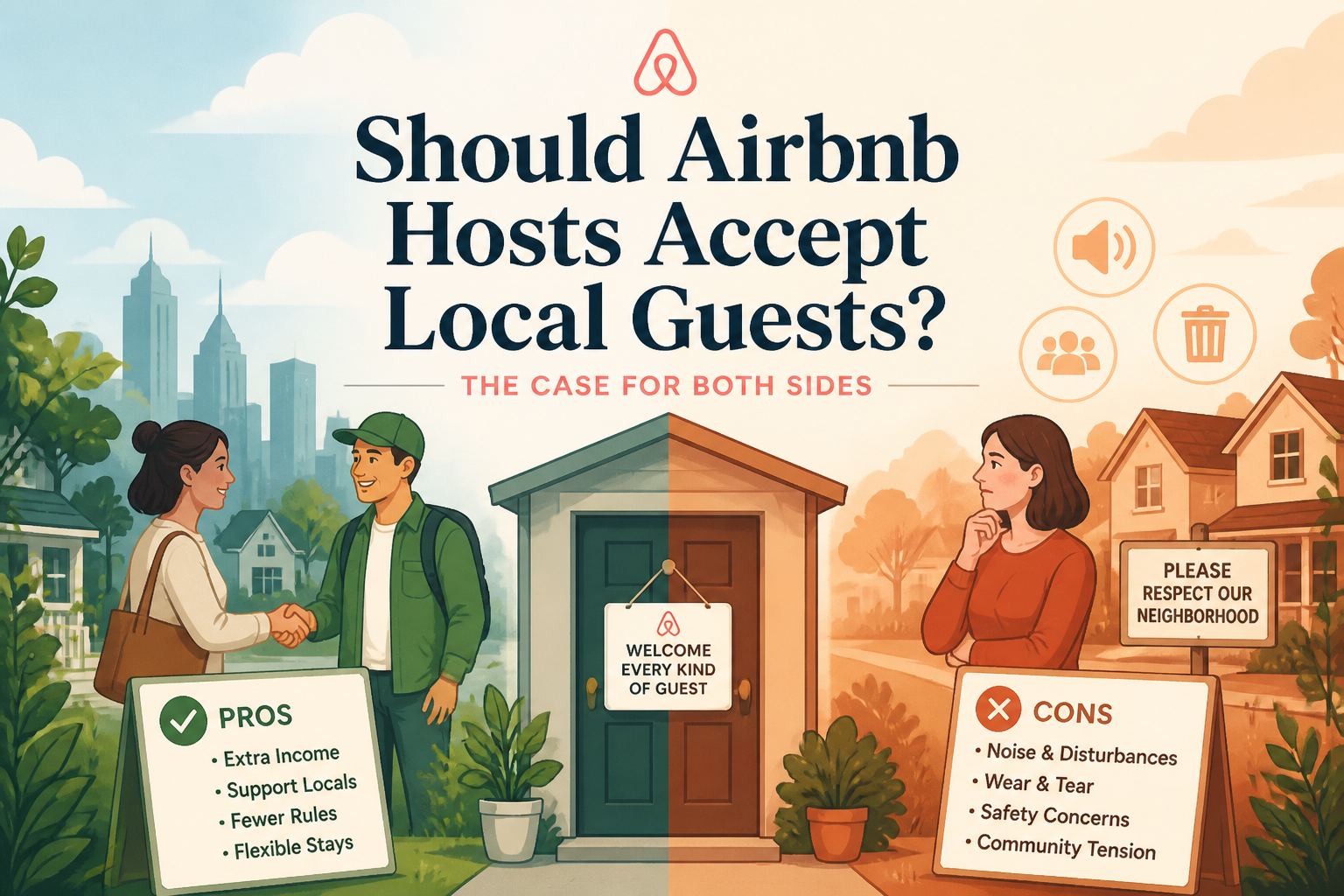 Should Airbnb Hosts Accept Local Guests? The Case for Both Sides
Few hosting decisions divide opinion more sharply than whether to accept guests who live nearby. Here is what hosts on both sides have learned from experience.
5 min read How to Write an Event Policy That Actually Protects Your Vacation Rental
A no-party rule is only as good as how clearly it's communicated. Here's how experienced hosts define, enforce, and occasionally profit from their event policies.
5 min read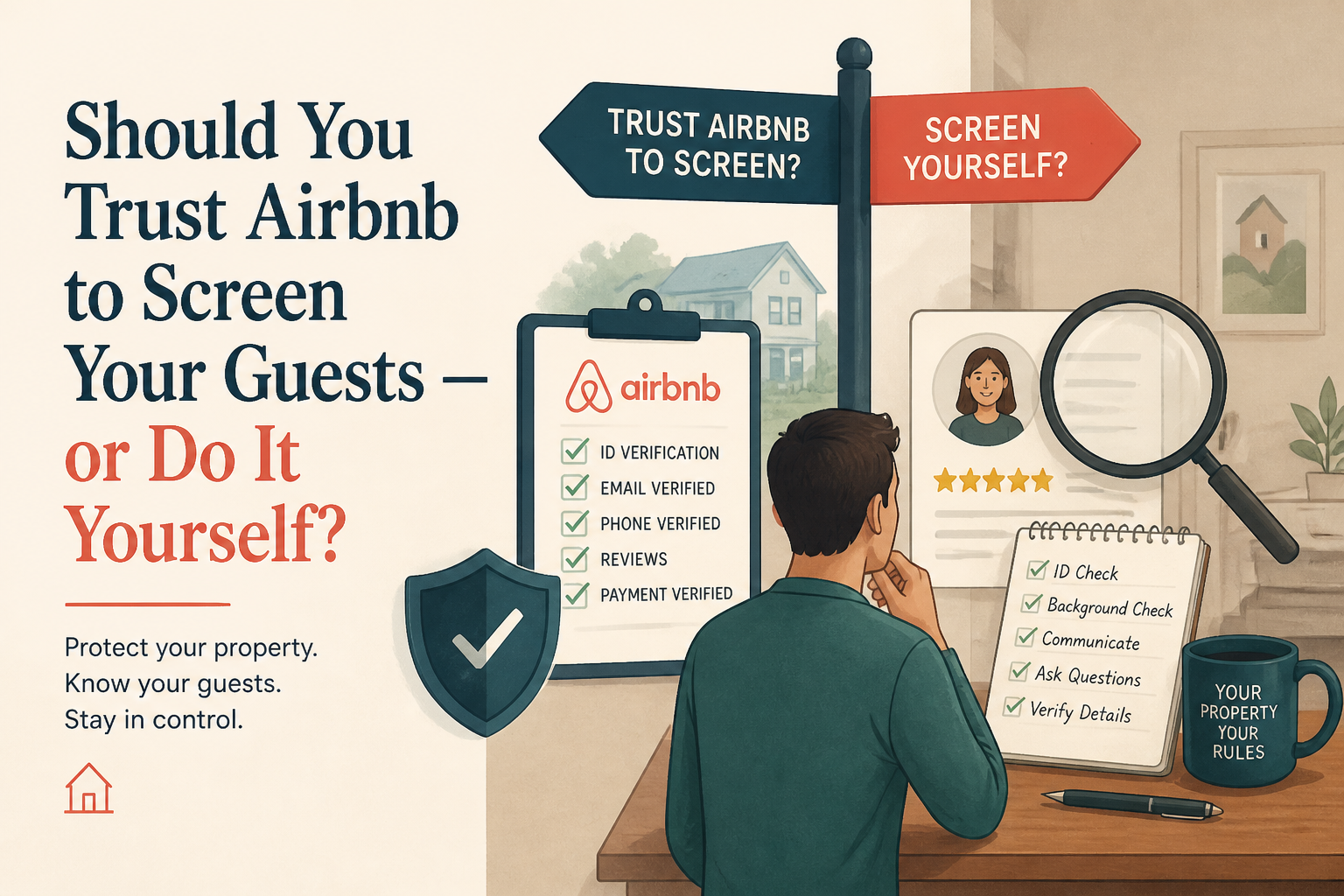 Should You Trust Airbnb to Screen Your Guests — or Do It Yourself?
Airbnb has a verification system. But a growing number of hosts have stopped relying on it alone — and what they've found has changed how they host.
5 min read Parties and Vacation Rentals: Where Hosts Draw the Line
Every host eventually gets a booking that makes them pause. How you respond to that moment — before it becomes a problem — is what separates a clear policy from a costly lesson.
5 min read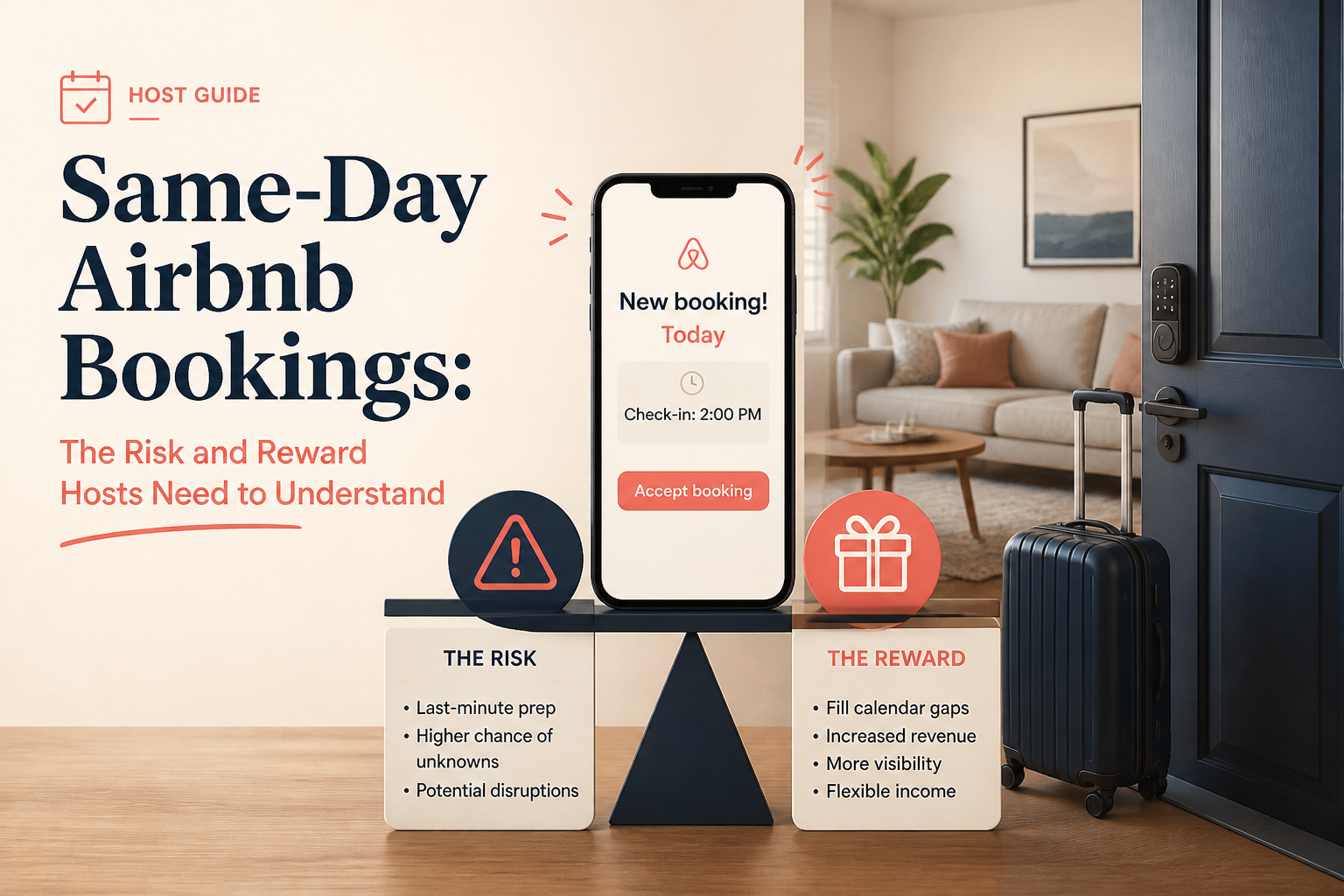 Same-Day Airbnb Bookings: The Risk and Reward Hosts Need to Understand
Two hosts. Same situation. Completely opposite experiences. The difference between them was not luck — it was systems.
6 min read