
Parties and Vacation Rentals: Where Hosts Draw the Line
Every host eventually gets a booking that makes them pause. How you respond to that moment — before it becomes a problem — is what separates a clear policy from a costly lesson.

She approved what sounded like a small dinner. A family gathering, the guest said. Maybe twelve people for a few hours. The property was large, the guests had good reviews, and it seemed reasonable enough to say yes.
By 11pm the neighbors were calling. There were more than thirty people inside. Music was playing. The guest was not answering their phone. By the time it was over, there was damage to two rooms, a broken patio chair, and a noise complaint filed with the city.
That host now has a no-party policy with no exceptions. She will tell you that she is not the kind of host who overreacts to things, and that this was not an overreaction.
But the same community that holds her experience also includes a host who rented her home to a bride for a wedding weekend. The bridal party gathered the night before. They prepared together on the morning of the wedding. They treated the house with more care than most guests ever do. The review was the best she had ever received. She would say yes to that booking again without hesitation.
Both of these outcomes started the same way: a host who said yes to a gathering. What made them different was not luck. It was what the host actually knew about what they were agreeing to before anyone arrived.
What No-Party Policies Actually Protect Against
The hosts who enforce strict no-party rules are almost always enforcing them because of something specific that happened. Not because they read a cautionary tale somewhere, but because they experienced one.
The pattern tends to be the same. A booking that made surface-level sense. A guest who seemed fine. An evening that escalated faster than anyone expected. And an aftermath that involved neighbor complaints, property damage, or both, that was disproportionately expensive and stressful relative to the revenue from the booking.
What makes parties particularly difficult to manage is not that guests are dishonest, although some are. It is that what starts as one thing can become something else without any single moment of obvious deception. A small gathering becomes a larger one when friends invite friends. A quiet evening becomes a loud one when the energy of the group shifts. The host who approved a dinner for twelve is not the same person who agreed to thirty people and a speaker system, but the booking confirmation does not reflect that distinction.
A clear no-party policy, stated explicitly in the listing and reinforced in pre-arrival communication, does not prevent all of this. But it creates accountability. A guest who agreed to specific terms and then violated them is in a measurably different position than a guest who operated in ambiguity you never resolved.
The Word Party Is Doing a Lot of Work
One of the more useful observations in any honest conversation about vacation rental event policies is that the word party covers an enormous range of situations, and treating them all the same way costs hosts real revenue without making them meaningfully safer.
A birthday dinner for eight in a large rural property is not the same risk as a same-day booking for one night from a local guest who wants space for twenty people. A bridal party getting ready on the morning of a wedding is not the same as an open invitation sent to a hundred people on a Saturday night. A family reunion where the booked guests are gathering with relatives who live nearby is not the same as a large group of strangers assembled by someone you have never verified.
Hosts who draw no distinction between these situations end up either refusing bookings they could have safely accepted or accepting a blanket policy that does not actually reflect the specific risks they are managing. Neither outcome is ideal.
The more useful frame is not whether a booking involves a gathering but whether the host has enough information to make a confident decision about what that gathering actually looks like. That requires asking the right questions before confirming, not after.
How Hosts Who Allow Events Do It Safely
A smaller but significant group of hosts does allow events, and they have built deliberate systems around that decision that are worth understanding even if you never intend to open your property to formal events.
The most important principle is that managed events require a different set of terms than a standard booking. One host who allows small weddings and similar gatherings through direct bookings charges a significantly higher rate for event stays than for accommodation stays. The premium reflects the additional wear, the additional coordination, and the additional risk. It is not a favor to the guest. It is a business arrangement with clear terms on both sides.
Written agreements that specify exactly what is permitted, how many people, what hours, what is excluded, and what the financial consequences of violations are, change the dynamic of an event booking entirely. A guest who has signed something specific is not in the same position as a guest who was verbally told to keep it small.
Noise monitoring devices provide real-time information without requiring constant manual oversight. Several hosts describe them as the single most effective tool for managing the risk that a stay escalates beyond what was agreed, because they create an early signal rather than a morning-after discovery.
What to Do Before the Next Booking Request Arrives
The most common mistake hosts make around event policy is not having one until they need it. A policy you construct in response to a specific request, under time pressure, while trying to decide whether to say yes, is almost always less clear and less enforceable than one you worked out in advance.
Decide now what you will and will not consider. If you will not allow any gathering beyond the booked guest count, say so explicitly in your listing and in your house rules. If you are open to certain types of events under certain conditions, define those conditions clearly enough that you could explain them to a guest in two sentences.
Then ask the question directly when a booking feels unclear. What is the occasion? How many people will be on the property? Will anyone be there who is not listed on the booking? The answers to those questions, asked before you confirm rather than after, tell you almost everything you need to know.
The guests who had the best gatherings at vacation rentals were almost always the ones whose hosts knew exactly what they were agreeing to. The ones who had the worst tended to be the ones who confirmed without asking and discovered the answer later.
Airbnb optimization specialist, Superhost, and founder of one of the largest Airbnb host communities.
Continue Reading
Chosen for you from The Optimization Journal.
 How to Write an Event Policy That Actually Protects Your Vacation Rental
A no-party rule is only as good as how clearly it's communicated. Here's how experienced hosts define, enforce, and occasionally profit from their event policies.
5 min read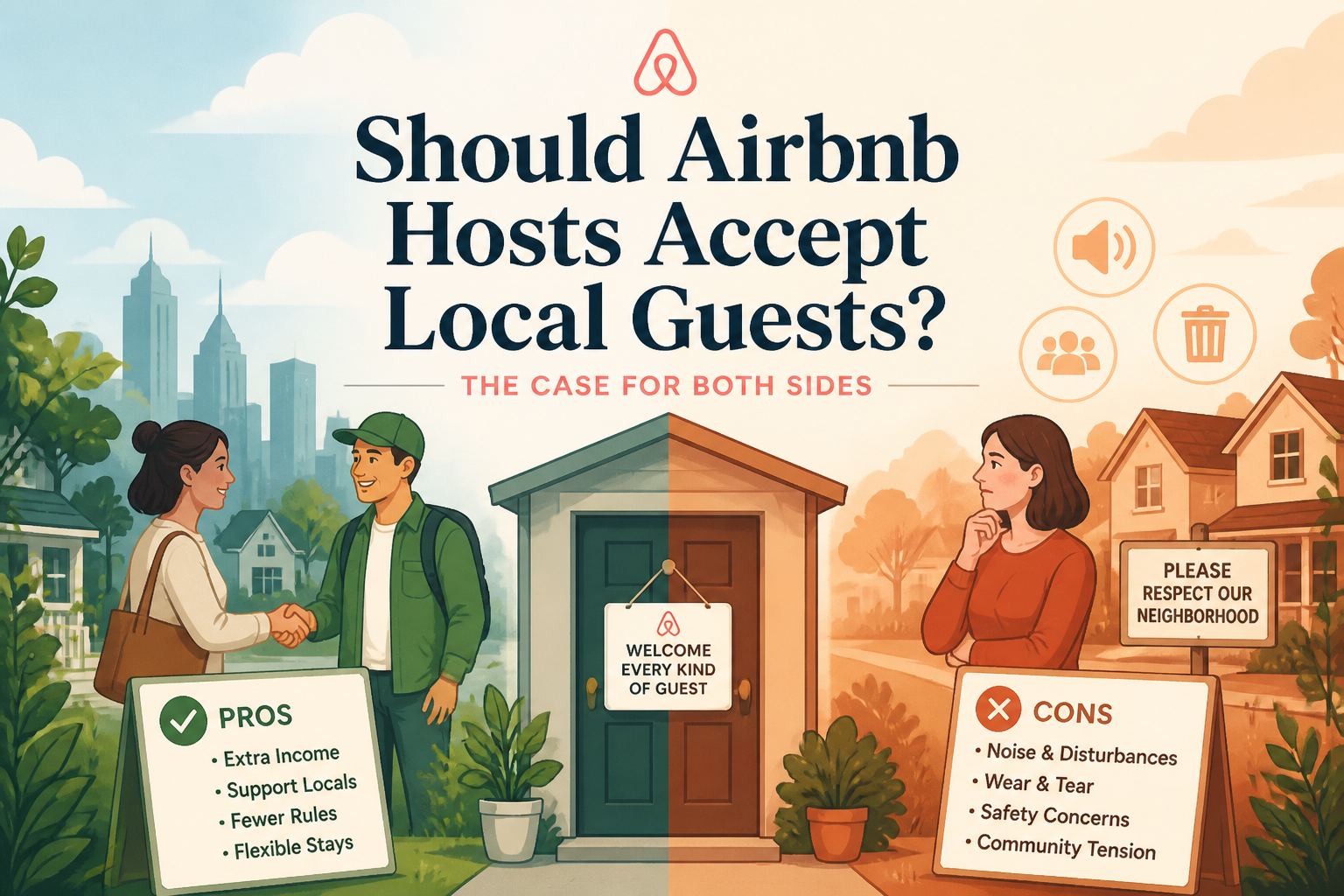 Should Airbnb Hosts Accept Local Guests? The Case for Both Sides
Few hosting decisions divide opinion more sharply than whether to accept guests who live nearby. Here is what hosts on both sides have learned from experience.
5 min read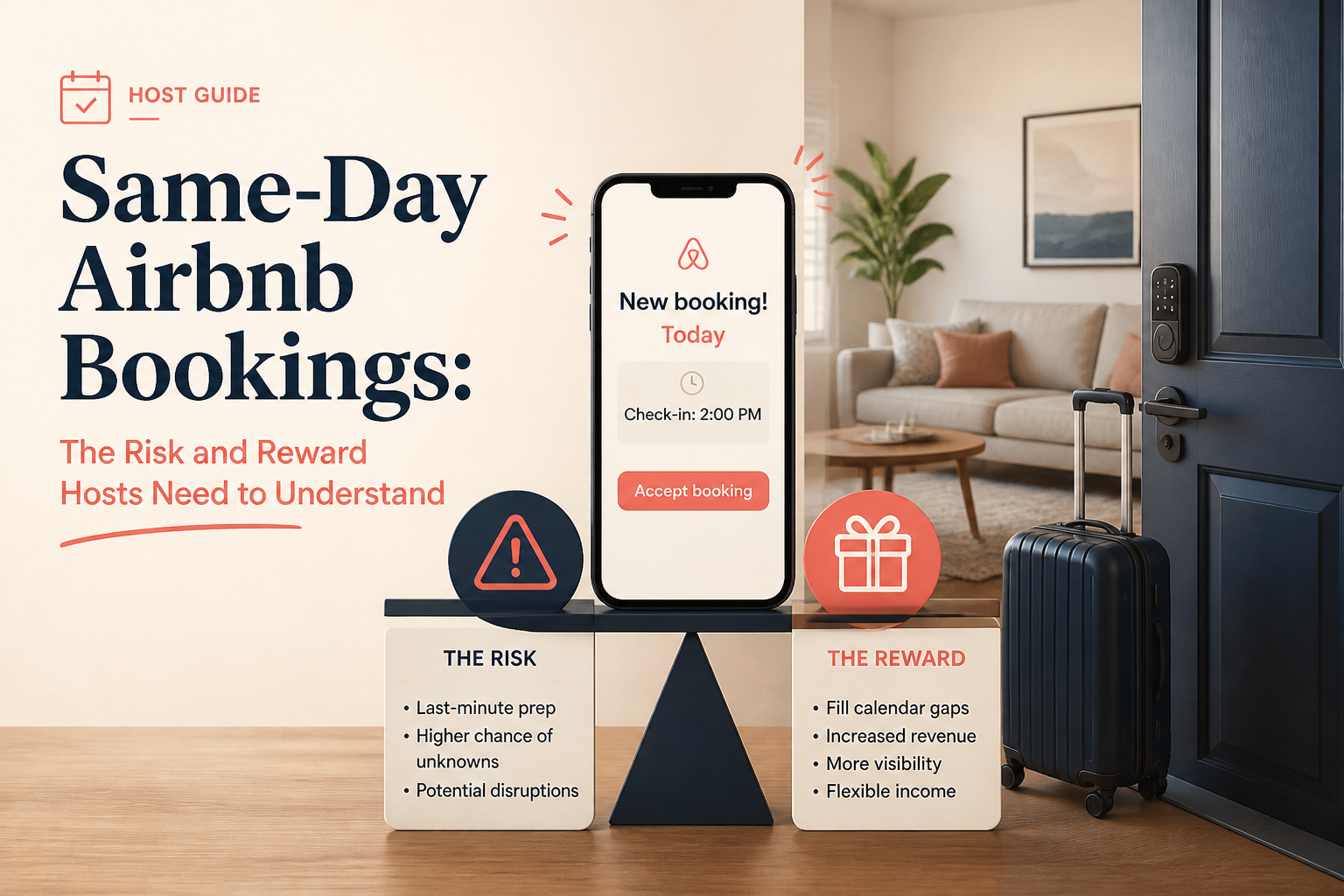 Same-Day Airbnb Bookings: The Risk and Reward Hosts Need to Understand
Two hosts. Same situation. Completely opposite experiences. The difference between them was not luck — it was systems.
6 min read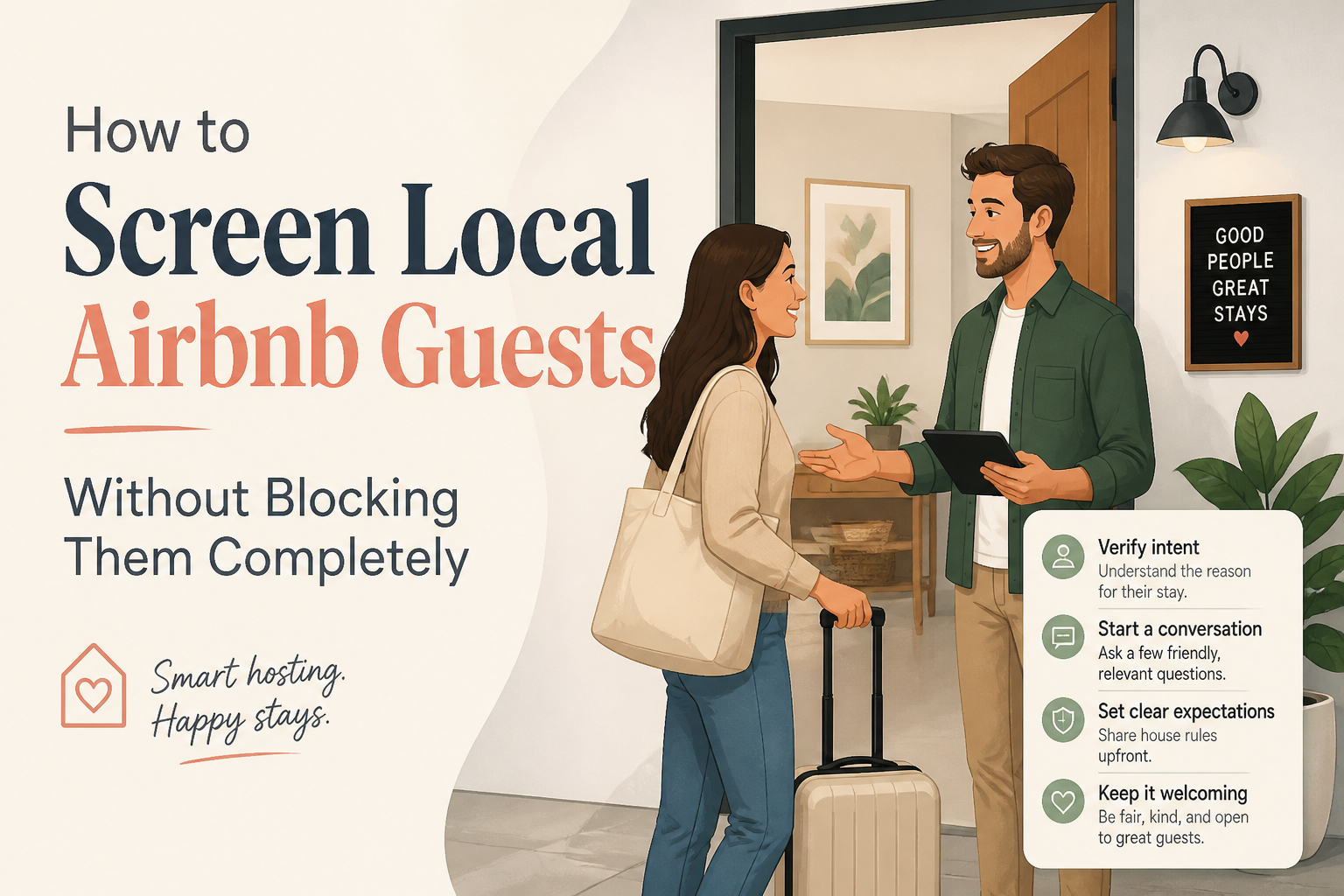 How to Screen Local Airbnb Guests Without Blocking Them Completely
A blanket no-locals policy costs you real revenue. A blanket yes leaves you exposed. Here's how experienced hosts find the middle ground.
5 min read The Real Numbers Behind Pet-Friendly Vacation Rentals
Some hosts say allowing pets fills their calendar. Others say it emptied their wallet. The difference almost always comes down to how prepared they were before the first dog arrived.
6 min read