
How to Write an Event Policy That Actually Protects Your Vacation Rental
A no-party rule is only as good as how clearly it's communicated. Here's how experienced hosts define, enforce, and occasionally profit from their event policies.

Most vacation rental hosts have some version of a no-party rule. What many of them discover, often at an inconvenient moment, is that the rule they have is not specific enough to mean anything when it matters.
No parties is a statement of intent. It is not a policy. A guest who invites six friends over after dinner did not think they were throwing a party. A group that starts the evening quietly and gets louder as the night goes on did not book with the intention of violating anything. And a gathering that the host would have declined if asked about in advance was not described as a party in the booking message because nobody called it that.
The difference between a rule that protects you and a rule that gives you something to point to after the fact is specificity. And specificity requires thinking through your policy before you need it, not while you are reading a booking request at 10pm trying to decide whether to confirm.
Start by Defining What You Actually Mean
Before you can write a policy that works, you need to be clear with yourself about what you are and are not willing to allow. These are different questions for different properties, and the answers should reflect your actual situation rather than a template you copied from another listing.
The questions worth working through are specific. Are you willing to allow guests to have visitors during their stay who are not listed on the booking? If yes, up to how many? At what hours? Do those visitors need to be disclosed in advance? Are you willing to allow a gathering that is larger than the booked guest count if the guest asks permission first? If so, under what conditions and with what lead time?
Once you have answered those questions for yourself, you have a policy. What most hosts have instead is a general preference, which is a very different thing.
Make the Policy Visible Before Anyone Books
A rule that a guest encounters for the first time after they have already paid and confirmed is not a rule they agreed to. It is a surprise. And surprises in the context of hosting tend to produce friction, pushback, and the occasional bad review from a guest who felt blindsided by conditions they did not know about when they decided to book.
Your event policy belongs in your listing description, in your house rules, and in your pre-arrival message. Not buried in a long list of conditions at the bottom of the house rules document, but stated clearly enough that a guest reading your listing would come away with no ambiguity about what is and is not permitted.
The specific language matters. No parties or events is a starting point. No unregistered guests beyond the booked guest count is more precise. No gatherings that include people not listed on the reservation, with quiet hours beginning at ten pm and no amplified music at any time, is something a guest can actually understand and measure their behavior against. The more specific the language, the harder it is for a guest to claim they did not realize what was expected.
Ask the Question Directly When Something Feels Unclear
The single most effective thing a host can do when a booking request raises any uncertainty about how the property will be used is to ask directly before confirming.
This does not need to be confrontational or suspicious in tone. A simple message that says you would like to understand a bit more about the stay before confirming, asks what the occasion is, and asks who will be on the property, is a completely reasonable pre-booking question. Guests with straightforward plans answer it easily. Guests who were planning something they did not mention tend to respond in ways that tell you everything you need to know before you have made any commitment.
The timing of this question matters. Asking before you confirm gives you the ability to decline without any platform friction. Asking after a booking is confirmed puts you in a position where declining requires a cancellation that may affect your standing on the platform. Ask early, ask directly, and act on what you hear.
Use Tools That Give You Early Warning
Even the clearest policy and the most thorough pre-booking screening will occasionally be tested by a guest who agreed to your terms and then pushed against them once they arrived. The question is whether you find out during the stay, when you can still do something about it, or the morning after, when you cannot.
Noise monitoring devices have become one of the most widely used tools among hosts who manage properties with any meaningful party risk. They do not record audio and they do not violate guest privacy. They measure decibel levels and send an alert when those levels exceed a threshold you set. That alert gives you the ability to contact the guest and address the situation before it becomes a neighbor complaint or a property damage situation.
Several hosts describe these devices as the single change that gave them the most confidence in accepting bookings they might otherwise have declined. The policy still matters. The pre-booking screening still matters. But having real-time information rather than relying on post-stay discovery changes what you are actually able to do when something starts to go wrong.
When Events Can Work in Your Favor
Not every host wants to allow events, and there is no obligation to. But it is worth noting that some hosts have turned event accommodation into a deliberate and profitable part of their business model.
Small weddings, elopements, photography sessions, corporate retreats, and family reunion weekends are all event types that attract guests who are willing to pay a premium for a property that can accommodate them, treat the space with particular care because the occasion matters to them, and tend to leave strong reviews because the stay was meaningful rather than routine.
The hosts who do this successfully have not simply opened their door to events. They have defined exactly what kinds of events they will consider, built the terms and fees around those specific situations, and made their willingness to host certain types of gatherings part of how they market the property. The event policy is not an afterthought. It is part of the listing's identity.
Whether you want that kind of business is a separate question from whether it is possible. But knowing it exists as an option, and that it operates on entirely different terms from the open-invite party that costs hosts their neighbor relationships and their deposits, is worth keeping in mind when you decide where your own line sits.
Airbnb optimization specialist, Superhost, and founder of one of the largest Airbnb host communities.
Continue Reading
Chosen for you from The Optimization Journal.
 Parties and Vacation Rentals: Where Hosts Draw the Line
Every host eventually gets a booking that makes them pause. How you respond to that moment — before it becomes a problem — is what separates a clear policy from a costly lesson.
5 min read How to Screen Local Airbnb Guests Without Blocking Them Completely
A blanket no-locals policy costs you real revenue. A blanket yes leaves you exposed. Here's how experienced hosts find the middle ground.
5 min read How to Make a Pet-Friendly Airbnb Actually Work
Allowing pets is a business decision, not just a gesture of goodwill. The hosts who get it right have built specific systems around it. Here's what those systems look like.
5 min read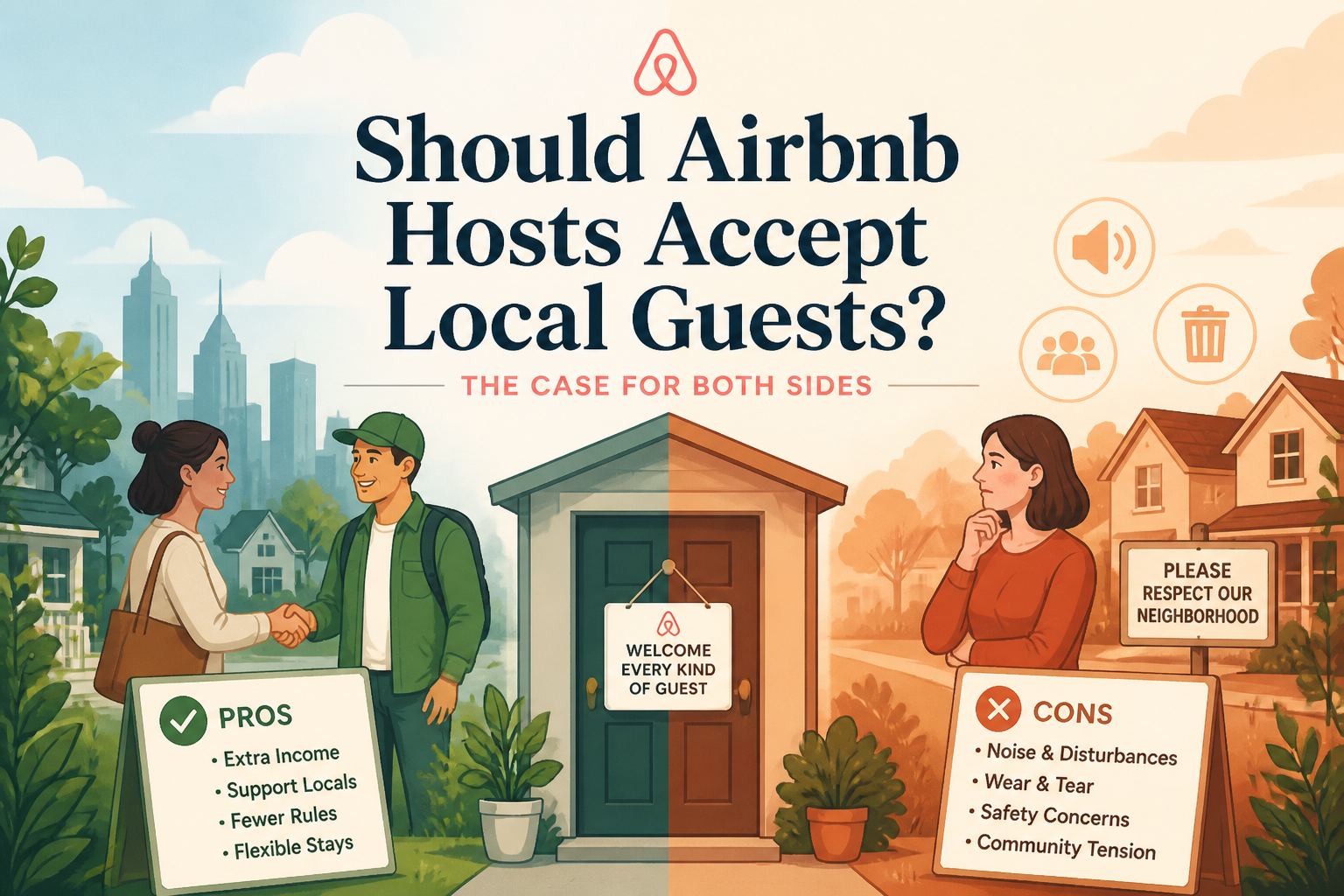 Should Airbnb Hosts Accept Local Guests? The Case for Both Sides
Few hosting decisions divide opinion more sharply than whether to accept guests who live nearby. Here is what hosts on both sides have learned from experience.
5 min read How Check-In Flexibility Becomes One of Your Best Hospitality Tools
The gesture that costs you nothing can be worth more than any amenity you add to your listing. Here's how to make check-in flexibility work in your favor.
5 min read