
The Flat Rate Versus Per-Person Pricing Debate in Short-Term Rentals
When one person pays the same nightly rate as eight, is that fair? When a solo guest cannot afford a space that costs as much as it does for a full group, is that fair? The pricing question is more interesting than it first appears.

A host with a property that sleeps nine charges the same nightly rate for one guest as for nine. She has run the numbers and decided this works for her. Her market skews toward large groups, the occasional small party pays the same as the full house, and the simplicity of one price removes all the friction around guest counts and enforcement.
A host in Paris charges differently. Her apartment bases its rate on one or two guests, with an additional charge per night for the third and fourth. The reasoning is direct: more guests mean higher utility costs, additional laundry for extra linens and towels, and longer cleaning time. She is not penalizing guests for traveling in a group. She is recovering costs that their stay genuinely creates.
Both of these approaches are defensible. Understanding why requires thinking about what pricing is actually for.
What flat rate pricing is really doing
Flat rate pricing treats the property as the product rather than the occupancy. The space is available. One rate covers it. How many people use it within the maximum is a guest decision, not a pricing variable.
The strongest case for flat rate pricing is operational simplicity. When the price does not change based on headcount, guests have no financial incentive to under-report. There is no verification problem. No one is declaring two guests and arriving with six because the per-person rate makes it worth misrepresenting.
One host described her two-bedroom property as requiring essentially the same cleaning effort whether a single couple or four people stay. Both bedrooms get used regardless, because even guests who only sleep in one use the other as storage or a rest space. The cleaning, the linen change, the preparation: all of it happens at the same cost. A flat rate simply acknowledges that reality.
There is also a competitive consideration. Guests browsing listings see the nightly rate first. A flat rate that encompasses the full capacity tends to make a listing look more accessible than a per-person rate that scales upward. In markets where guests make fast decisions based on the displayed rate, that can translate directly into more bookings.
What per-person pricing is really doing
Per-person pricing treats the stay as having variable costs based on how many people are actually using the space. Utilities, water, laundry, additional linens: all of these scale in some proportion with occupancy. A family of eight produces more laundry than a couple. A full house uses more electricity than a solo traveler. The per-person fee is an attempt to recover those variable costs from the guests who create them.
There is also a fairness dimension that some hosts describe as compelling. A solo traveler booking a property that accommodates nine is subsidizing the rate for large groups if the price is flat. Per-person pricing redistributes that correctly, charging small groups for what they use and larger groups for what they use.
The per-person approach also has a secondary effect on the guest profile it attracts. When price scales with group size, smaller parties get a meaningfully lower total cost. This can open a property to solo travelers or couples who would otherwise find a large-capacity listing overpriced, which diversifies the booking base and can improve occupancy during periods when large-group demand is weaker.
The verification problem that per-person pricing creates
The cost of per-person pricing is the verification problem. When the price changes based on headcount, guests have a financial incentive to declare fewer people than will actually arrive. Some do this deliberately. Others do it accidentally, not realizing that the person who joins them from a day trip technically changes their guest count.
Managing this requires a process: a pre-check-in message that confirms the guest count, a clear statement that the rate applied at booking assumed a specific number of guests, and a willingness to address discrepancies before or after the stay. One host who charges per person described the volume of work involved in confirming guest counts as meaningful overhead. He continued doing it because the economics supported it, but he was honest about what it cost in time.
One host who loves the per-person pricing approach noted a specific practical problem she encountered: guests would sometimes choose the lower-person option to get a cheaper quoted rate, then notify her after booking that more people were coming. Each adjustment required a manual modification and additional communication. She added a confirmation step to her post-booking workflow specifically to catch this early rather than discovering it at check-in.
The hybrid that most experienced hosts land on
The most common approach among hosts who have thought through the pricing question carefully is a hybrid: a flat base rate for a defined smaller group, and additional per-person fees for guests beyond that threshold.
This structure captures the best of both approaches. Small groups, couples and families traveling within the base capacity, get a straightforward price without feeling penalized for their size. Larger groups pay the additional cost their stay actually creates. The base rate is competitive and easy to present. The overage fee is transparent and justified.
The key is where you set the threshold. Setting it at a natural occupancy point for your property, the number of guests at which your costs are covered without additional expenses, produces a rate structure that makes operational sense and that guests tend to find reasonable when it is explained clearly.
Platform mechanics that matter
Platform search results can be affected by how you structure your pricing. A listing priced for full capacity with a flat rate may appear expensive to a smaller party searching for fewer guests. A listing priced for a base group with per-person overages may appear more affordable to that same search, which can improve visibility and conversion for smaller groups.
Whether this matters in your market depends on the proportion of your bookings that come from smaller versus larger parties. In markets where families and large groups are the dominant booking type, the search visibility benefit of per-person pricing may be less relevant. In markets with more varied group sizes, it can meaningfully improve how your listing performs.
Airbnb optimization specialist, Superhost, and founder of one of the largest Airbnb host communities.
Continue Reading
Chosen for you from The Optimization Journal.
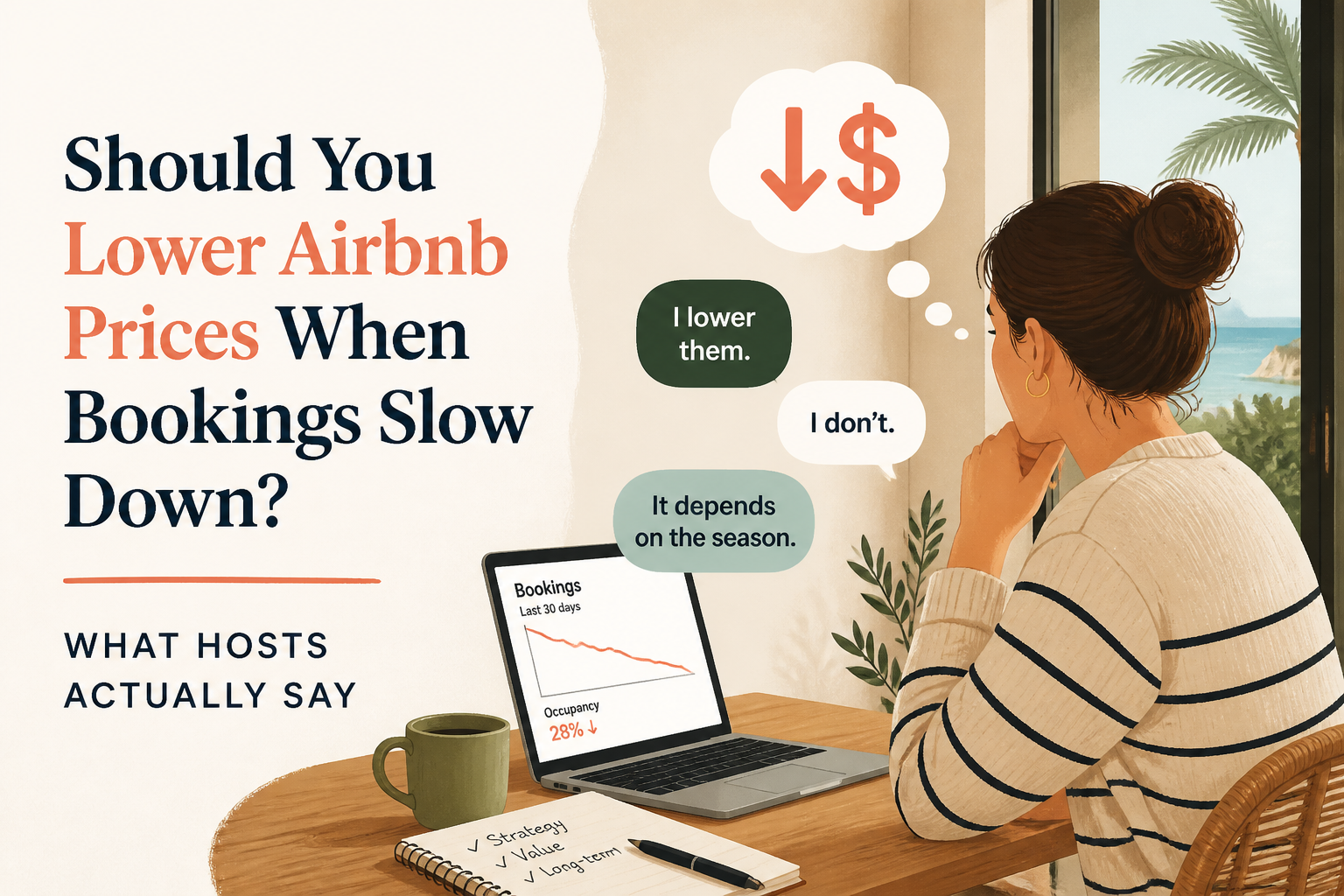 CornerstoneShould You Lower Airbnb Prices When Bookings Slow Down? What Hosts Actually Say
When Airbnb bookings slow down, should you lower your nightly rate or hold firm? Discover what experienced hosts reported, why some regret discounting, and how to make smarter pricing decisions.
15 min read How to Choose and Implement a Guest-Count Pricing Strategy for Your Rental
The right pricing structure for your vacation rental depends on your property size, your market, and how much verification overhead you are willing to manage. Here is how to find the right fit.
4 min read Why the Cleaning Fee Is About More Than Covering Your Cleaner
The cleaning fee question touches platform mechanics, guest psychology, dispute protection, and how guests compare your listing to the hotel down the road. The decision is worth thinking about carefully.
4 min read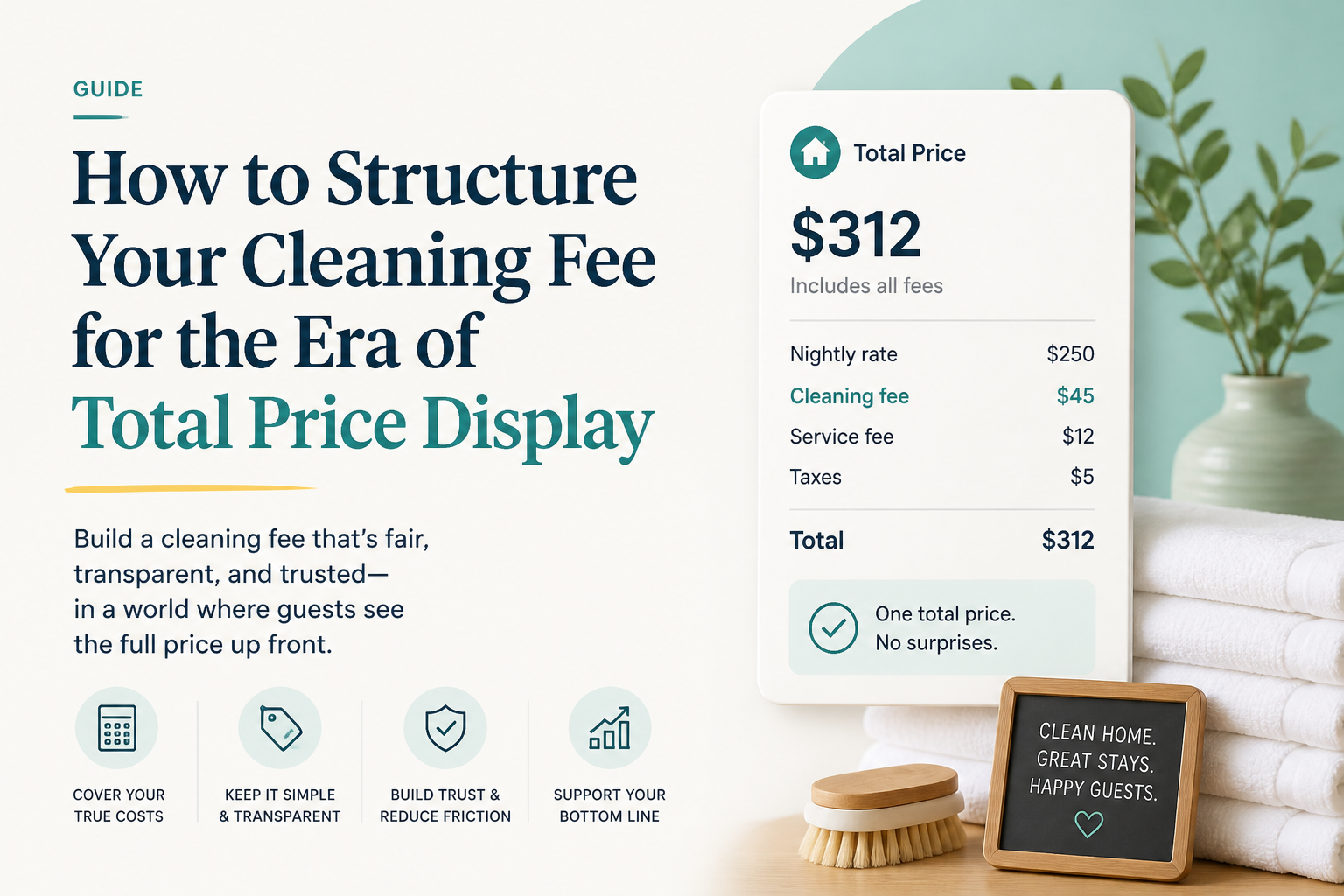 How to Structure Your Cleaning Fee for the Era of Total Price Display
Guests now see your total cost including cleaning fees from the first search result. Here is how to set your cleaning fee structure in a way that works with that reality rather than against it.
4 min read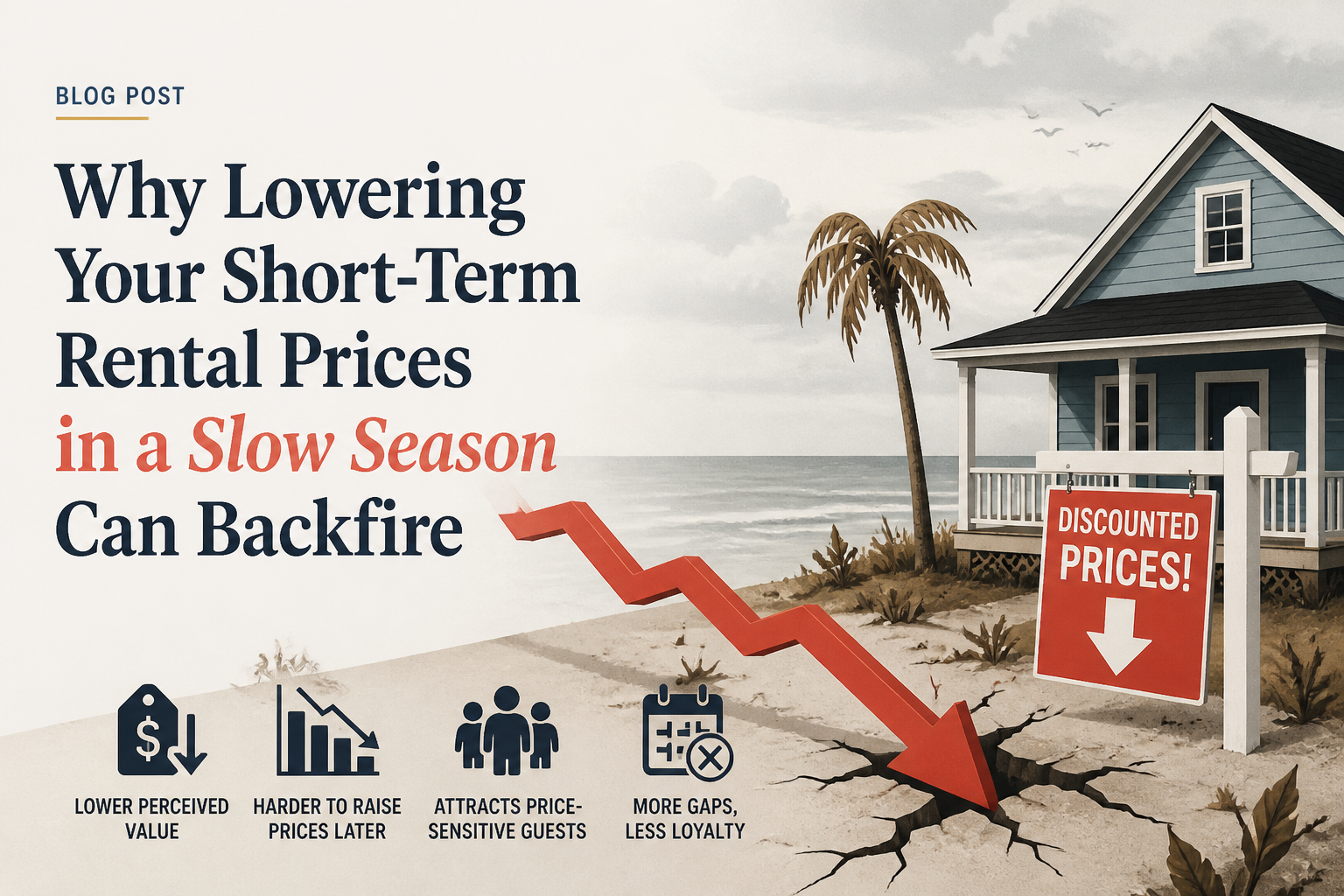 Why Lowering Your Short-Term Rental Prices in a Slow Season Can Backfire
She dropped her rates when the calendar slowed. The bookings came. And the quality of the guests who arrived dropped noticeably. She raised the prices back. She has not dropped them again.
4 min read