
How to Structure Your Cleaning Fee for the Era of Total Price Display
Guests now see your total cost including cleaning fees from the first search result. Here is how to set your cleaning fee structure in a way that works with that reality rather than against it.
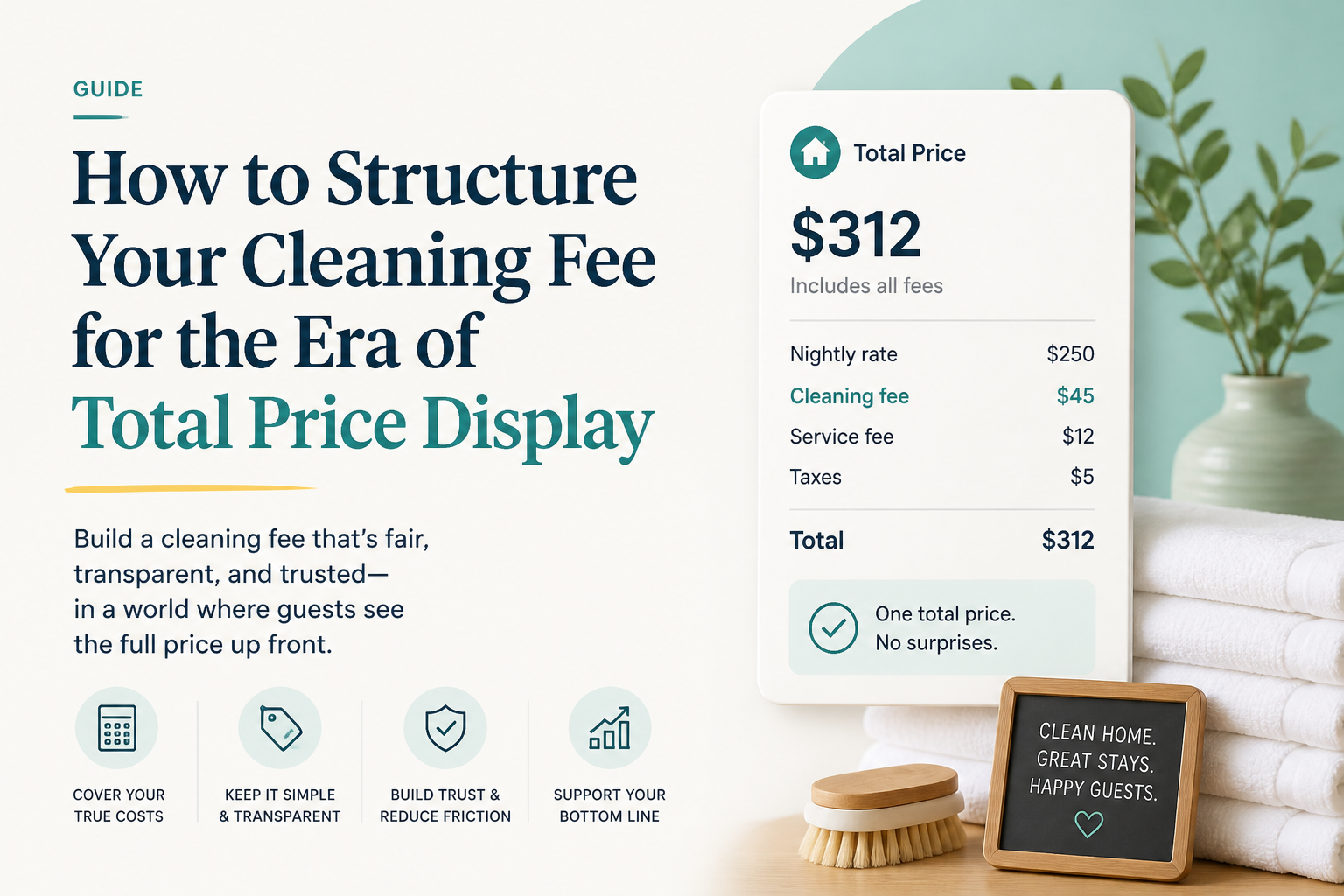
The way guests see your listing has changed. Your total cost is visible from the first search result, cleaning fee included. The implications for how you structure that fee are significant, and the strategies that worked before the change may not be the right ones now. Here is how to think through the decision given the current platform reality.
Calculate what a turnover actually costs you first
Before you decide anything about your cleaning fee structure, do the actual cost calculation. Add up your cleaning cost or the time you spend cleaning yourself, laundry, supplies, and any coordination overhead. That is your fixed turnover cost per booking regardless of stay length.
This number is what your cleaning fee needs to cover for your economics to make sense. If a turnover costs you one hundred and fifty dollars in total, a cleaning fee of seventy-five dollars means you are subsidizing cleaning costs out of your nightly rate. Whether that is intentional or accidental changes the decision significantly.
Do this calculation for your shortest possible stay. A one-night booking with a one-hundred-and-fifty-dollar turnover cost and a seventy-five-dollar cleaning fee requires your nightly rate to cover seventy-five dollars of cleaning cost, on top of your property costs and profit margin. Whether the nightly rate you are charging does that is a question worth answering before you finalize your structure.
Compare your total cost to your competition
With total prices visible from search, the competitive comparison guests make is based on total cost, not nightly rate. Log into a guest account or use an incognito browser and search for your market with your typical guest count and stay length. What is the total cost for a comparable listing nearby?
The number you see is what guests are comparing you against. If your total cost, including cleaning fee, is significantly higher than comparable listings, that disadvantage is now fully visible from the first result rather than discovered at checkout. If your total is competitive or lower, that advantage is fully visible too.
This exercise tells you whether your current structure positions you well in the current platform environment. It may also reveal that a different fee structure, same total cost but different allocation between nightly rate and cleaning fee, produces a better display position in search for the guest types you most want to attract.
Three approaches and when each one makes sense
A separate cleaning fee makes the most sense when your cleaning cost varies by stay length, when the platform protection benefit matters to your risk profile, when your nightly rate fluctuates significantly by season and embedding a fixed cleaning cost would distort either peak or off-season pricing, or when clean, transparent pricing is part of how you present your listing to guests.
Building cleaning into the nightly rate makes the most sense when your cleaning cost is modest relative to your nightly rate, when you do your own cleaning and view it as an operational cost rather than a pass-through, when your market includes significant hotel competition that sets a one-price expectation, or when you maintain a two or more night minimum that spreads the fixed cleaning cost across enough revenue to absorb it.
A hybrid, where the cleaning fee exists but is priced modestly rather than at full cost recovery, makes sense when you want the platform protection benefit of a named fee but your market is sensitive to large add-on charges, or when you manage a mix of short and long stays with very different cost profiles.
Short stays are the place to focus your attention
The one-night booking is where cleaning fee structure matters most. On a seven-night stay, a hundred-dollar cleaning fee adds roughly fifteen dollars per night to the effective cost, which is unlikely to change the guest's decision. On a one-night stay, the same fee doubles or triples the effective nightly cost.
If you accept one-night bookings, your cleaning fee structure needs to either make those stays profitable at the stated rate or you need to price one-night stays at a premium that offsets the cleaning cost. A cleaning fee that works for three-night stays may not work for one-night stays at the same nightly rate.
Some hosts solve this by pricing one-night stays at a higher nightly rate and accepting the same cleaning fee. Others solve it by requiring a two-night minimum, which removes the calculation problem entirely. The point is that one-night economics need to be evaluated separately from multi-night economics when you are setting your fee structure.
Review the fee annually, not whenever you think of it
Cleaning costs change. Labor costs rise. Supply costs fluctuate. A cleaning fee set two years ago may no longer reflect your actual costs, which means you may be subsidizing cleaning without realizing it.
One practical advantage of a separate cleaning fee over built-in pricing is that it is easier to adjust. Raising a cleaning fee from one hundred to one hundred and twenty dollars is a single setting change that does not require recalibrating your nightly rate strategy. Embedding the same increase into your nightly rate requires a more complex review of how the rate change affects your search visibility and comparative positioning.
Set a calendar reminder to review your cleaning fee once a year against your actual cleaning costs. Make the adjustment if the costs have changed. A small annual adjustment tends to be less disruptive than a large correction after several years of drift.
Airbnb optimization specialist, Superhost, and founder of one of the largest Airbnb host communities.
Continue Reading
Chosen for you from The Optimization Journal.
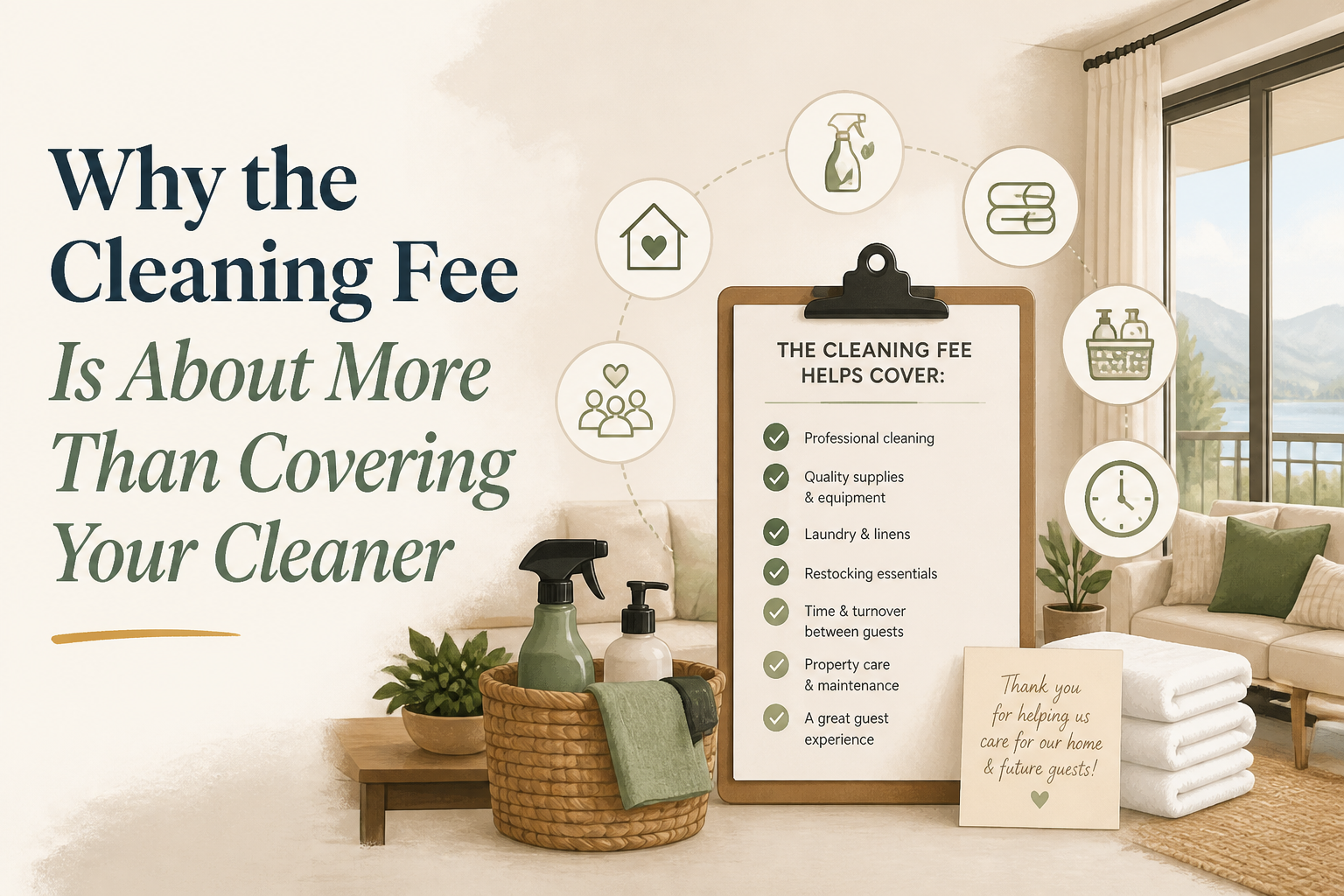 Why the Cleaning Fee Is About More Than Covering Your Cleaner
The cleaning fee question touches platform mechanics, guest psychology, dispute protection, and how guests compare your listing to the hotel down the road. The decision is worth thinking about carefully.
4 min read How to Choose and Implement a Guest-Count Pricing Strategy for Your Rental
The right pricing structure for your vacation rental depends on your property size, your market, and how much verification overhead you are willing to manage. Here is how to find the right fit.
4 min read The Flat Rate Versus Per-Person Pricing Debate in Short-Term Rentals
When one person pays the same nightly rate as eight, is that fair? When a solo guest cannot afford a space that costs as much as it does for a full group, is that fair? The pricing question is more interesting than it first appears.
5 min read How to Set a Long-Stay Discount Policy That Serves Your Specific Property
A long-stay discount that makes sense for one host can cost another host money they did not know they were giving away. Here is how to figure out which situation you are in.
4 min read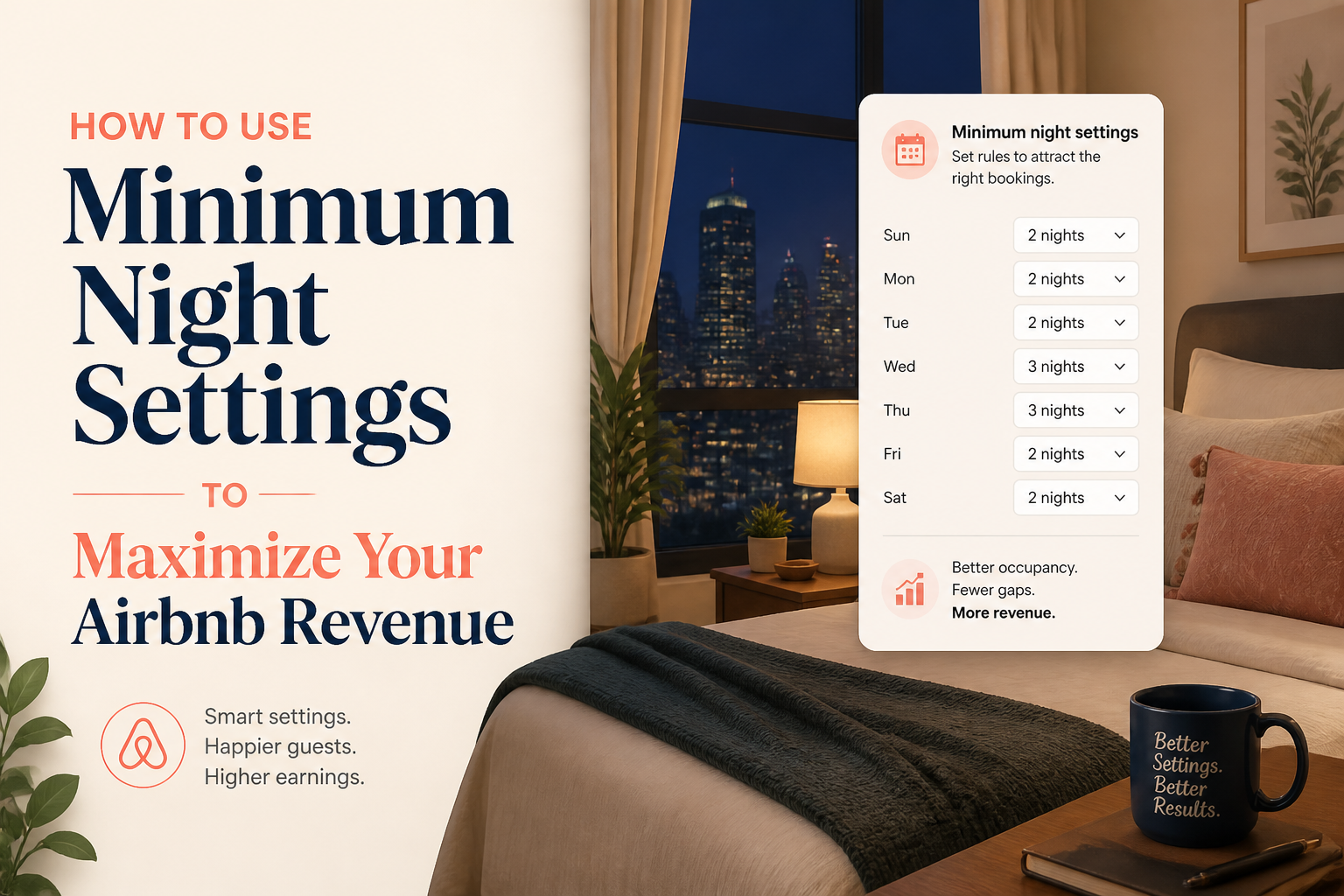 How to Use Minimum Night Settings to Maximize Your Airbnb Revenue
Your minimum stay setting is one of the most powerful levers in your listing — and most hosts set it once and never revisit it. Here's how to use it more strategically.
5 min read