
Airbnb’s “Ask About This Home” Is Why Guest Intent Optimization Matters
Airbnb is starting to let guests ask questions directly from a listing. That makes complete listings, clear descriptions, accurate amenities, and guest intent optimization more important than ever.
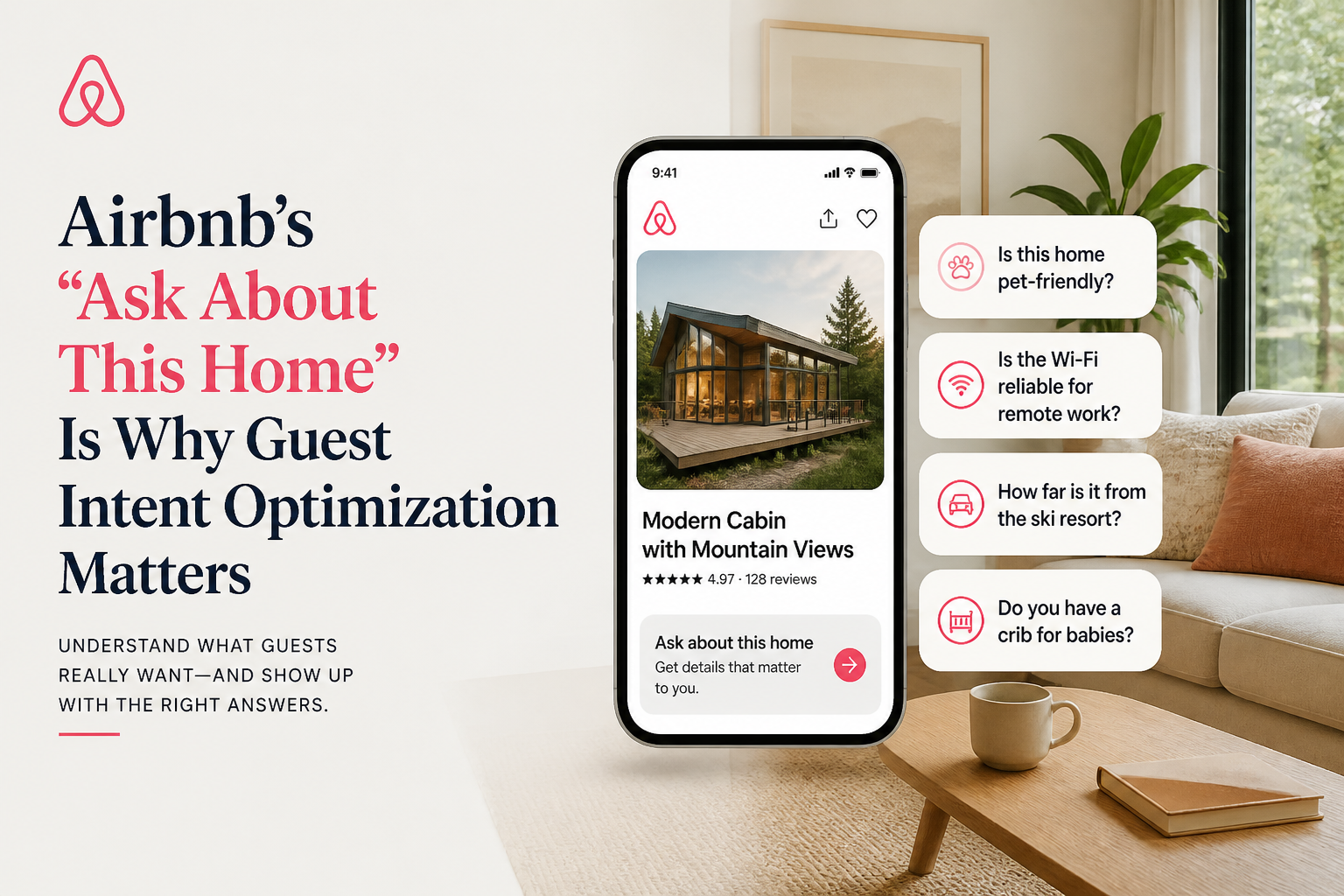
I saw something on an Airbnb listing that every host should pay attention to.
Near the bottom of the listing was a new box:
“Ask about this home.”
A guest can type a normal question directly into the listing.
For example:
“Is there a pool?”
It looks like a small feature.
I don’t think it is.
I think this is another sign of where Airbnb search is going.
Guests Will Ask Instead of Search
For years, guests have searched Airbnb in a fairly predictable way.
Choose a destination.
Enter dates.
Select filters.
Open listings.
Read through them looking for answers.
But AI changes that behavior.
Instead of digging through a listing, a guest can increasingly just ask:
- Is the pool private?
- Can I work remotely from here?
- Would this work for two families?
- Is the backyard fenced?
- Are there stairs?
- Can we walk to the beach?
- Will eight adults actually be comfortable?
Those are not really keyword searches.
They are questions about intent.
This Is What I Mean by Guest Intent Optimization
I’ve been optimizing listings around this principle for a long time.
Do not only tell Airbnb what the property has.
Explain who the property is right for and what kind of stay it supports.
There is a big difference between:
“3-bedroom home with pool.”
and:
“Private 3-bedroom home with a fenced pool area and plenty of space for families to relax together.”
Same property.
Much more context.
The second version helps communicate:
- Privacy
- Family suitability
- Outdoor experience
- Group use
That becomes increasingly important if Airbnb is trying to understand what the guest actually wants.
Your Listing Is Becoming Data for Airbnb
This is why I’ve always pushed hosts to fill in everything.
Your amenities matter.
Your description matters.
Your rooms matter.
Your photo captions matter.
Your Guest Access section matters.
Your neighborhood information matters.
Your reviews matter.
Hosts sometimes tell me:
“Guests don’t read all of that.”
Maybe they don’t.
But Airbnb can.
And if Airbnb is going to answer questions about your property, it needs enough information to answer them accurately.
Think About a Remote-Work Guest
Imagine two listings both have a workspace.
Listing A checks the workspace amenity.
That’s it.
Listing B checks the amenity and explains that there is a dedicated desk, comfortable chair, strong Wi-Fi, and a quiet room where someone can work during the day.
Now imagine a guest asks:
“Would this be a good place to work remotely for a week?”
Which listing gives Airbnb more information to work with?
This is why listing optimization is changing.
Generic Adjectives Become Even Less Useful
Beautiful.
Stunning.
Amazing.
Luxury.
Those words do very little when Airbnb is trying to answer a specific guest question.
Can six adults sleep comfortably?
Is the hot tub private?
Is there somewhere quiet to work?
Is parking easy?
Does the home work well for small children?
Airbnb needs real information.
The more clearly your listing answers those questions, the easier it becomes for Airbnb to understand when your property is the right match.
This Is Just the Beginning
I do not think “Ask about this home” is the end of this change.
I think it is the beginning.
Guests will increasingly expect to describe what they want in normal language and have the platform help them find or evaluate the right property.
That means hosts should start moving away from one question:
“What keywords should I put in my listing?”
And start asking a better one:
“What questions would my ideal guest ask, and have I given Airbnb enough information to answer them?”
That is guest intent optimization.
See How Well Your Listing Communicates Guest Intent
I built a free Guest Intent Optimization Analysis specifically for this.
It looks at how clearly your listing communicates:
- Who the property is right for
- What kind of experience it offers
- What guest needs it satisfies
- Whether Airbnb has enough context to understand your property properly
It can help you spot the gaps before this kind of search becomes even more important.
The future of Airbnb search may not be about guests finding your keywords.
It may be about Airbnb understanding your property well enough to know when you are the answer.
Airbnb optimization specialist, Superhost, and founder of one of the largest Airbnb host communities.
Continue Reading
Chosen for you from The Optimization Journal.
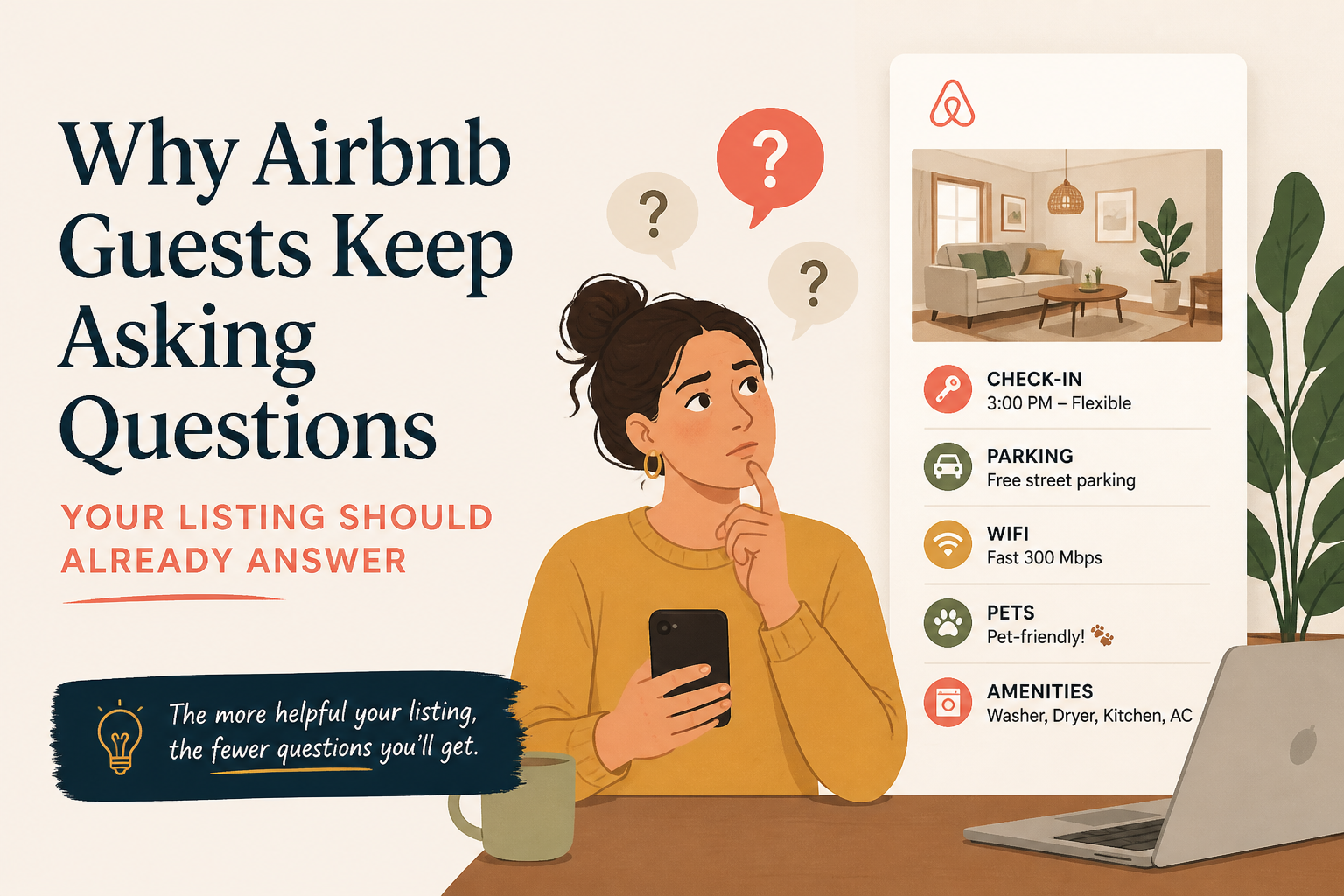 Why Airbnb Guests Keep Asking Questions Your Listing Should Already Answer
Repeated guest questions are often a sign that your Airbnb listing is not making important information easy enough to find. Instead of answering the same message over and over, use those questions to improve the listing itself.
5 min read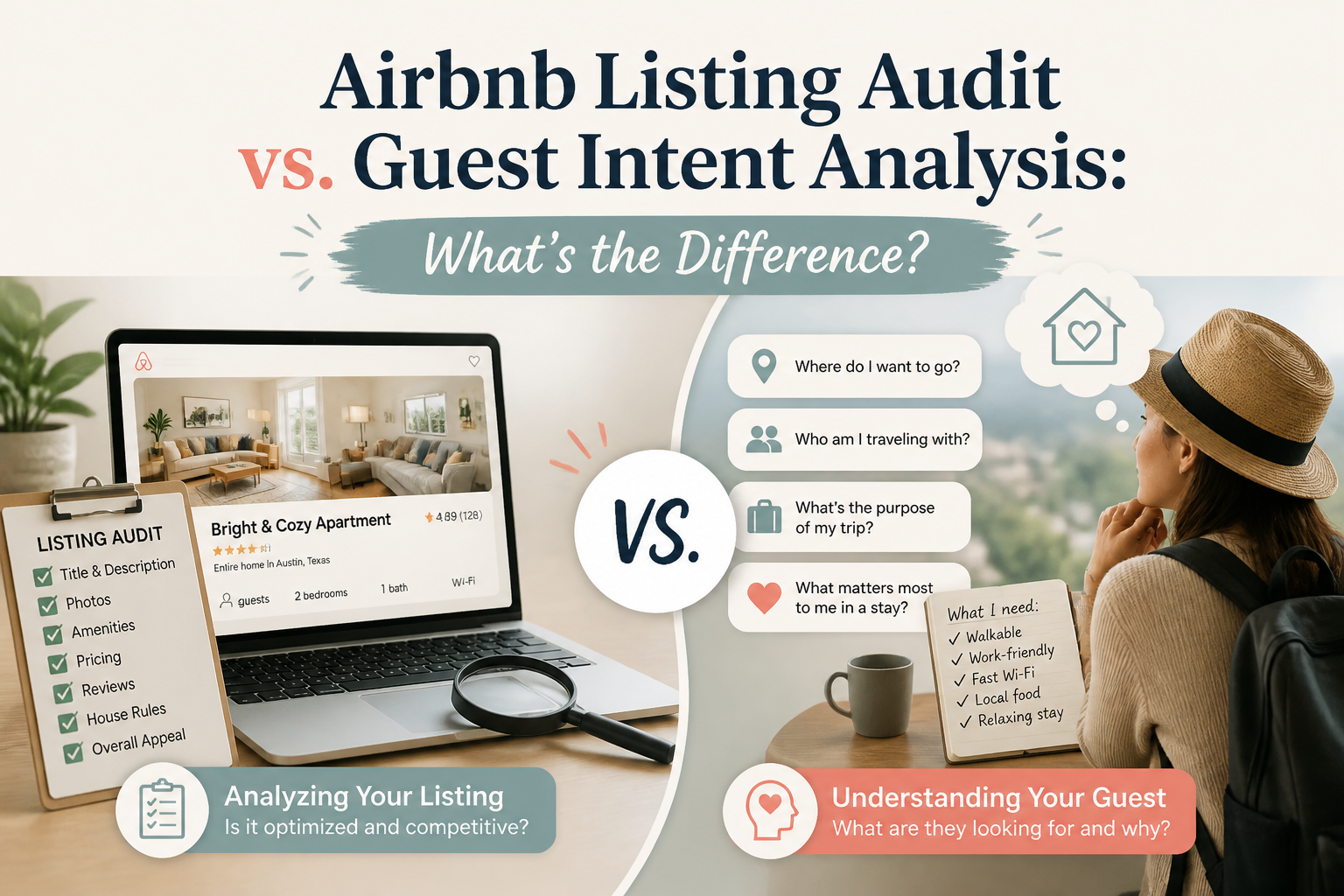 Airbnb Listing Audit vs. Guest Intent Analysis: What's the Difference?
An Airbnb listing can be complete and still struggle to convert. That is because structural problems and guest hesitation are not the same thing. Here is the difference between auditing a listing and analyzing how potential guests may react to it.
5 min read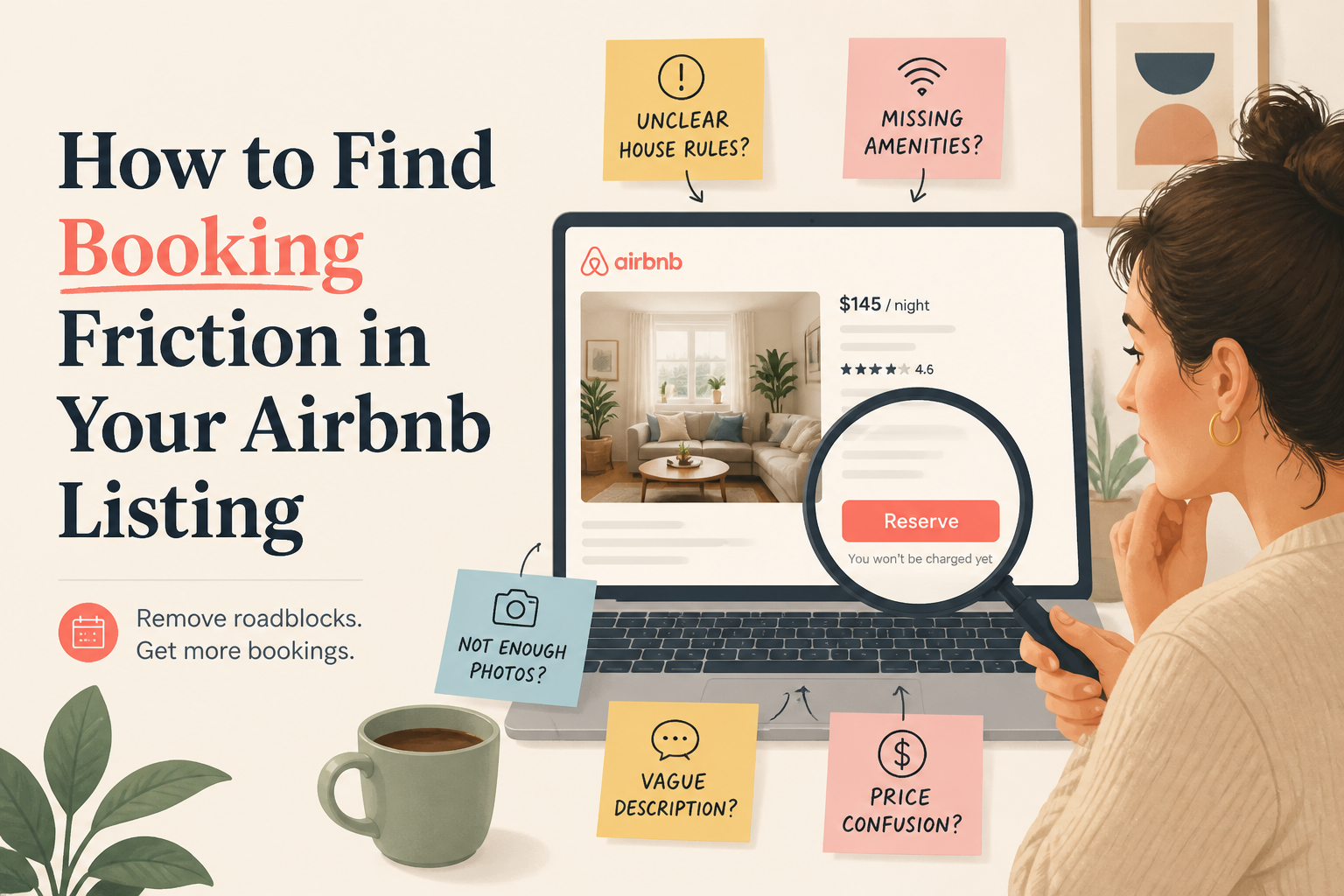 How to Find Booking Friction in Your Airbnb Listing
Sometimes an Airbnb listing looks complete, the price seems reasonable, and guests are still not booking. The problem may be small points of friction that create doubt as guests move through the listing. Here is how I look for them.
5 min read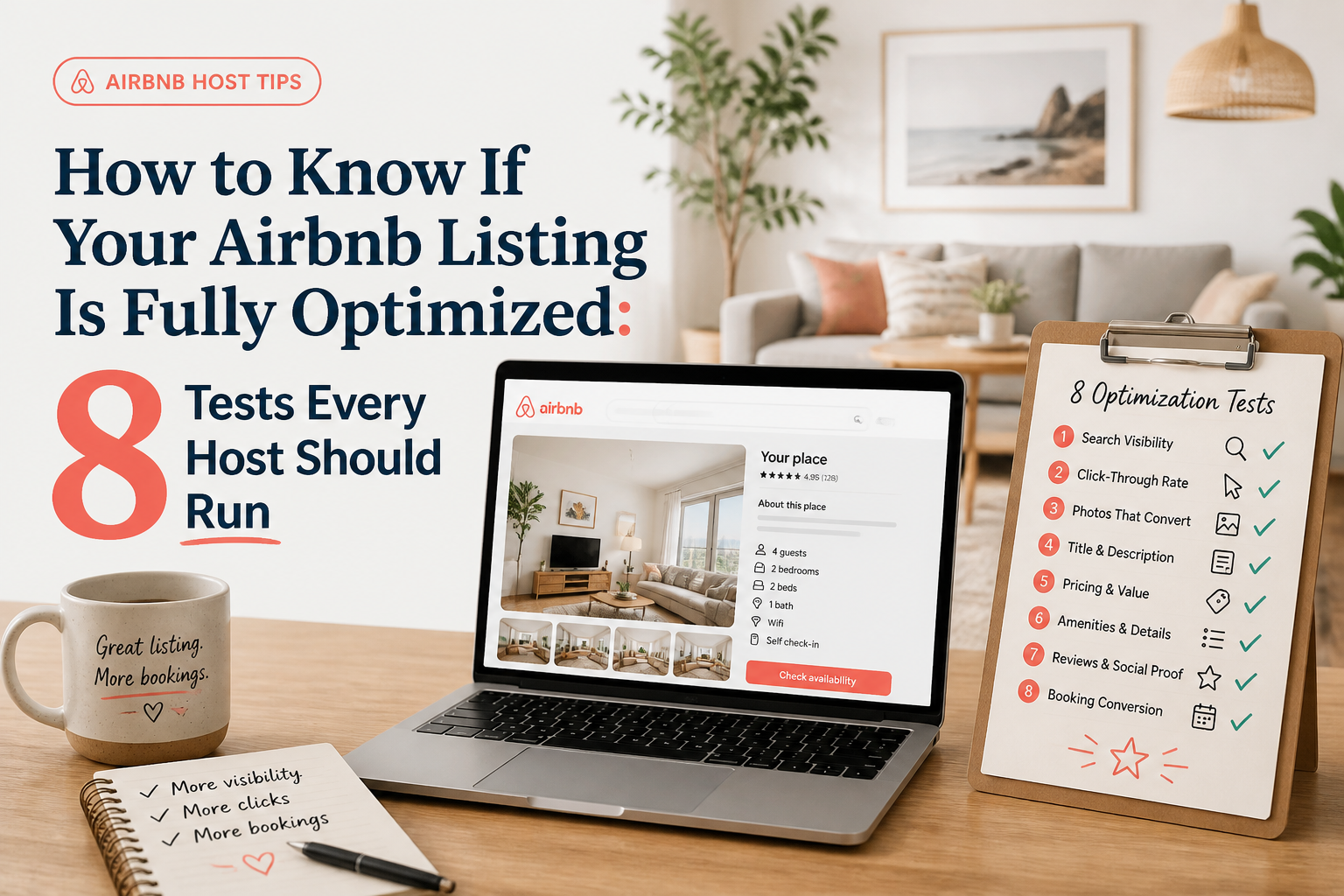 CornerstoneHow to Know If Your Airbnb Listing Is Fully Optimized: 8 Tests Every Host Should Run
Is your Airbnb listing actually optimized, or does it just look complete? Use these eight practical tests to evaluate your photos, title, descriptions, amenities, guest expectations, and booking performance before making unnecessary changes.
21 min read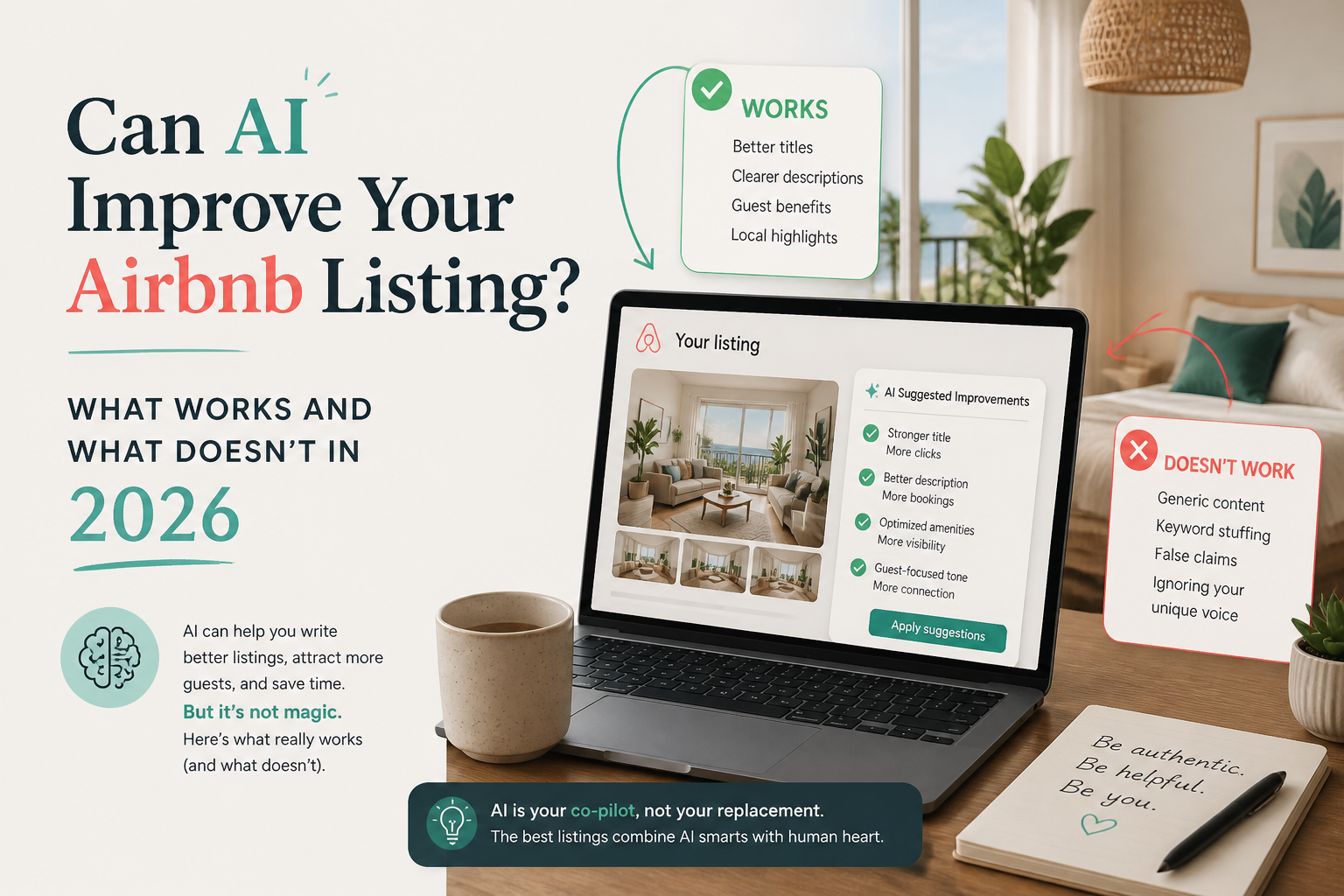 CornerstoneCan AI Improve Your Airbnb Listing? What Works and What Doesn't in 2026
Can ChatGPT or an AI Airbnb listing optimizer really improve your property description, title, and booking potential? Learn which tasks AI handles well, where it makes mistakes, and how to use it safely with real listing data and a structured optimization framework.
24 min read