
How to Find Booking Friction in Your Airbnb Listing
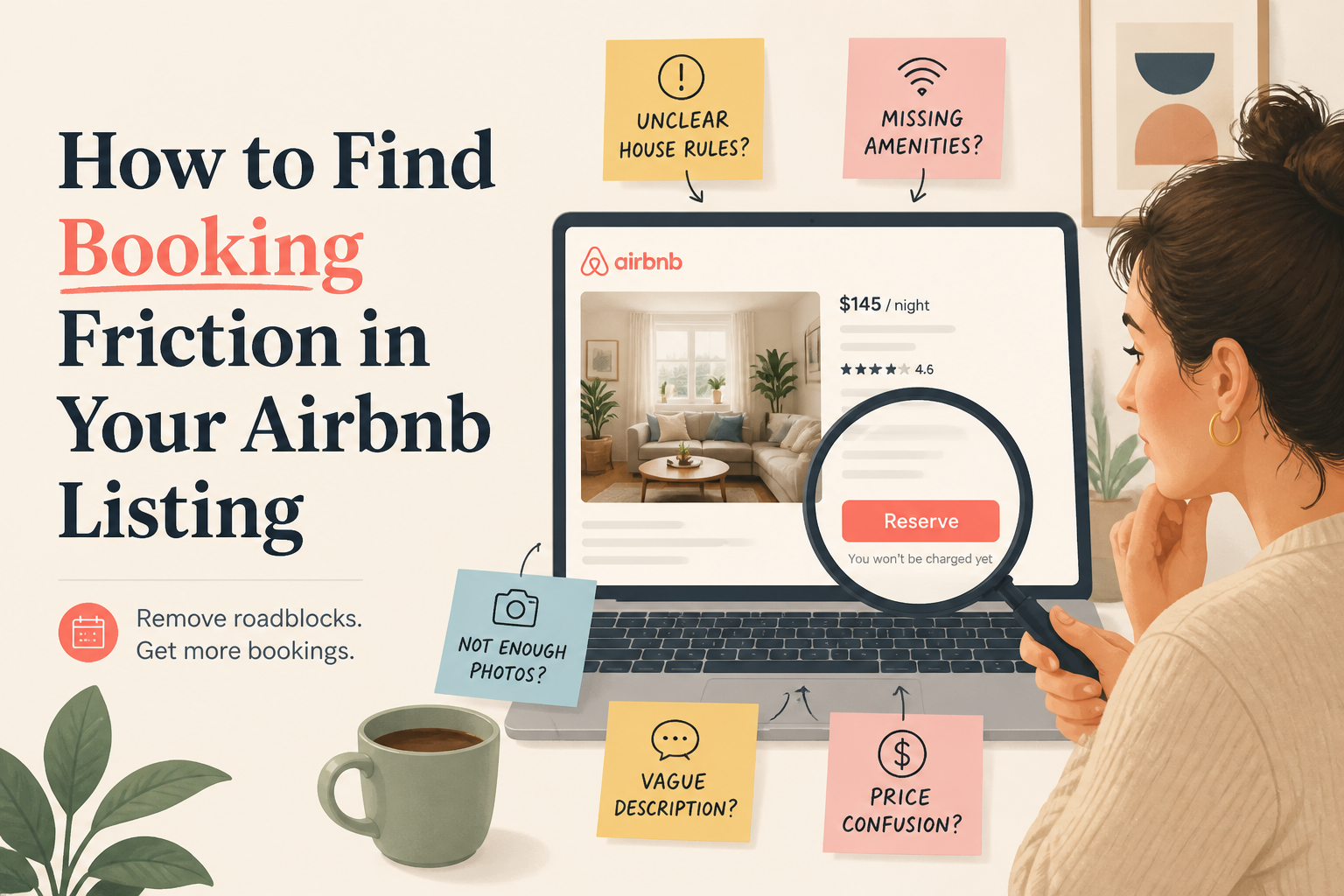
Sometimes an Airbnb listing looks complete, the price seems reasonable, and guests are still not booking. The problem may be small points of friction that create doubt as guests move through the listing. Here is how I look for them.
Imagine a guest searching Airbnb for a weekend away.
They see your property, like the cover photo, and click.
The first few photos look good. The price is within their budget. The rating is strong. Nothing is obviously wrong.
Then they keep scrolling.
They notice that the backyard shown in the cover photo might be shared, but they are not sure. The bedroom photos look nice, but they cannot figure out which room has the king bed. A review mentions road noise. Another guest talks about difficult parking. The description says parking is “convenient,” but does not explain what that means.
The guest never sends you a message.
They just go back to the search results.
That is what I mean by booking friction. It is not always one major problem. Often it is a series of small uncertainties that make another listing feel easier to book.
The Listing Can Be Complete and Still Create Doubt
This is an important distinction because hosts often look at their listing and think everything is there.
The bedrooms are listed. The amenities are selected. The description is filled out. There are plenty of photos. Guest Access is complete.
Structurally, the listing may be in good shape.
But completeness does not automatically mean clarity.
A guest is not checking whether you filled every field. They are trying to answer a much simpler question: Do I feel comfortable booking this property?
If they have to work too hard to understand something important, friction starts building.
Look for Places Where the Guest Has to Guess
If I were reviewing a listing for booking friction, this is where I would start.
What does the guest have to assume?
If the listing says “great parking,” where exactly do they park?
If the description says “spacious outdoor area,” is it private?
If the property sleeps eight, where do all eight people actually sleep?
If the listing is described as walkable, what can the guest realistically walk to?
If the pool is one of the main selling points, is it private, shared, seasonal, heated, or available all year?
The host usually knows all of these answers, which is exactly why they are easy to overlook.
Every unanswered question does not cost you a booking. But the more uncertainty you create, the easier it becomes for the guest to choose a listing that feels clearer.
Check Whether the Photos and Words Tell the Same Story
I pay a lot of attention to consistency between the photos and the copy.
If the title leads with an ocean view, I expect that view to be obvious in the gallery.
If the description positions the home as ideal for families, I should probably see the spaces and amenities that make it work well for families.
If the cover photo is a beautiful pool, but it takes twenty photos before I understand whether that pool belongs exclusively to the property, that creates unnecessary doubt.
None of this means the host is intentionally misleading anyone.
It usually means different parts of the listing were created at different times and nobody stepped back to see whether they still work together.
Now Read the Reviews Against the Listing
This is where things get more interesting.
I would not read the reviews only to see whether guests were happy. I would compare what guests repeatedly say with what the listing itself promises.
Suppose several guests say:
“The location was fantastic. We walked everywhere.”
But walkability is barely mentioned in the listing.
That may be a strength you are underselling.
Now imagine several guests mention that parking is tight.
Your description says there is free parking but gives no additional context.
That may be an expectation problem.
The solution is not necessarily to hide the parking issue or make it sound better. It may be to explain it more accurately so the guest knows what to expect before booking.
I think reviews are particularly valuable because they show how the property is being experienced after the marketing ends.
Pay Attention to Repeated Questions
Your inbox can reveal friction too.
If one guest asks whether the pool is private, that may mean nothing.
If five guests ask, I would change the listing.
If people repeatedly ask how far you are from downtown, whether there is a washer, where they park, or whether a bedroom is upstairs, the information may technically exist somewhere in the listing but still be too difficult to find.
A common mistake is responding to every question individually without asking why the question keeps arriving.
I would rather answer it once inside the listing.
Do Not Confuse Friction With a Negative
This matters because removing booking friction does not mean making the property sound perfect.
Sometimes the best way to reduce hesitation is to be more direct about a limitation.
If there are stairs, say so.
If the pool is shared, make it obvious.
If the property is on a lively street, do not describe the location as a quiet retreat.
If parking is tight for large vehicles, tell people before they arrive in an SUV and discover it themselves.
The right guest may still happily book.
In fact, clearer expectations can make the listing more convincing because the guest is not wondering what is being left out.
This Is Different From a Normal Listing Audit
This is why I built Guest Intent Optimization as a separate tool from the Airbnb Listing Audit.
The Audit is where I would start if I want to know whether the listing has structural weaknesses: incomplete sections, weak copy, missing information, and areas that need attention.
Guest Intent goes a step further.
It looks at the listing as a guest decision, including how the photos, copy, and real reviews work together. The goal is to find the points where a guest may hesitate even when the listing itself looks complete.
I would usually fix the obvious structural issues first. Then I would look for the less obvious friction.
What I Would Change After Finding Friction
The answer depends on what you find.
Sometimes one sentence is enough.
Sometimes the photo order needs to change.
Sometimes an important feature needs to move into the summary instead of being buried halfway down the page.
Sometimes Guest Access needs clarification. Sometimes the reviews reveal that your positioning is emphasizing the wrong benefit. And occasionally the issue has nothing to do with copy at all. It may be something operational that needs to change at the property.
This is why I do not like blindly rewriting the entire listing whenever conversion feels weak.
First find the friction.
Then fix the part creating it.
The Goal Is an Easier Decision
I do not think guests need to fall in love with every sentence in your listing.
They need to understand the property, see why it fits their trip, and feel comfortable that what they are booking is what they are going to get.
Every time you remove an unnecessary question, contradiction, or surprise, you make that decision a little easier.
That is the way I think about Guest Intent.
You are not trying to convince every guest to book. You are trying to remove the unnecessary reasons the right guest might decide not to.
Airbnb optimization specialist, Superhost, and founder of one of the largest Airbnb host communities.
Continue Reading
Chosen for you from The Optimization Journal.
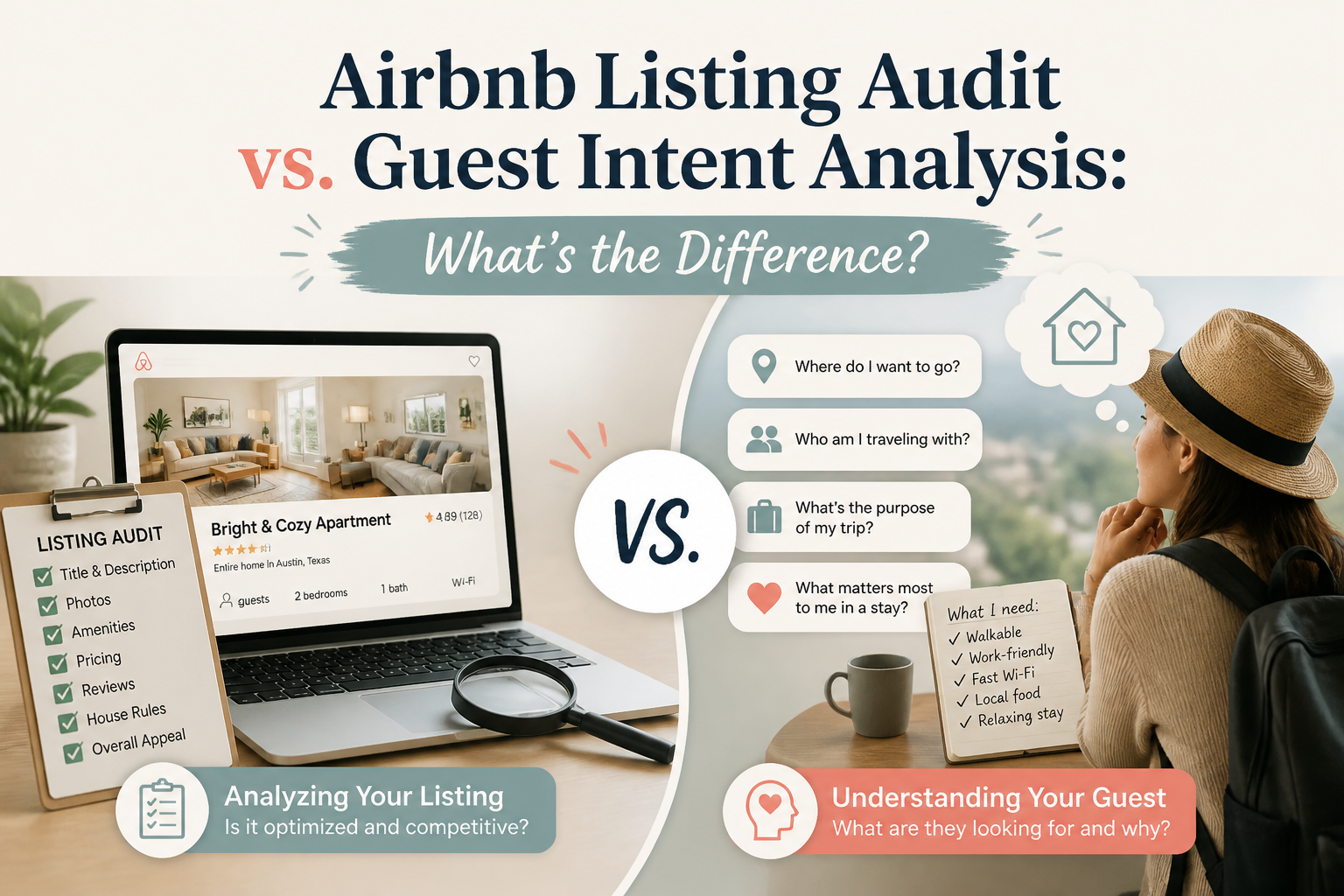 Airbnb Listing Audit vs. Guest Intent Analysis: What's the Difference?
An Airbnb listing can be complete and still struggle to convert. That is because structural problems and guest hesitation are not the same thing. Here is the difference between auditing a listing and analyzing how potential guests may react to it.
5 min read What Guests Look for Before Booking an Airbnb
Guests do not read an Airbnb listing from top to bottom like a brochure. They scan, compare, hesitate, and decide. Understanding what they look for first can help you make the listing easier to trust and easier to book.
6 min read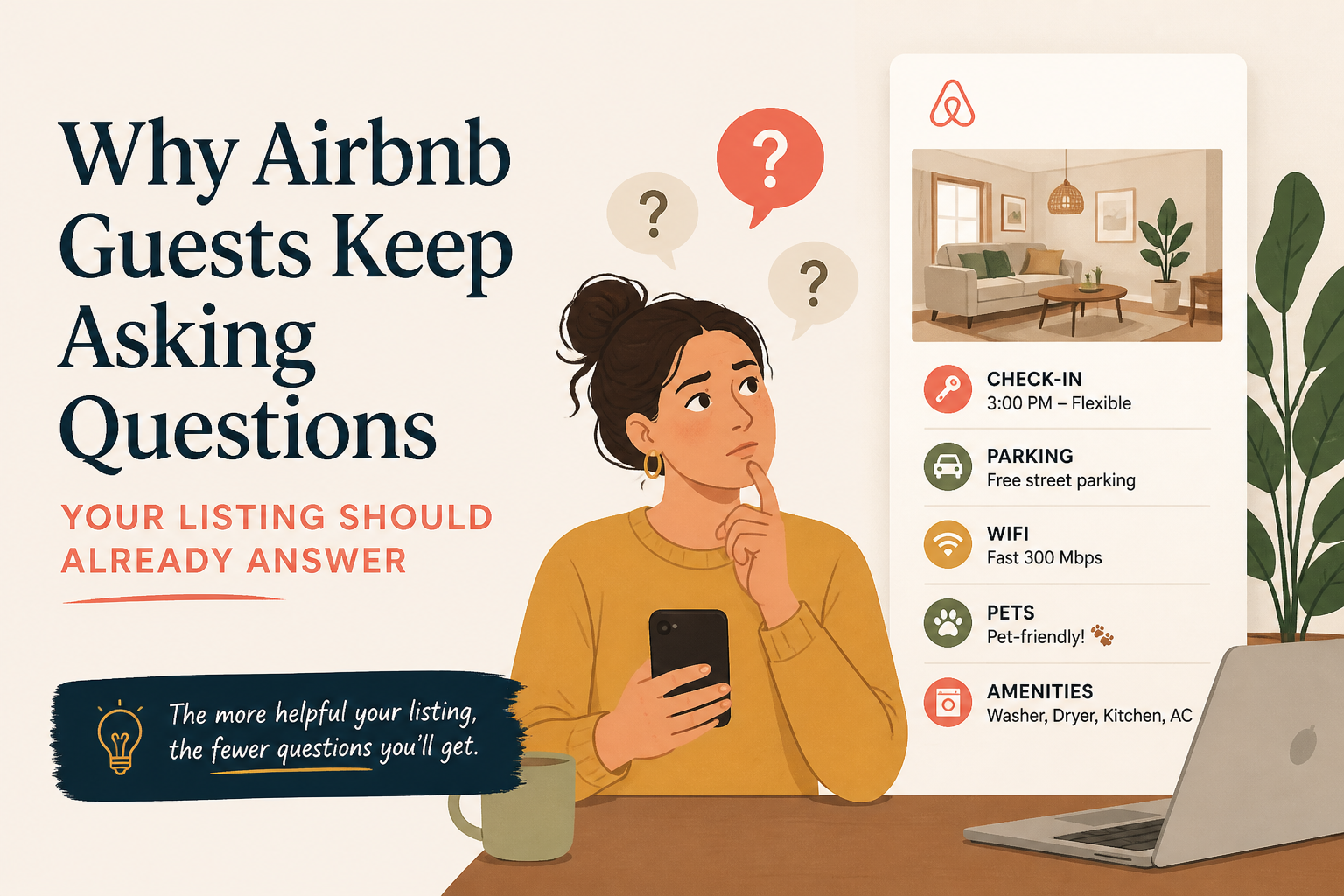 Why Airbnb Guests Keep Asking Questions Your Listing Should Already Answer
Repeated guest questions are often a sign that your Airbnb listing is not making important information easy enough to find. Instead of answering the same message over and over, use those questions to improve the listing itself.
5 min read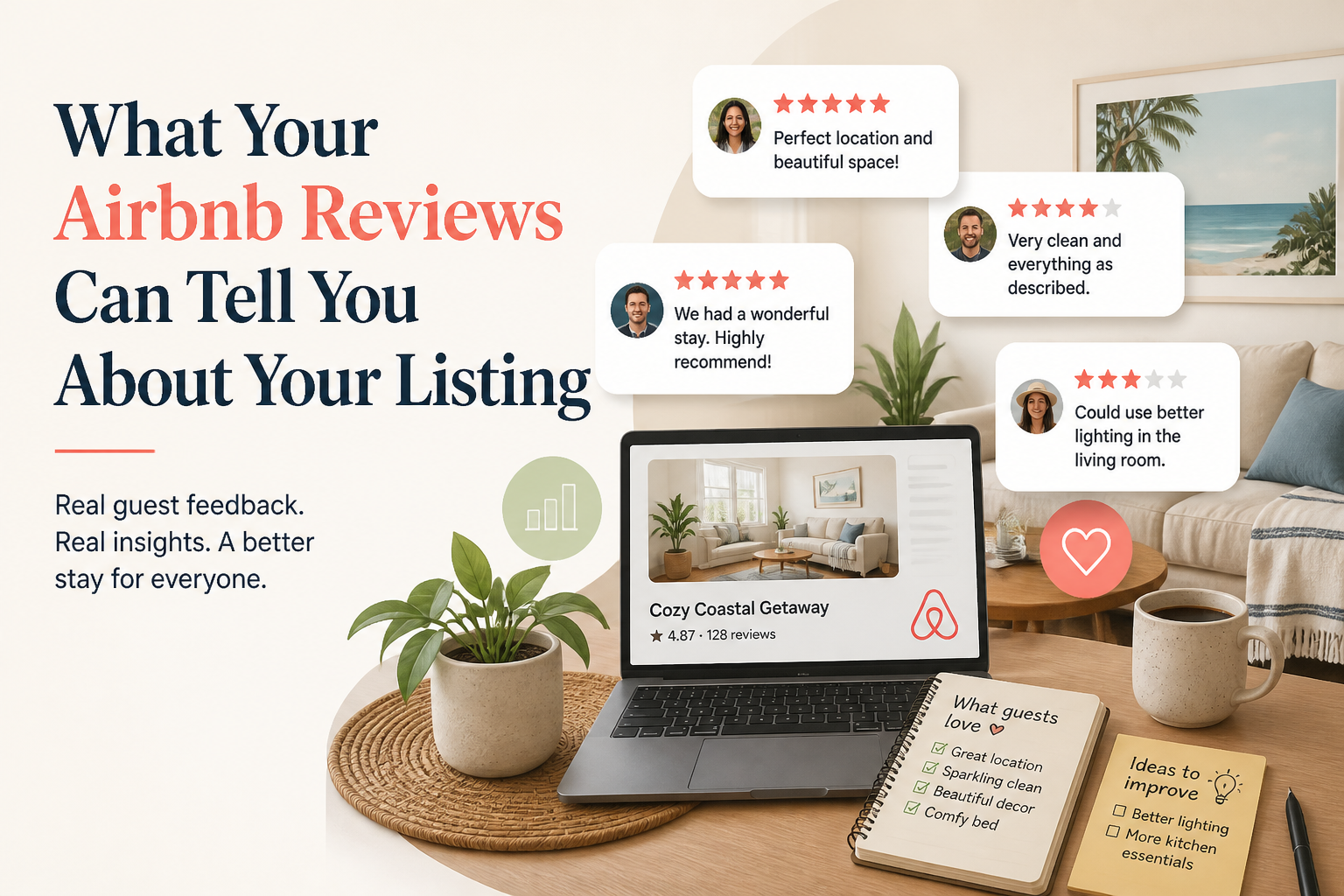 What Your Airbnb Reviews Can Tell You About Your Listing
Airbnb reviews are more than social proof. They can show you what guests value, what confuses them, what keeps getting mentioned, and where your listing may be setting the wrong expectations.
6 min read Hospitality Is Not What You Give Guests. It's What You Remove.
Great hospitality isn't only about adding amenities, welcome gifts, or personal touches. It's about removing friction, uncertainty, and unnecessary effort from the guest experience. Here's why the best hospitality often goes unnoticed.
6 min read