
Hospitality Is Not What You Give Guests. It's What You Remove.
Great hospitality isn't only about adding amenities, welcome gifts, or personal touches. It's about removing friction, uncertainty, and unnecessary effort from the guest experience. Here's why the best hospitality often goes unnoticed.
When people talk about hospitality in the short-term rental industry, the conversation usually turns to things.
A welcome basket.
Better toiletries.
Coffee.
Snacks.
A handwritten note.
Those are all nice touches. I use and appreciate many of them.
But I don't think they're the essence of hospitality.
To me, great hospitality is much simpler:
The guest shouldn't have to work hard to have a great stay.
They shouldn't have to search for information.
They shouldn't have to guess how something works.
They shouldn't have to message you three times to figure out where to park.
They shouldn't arrive expecting one thing and discover another.
They shouldn't have to solve problems you could have anticipated before they arrived.
The best hospitality often isn't something you add.
It's friction you remove.
Think About the Guest's Journey
A guest's experience with your property begins long before check-in.
It starts when they first see your listing.
They look at the photos. They read the title. They scan the amenities. They read reviews. They try to understand the layout.
And throughout that process, they're making hundreds of tiny judgments.
- Is this the right place?
- Can I trust this host?
- Is parking easy?
- Will my family fit comfortably?
- Is that bedroom upstairs or downstairs?
- Is the pool private?
- What's the neighborhood like?
- Will check-in be complicated?
Every unanswered question creates a little friction.
And every clear answer removes some.
That's why I believe listing optimization and hospitality are actually the same discipline at different stages of the guest journey.
Optimization is hospitality before the booking.
Operations are hospitality during the stay.
Communication is the bridge between them.
A Complete Listing Is an Act of Hospitality
This is one reason I'm such a strong believer in completing every part of an Airbnb listing.
Hosts sometimes view descriptions, photo captions, amenities, guest access information, house rules and neighborhood details as administrative work.
I see them differently.
They're hospitality.
If a guest needs a dedicated workspace and you've accurately selected it in your amenities, you've helped them make the right decision.
If your photo caption clearly identifies a king bed, you've answered a question before they needed to ask it.
If your listing explains that there are two flights of stairs before someone with mobility limitations books, you've potentially prevented a terrible experience.
The purpose isn't simply to give Airbnb more information.
It's to give the guest more certainty.
That's one of the central ideas behind The Airbnb Optimization Playbook: Airbnb needs structure and information, while guests need clarity and trust. When those two needs are aligned, the listing becomes stronger.
Great Hospitality Often Happens Before There's a Problem
Average hospitality reacts.
Great hospitality anticipates.
There's an enormous difference.
If a guest messages you at 11:30 p.m. because they can't figure out the thermostat, responding in two minutes is excellent service.
But if they never needed to message you because the thermostat instructions were already clear, that's better hospitality.
The same applies everywhere.
Don't just answer questions quickly.
Ask yourself why the guest needed to ask the question at all.
If five guests have asked where to park, you don't have five guest problems.
You have one communication problem.
If guests repeatedly struggle with the lock, the answer isn't necessarily faster messaging.
Maybe the check-in instructions need improvement.
If guests consistently misunderstand the sleeping arrangements, perhaps the photos, captions or listing description aren't clear enough.
This is where professional hosting becomes systematic.
Every recurring guest question is data.
Every complaint is data.
Every misunderstanding is data.
Use that information to remove friction for the next guest.
Hospitality Is Also About Setting Boundaries
There's another side of hospitality that doesn't get discussed enough.
Being hospitable does not mean saying yes to everything.
It doesn't mean allowing early check-ins when the property isn't ready.
It doesn't mean ignoring house rules.
It doesn't mean answering non-urgent messages at 2 a.m.
It doesn't mean sacrificing your business to avoid disappointing someone.
Professional hospitality requires boundaries.
The important part is how those boundaries are communicated.
There's a difference between:
"NO EARLY CHECK-IN."
and:
"We'd love to accommodate an early arrival when possible. Because our cleaning team needs enough time to prepare the property properly for every guest, we can only confirm early check-in once the home is ready."
The policy hasn't changed.
The hospitality has.
You can protect the property, your team, your time and your business while still communicating with warmth and respect.
The Best Guest Experience Feels Effortless
Think about a truly great hotel stay.
You probably don't remember every operational detail.
That's precisely the point.
The door opened. The room was ready. The temperature was comfortable. The Wi-Fi worked. You knew where breakfast was. When you needed something, you knew what to do.
Everything simply worked.
Short-term rentals should aim for the same feeling.
Behind that effortless experience may be an enormous amount of work:
- Automated messages
- Cleaning checklists
- Maintenance schedules
- Detailed house manuals
- Accurate listings
- Thoughtful photo captions
- Clear signage
- Backup plans
- Guest screening
- Well-designed house rules
The guest doesn't need to see the machinery.
They should experience the result.
Great hospitality feels simple because someone worked very hard to make it simple.
Hospitality Doesn't End at Checkout
This is also where hospitality connects to something much bigger: repeat business.
A guest may initially discover you through Airbnb.
That's valuable. Platforms provide tremendous reach and make it possible for travelers to discover properties they would otherwise never find.
But what happens after that first stay?
If the experience was forgettable, the next time that guest visits your city they'll probably go back to Airbnb and start searching all over again.
But if the experience was exceptional, something different happens.
They remember you.
They remember the property.
They may remember its name.
And suddenly you're no longer competing against hundreds of listings.
You're the place they already trust.
That's the foundation of the direct booking philosophy I discuss in The Airbnb Direct Booking Playbook: platforms can introduce guests to a property, while a recognizable brand and a strong relationship can help bring those guests back.
And that relationship doesn't begin with a direct booking website.
It begins with hospitality.
Your Brand Is How the Stay Felt
Hosts sometimes think branding means creating a logo, choosing colors and buying a domain name.
Those things can support a brand.
But they aren't the brand.
Your real brand is what the guest remembers.
- Was communication easy?
- Did the property match the photos?
- Did everything work?
- Did they feel looked after without feeling watched?
- Were expectations clear?
- Would they trust you with another vacation?
That's your brand.
A beautiful website can amplify that reputation.
It cannot manufacture it.
A Simple Hospitality Audit
Before buying another amenity for your property, try something different.
Walk through the entire guest journey.
Start with the search result.
Then your listing.
Then booking.
Pre-arrival.
Arrival.
The first hour inside the property.
The first morning.
Checkout.
And finally, what happens after the guest leaves.
At every stage, ask one question:
Where does the guest have to think harder than they should?
That's where your next hospitality improvement probably lives.
Maybe it's a better photo.
Maybe it's a clearer sentence.
Maybe it's labeling a light switch.
Maybe it's simplifying check-in.
Maybe it's replacing a confusing appliance.
Maybe it's sending one less automated message rather than one more.
Not every improvement costs money.
Some of the most valuable ones cost nothing.
Hospitality Is the Business
We sometimes separate the short-term rental business into different categories.
Marketing. Optimization. Operations. Communication. Reviews. Branding. Direct bookings.
But from the guest's perspective, none of those categories exist.
There is only one experience.
And every interaction either makes that experience easier or harder.
That's why hospitality shouldn't be treated as the soft side of the business.
Hospitality is the business.
Your photos make a promise.
Your listing explains the promise.
Your communication reinforces the promise.
Your property delivers the promise.
And if you do all of those things consistently enough, the guest remembers who kept it.
That's when you stop being simply another Airbnb listing.
You become a place they want to return to.
Airbnb optimization specialist, Superhost, and founder of one of the largest Airbnb host communities.
Continue Reading
Chosen for you from The Optimization Journal.
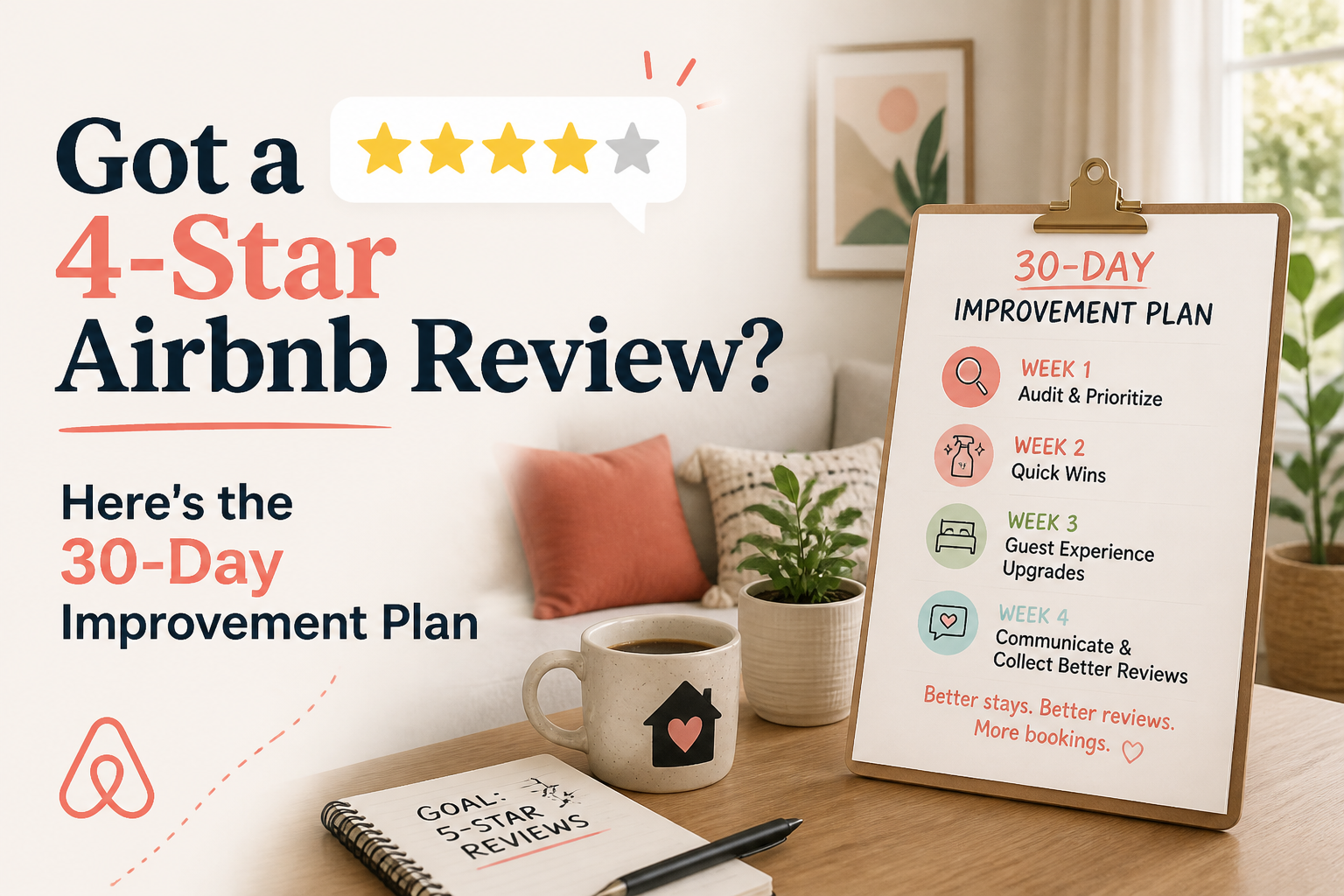 CornerstoneGot a 4-Star Airbnb Review? Here's the 30-Day Improvement Plan
A 4-star Airbnb review can be frustrating, especially when a guest seemed happy. Learn how to respond professionally, identify what went wrong, and turn feedback into a practical 30-day plan for improving your listing and guest experience.
19 min read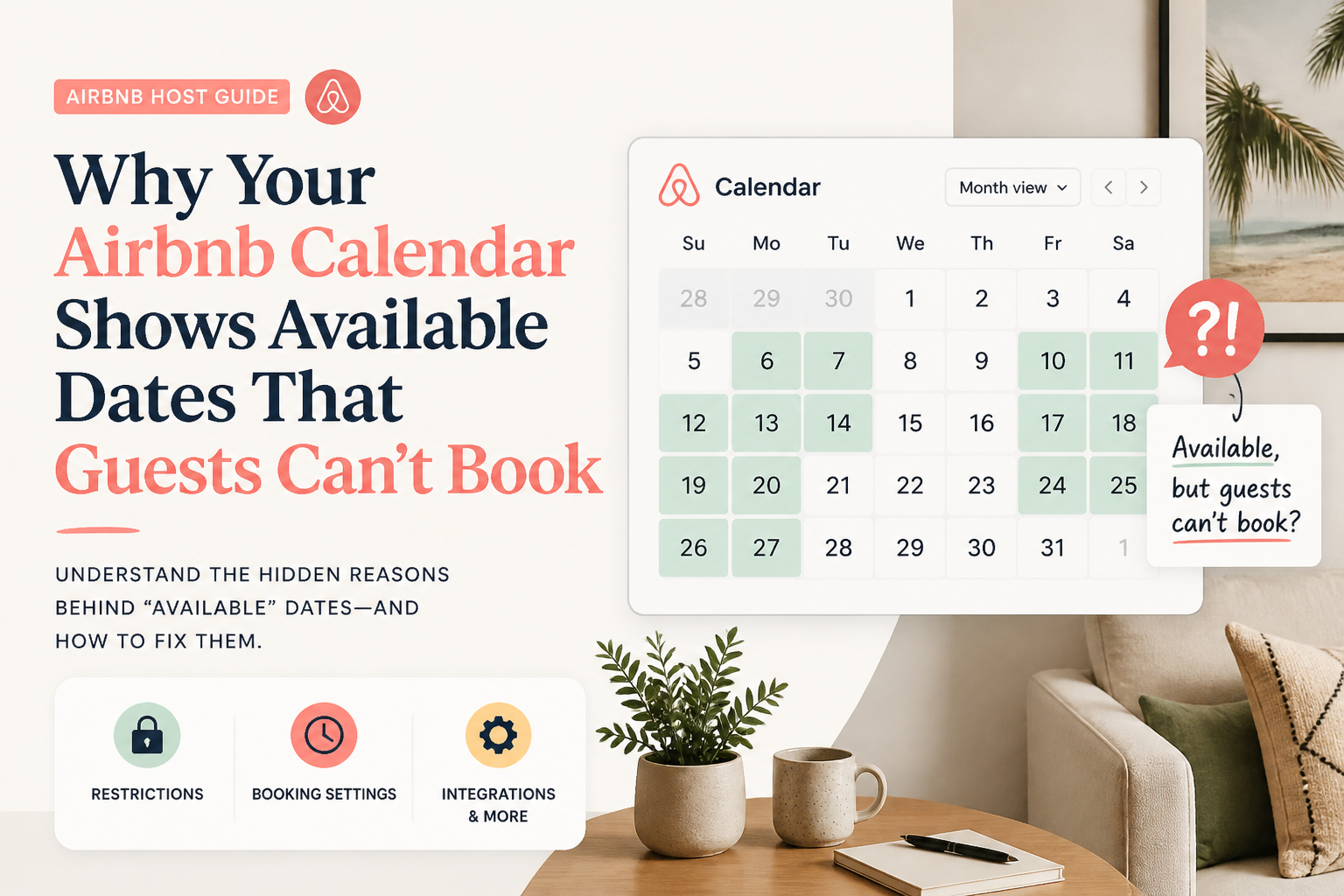 CornerstoneWhy Your Airbnb Calendar Shows Available Dates That Guests Can't Book
Your Airbnb calendar shows open dates, but guests still can't reserve them. Learn how minimum stays, check-in restrictions, preparation time, advance notice, and calendar synchronization can silently block bookings.
19 min read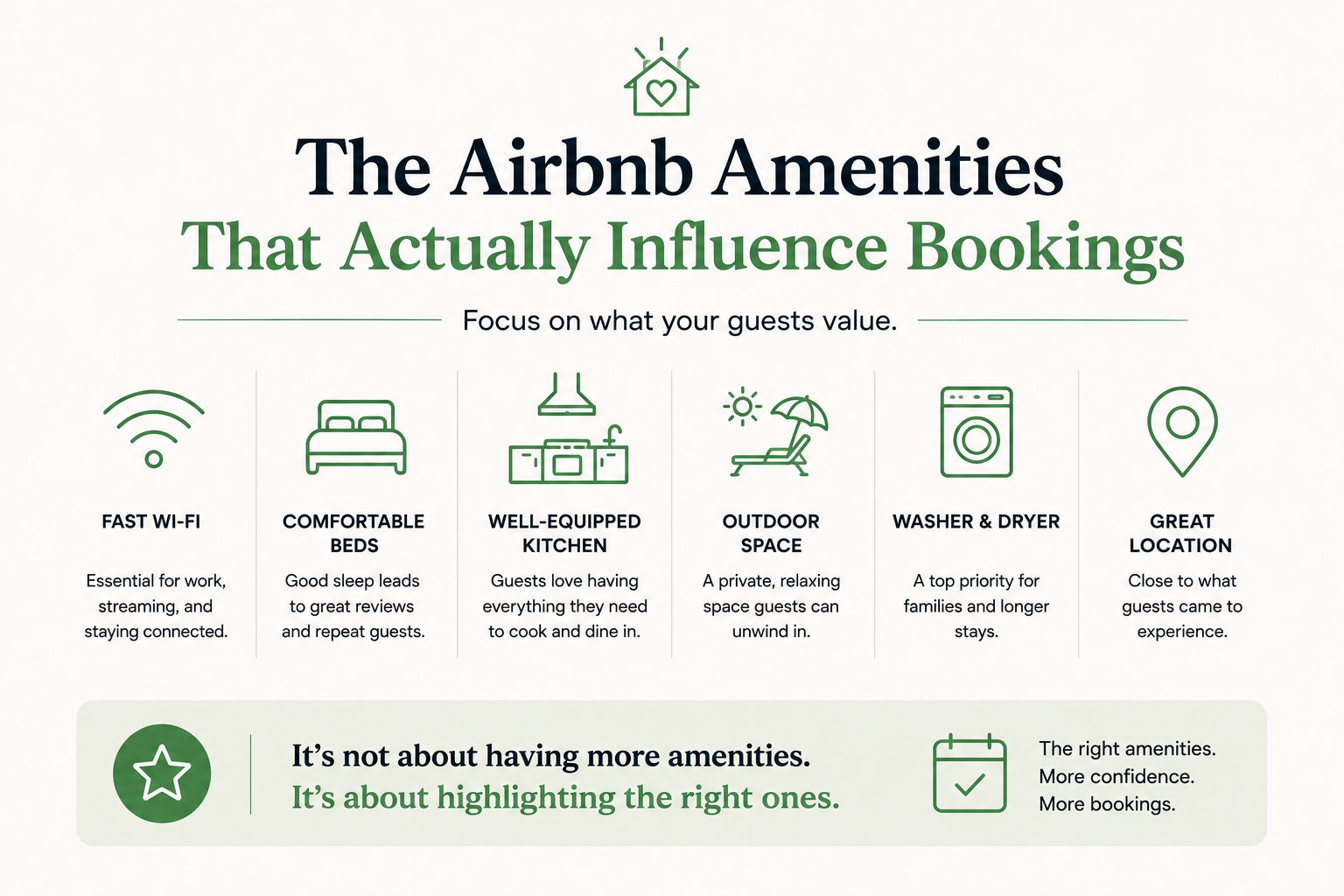 CornerstoneThe Airbnb Amenities That Actually Influence Bookings
Most hosts focus on adding more amenities. The best-performing listings focus on highlighting the amenities their ideal guests actually care about.
2 min read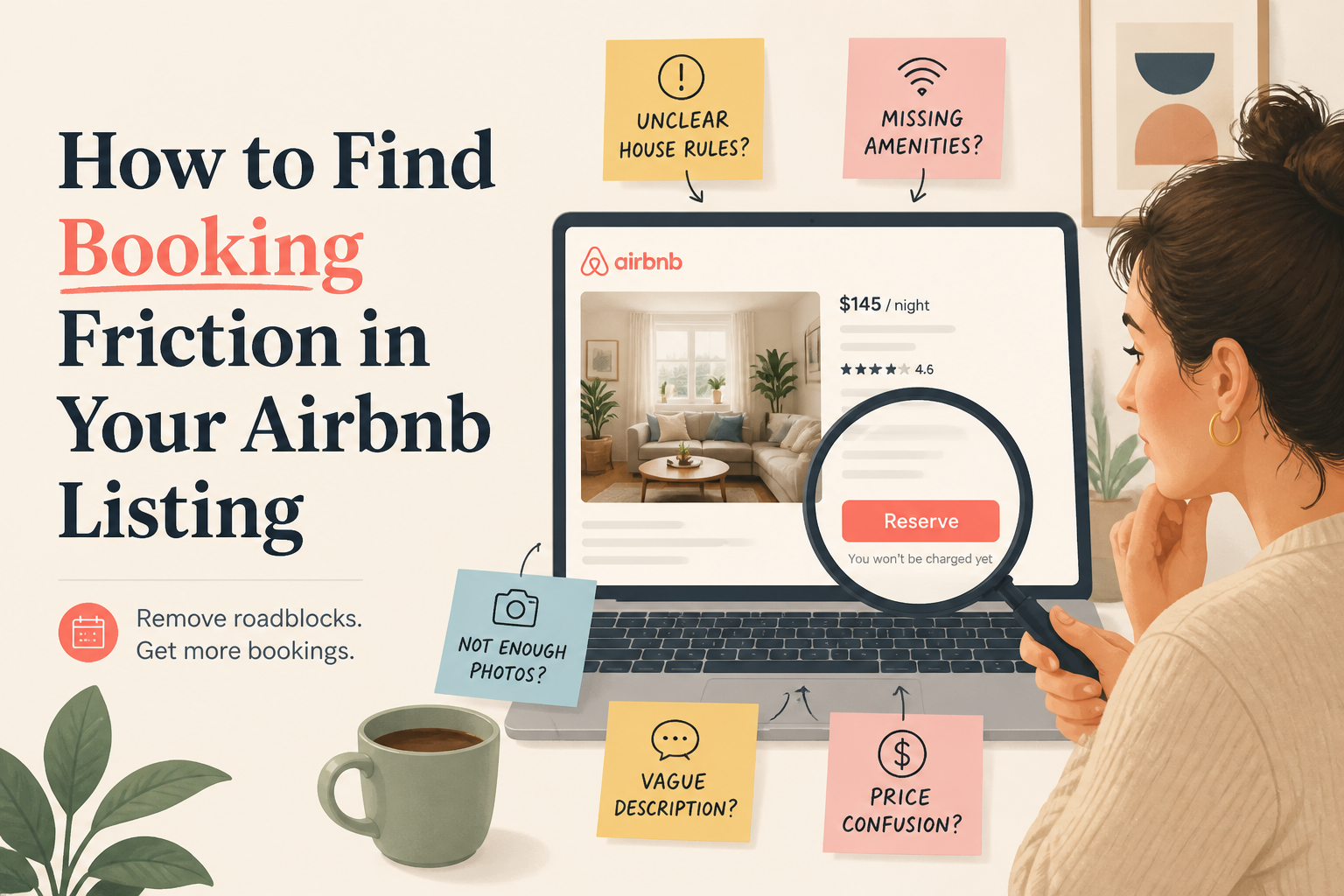 How to Find Booking Friction in Your Airbnb Listing
Sometimes an Airbnb listing looks complete, the price seems reasonable, and guests are still not booking. The problem may be small points of friction that create doubt as guests move through the listing. Here is how I look for them.
5 min read How Check-In Flexibility Becomes One of Your Best Hospitality Tools
The gesture that costs you nothing can be worth more than any amenity you add to your listing. Here's how to make check-in flexibility work in your favor.
5 min read