
Why Hosts Who Never Visit Their Own Rental Often Regret It
She spent her entire first year fully booked. She never visited once. At the start of year two, she blocked two weeks before the calendar opened to guests. She has not missed doing it since.
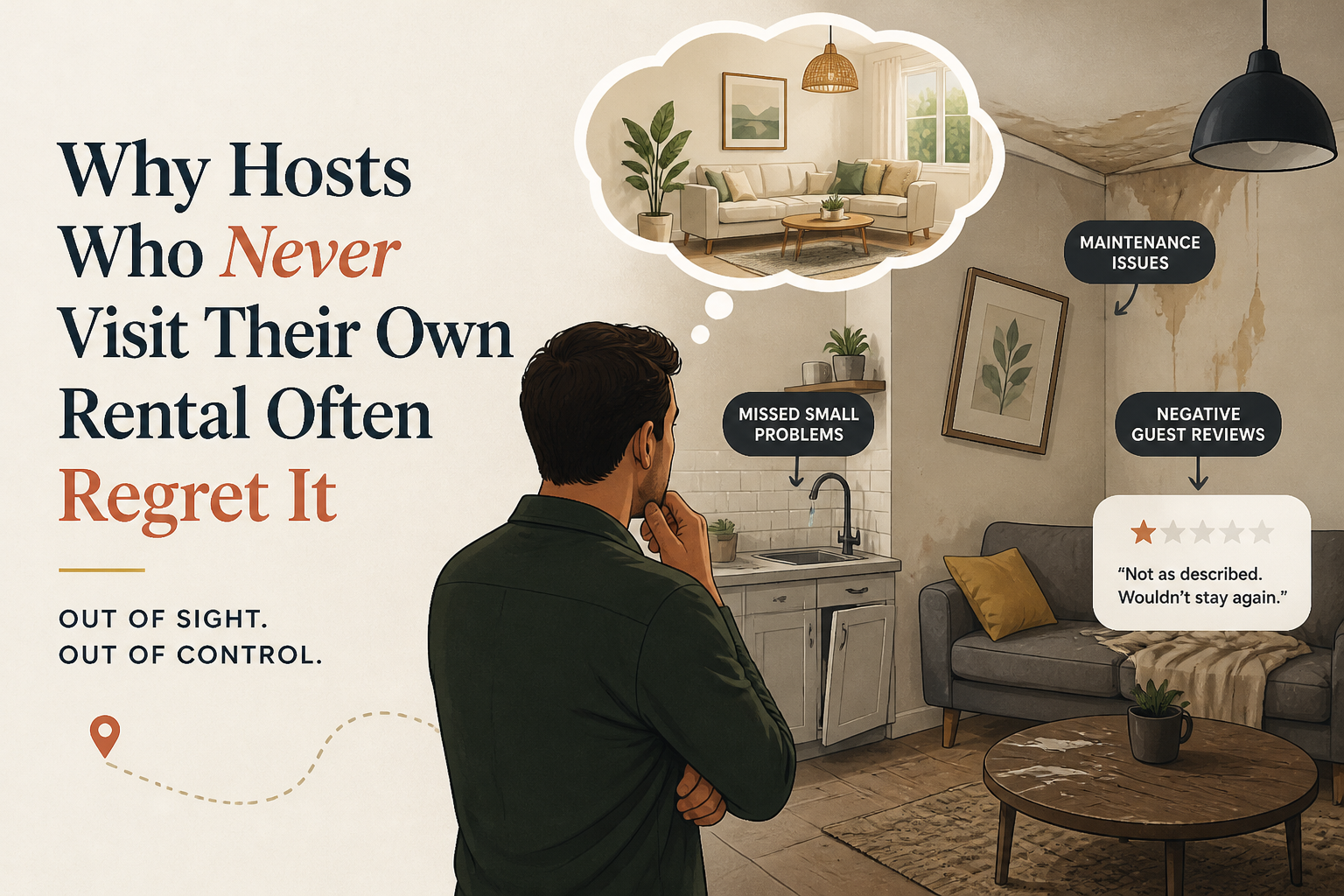
She spent the entire first year fully booked. Not by design exactly, but because every time she considered visiting, there was a booking in the window she wanted, and then another, and then summer became autumn and autumn became the new year without her ever sleeping in the bed she had furnished, or sitting on the deck she had built, or using the kitchen she had stocked for other people.
At the start of year two, she blocked two weeks before the calendar opened to guests. She has not missed doing it since.
That experience, or some version of it, came up repeatedly in the host community when the personal use question was raised. The first year is often consumed entirely by the business of figuring out how to host. By the second or third year, most hosts have recalibrated. The ones who have not tend to describe a quiet sense of regret about it.
The peculiar experience of owning a place you never enter
There is something genuinely strange about owning or managing a property where strangers sleep regularly and you never do. You make decisions about the sheets, the kitchen equipment, the art on the walls, the welcome basket. You receive reviews about the deck, the view, the comfortable beds. You read about experiences in a space you have never occupied.
Several hosts described a slow sense of disconnection that set in after a year or more of purely commercial hosting. The property was a business, and an effective one. But it had stopped being a place. The relationship to it became purely managerial, and something about that felt like a loss, even if it was hard to name.
The hosts who blocked personal time regularly tended to describe the opposite: a feeling of ownership that stayed alive alongside the income, a sense of being connected to the property as something that belonged to them rather than something they administered on behalf of a stream of guests.
What visiting does that remote management cannot
The operational argument for personal visits is practical and underappreciated. A host who moves through the property, opens the drawers, uses the appliances, sits on the furniture, and sleeps in the bed is experiencing the space the way guests do. That experience surfaces things that never appear in a cleaner's checklist.
One host described noticing, during a personal stay, that the kitchen lacked a muffin pan. A small thing. Something no guest had mentioned. Something she noticed the moment she tried to make breakfast. Another host found that a bedroom light switch was in a confusing location that required multiple attempts to find in the dark. Another discovered that the outdoor furniture was harder to move than it appeared in the listing photos and that guests had simply stopped using it.
These discoveries are not emergencies. They are the accumulated friction of a space that guests learn to work around but rarely bother to report. The host who visits catches them. The host who never visits inherits them in reviews, or does not know about them until a guest mentions them in a way that costs a rating point.
Maintenance visits disguised as personal stays
Many hosts who visit regularly describe the stays as dual-purpose: time at a property they love and time spent doing the maintenance work that accumulates between guest stays. Replacing batteries in smoke detectors and remotes. Deep-cleaning the oven. Checking the filter on the air conditioning. Auditing the supply cabinet. Noting what needs to be ordered, repaired, or replaced.
One host described visiting every two to three months specifically to run through what she called her maintenance list, covering everything from inventory to contractor scheduling. It is real work, she said. But it keeps the property in exceptional condition the rest of the time. The pleasure of being there is woven around the tasks rather than sitting separate from them.
This framing makes personal visits easier to justify financially. The time is not purely pleasure. It is preventive maintenance that reduces the cost of reactive repairs later and the wear that shows up in review scores over time. A property that a host inhabits periodically tends to be in better condition than one that sees only guests and cleaners.
The missed seasons and the slow regret
Several hosts described the particular regret of a property that was bought for a specific reason, a ski cabin, a beach house, a mountain retreat, that the owner has visited exactly once. The property fills every weekend from December through March. The owner has not skied in two years.
This is a version of a broader hosting trap: optimizing so completely for revenue that you optimize yourself out of the thing you built. The property was bought for a reason. The hosting income was meant to make the ownership sustainable, not to replace the ownership entirely.
Hosts who described being happiest with their hosting life tended to be the ones who had preserved some version of the original reason they acquired the property. Not as a commercial calculation, but as a deliberate choice about what the whole arrangement was actually for.
The question worth asking once a year
If you have not visited your own property in the last twelve months, the question is worth sitting with. Is that because you live close enough that a visit is not meaningful, and the property feels genuinely present in your life? Or is it because every time you looked at the calendar, it was full?
If it is the second, consider whether the next time you open your calendar for a new season, the first thing you put on it should be for you.
Airbnb optimization specialist, Superhost, and founder of one of the largest Airbnb host communities.
Continue Reading
Chosen for you from The Optimization Journal.
 How to Build Personal Time Into Your Hosting Calendar Without Sacrificing Revenue
The hosts who visit their property most reliably are not the ones who wait for a gap to appear. They are the ones who created the gap first and let the rest of the calendar fill around it.
4 min read How to Set a Long-Stay Discount Policy That Serves Your Specific Property
A long-stay discount that makes sense for one host can cost another host money they did not know they were giving away. Here is how to figure out which situation you are in.
4 min read How Check-In Flexibility Becomes One of Your Best Hospitality Tools
The gesture that costs you nothing can be worth more than any amenity you add to your listing. Here's how to make check-in flexibility work in your favor.
5 min read The Date Change Loophole That Catches Airbnb Hosts Off Guard
A guest inside the cancellation window asks to move their dates. The host agrees. A couple of hours later, the guest cancels from outside the window, penalty-free. It is a known pattern and it has a name.
4 min read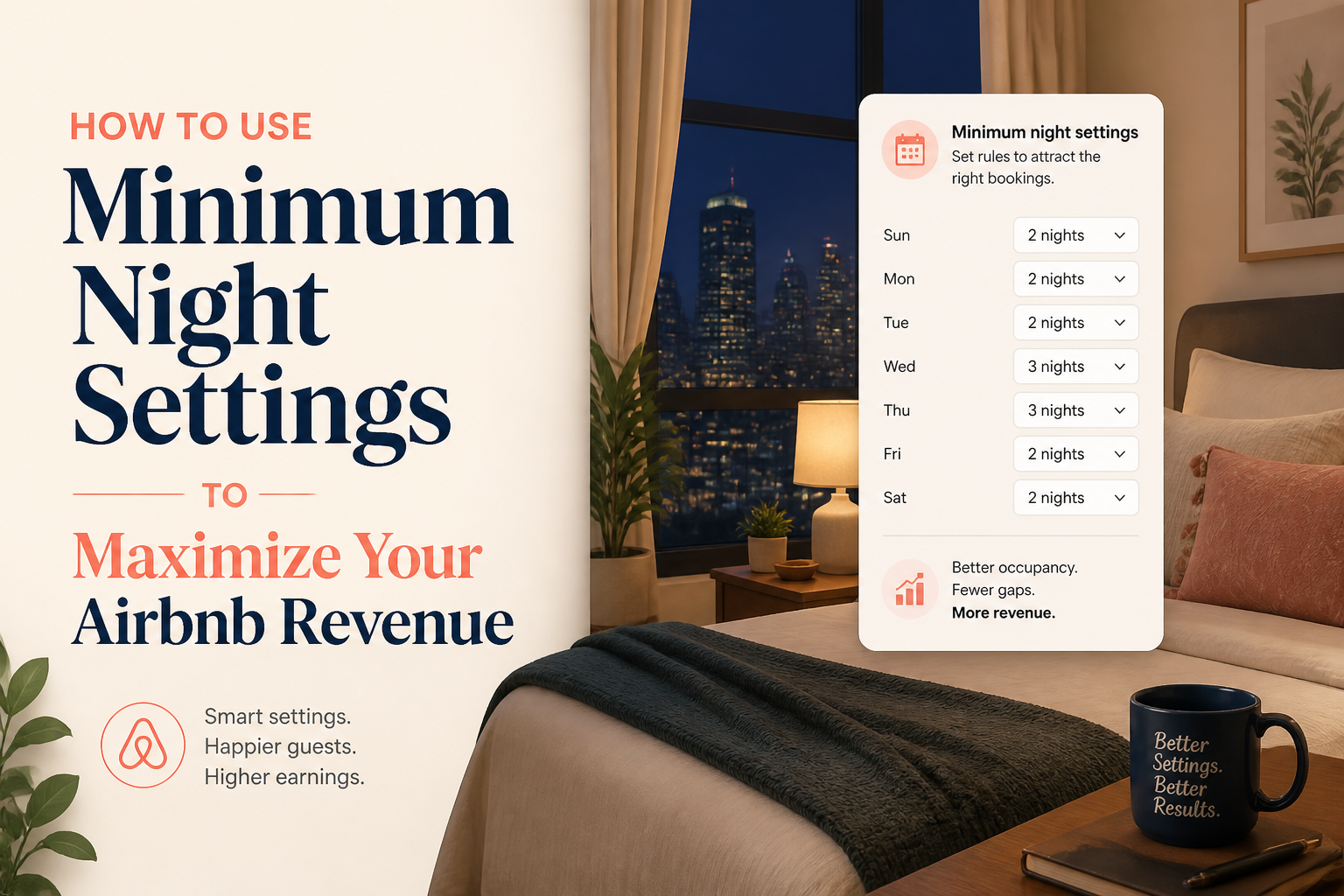 How to Use Minimum Night Settings to Maximize Your Airbnb Revenue
Your minimum stay setting is one of the most powerful levers in your listing — and most hosts set it once and never revisit it. Here's how to use it more strategically.
5 min read