
Why Airbnb Hosts Should Track Local Events Months in Advance
By the time a major local event is obviously driving Airbnb demand, some of the best booking opportunities may already be gone. Concerts, festivals, graduations, tournaments, and conferences are much more useful when you know about them early enough to adjust your calendar before guests start booking.
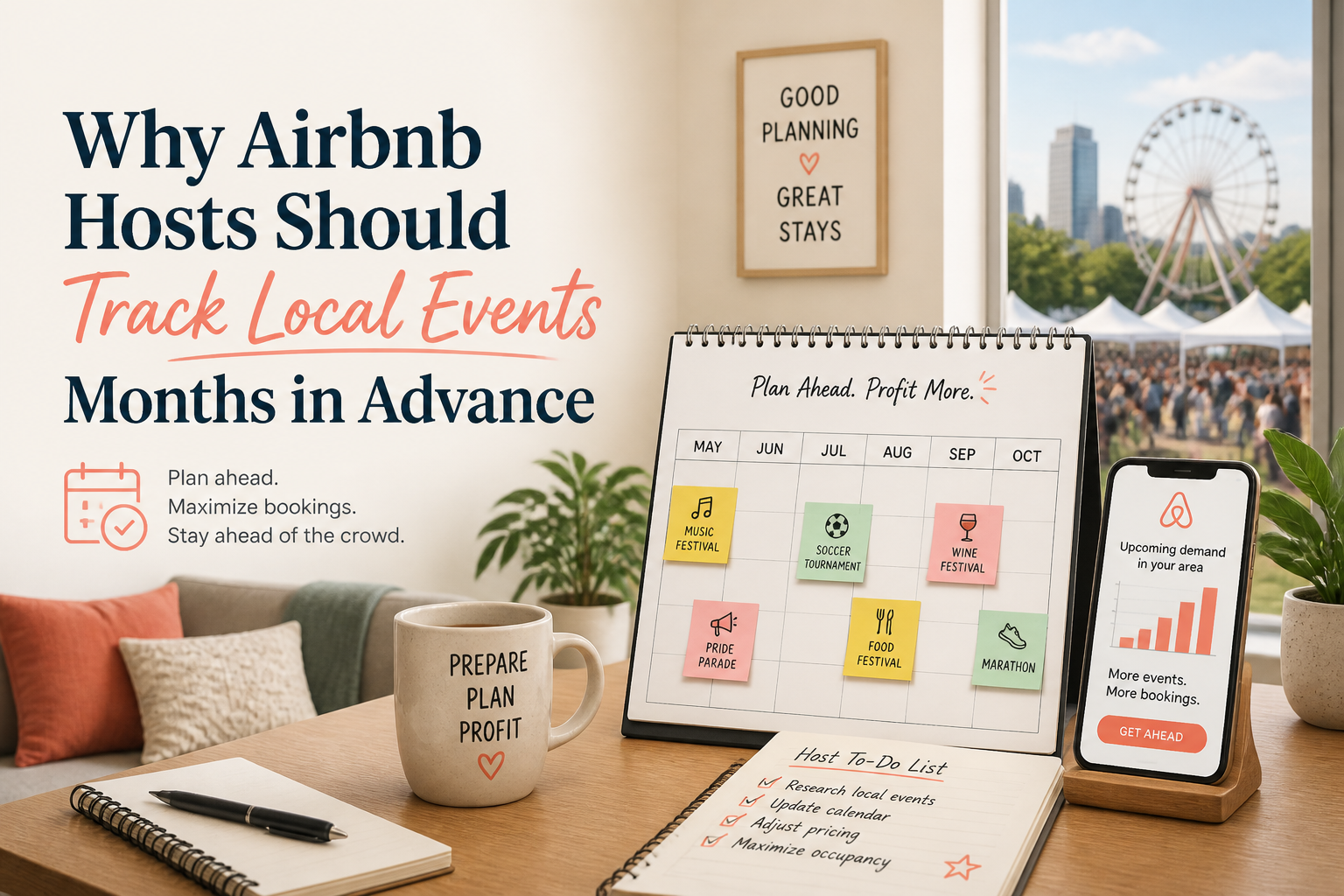
Finding out about a major event the week before it happens is interesting.
Finding out three months before it happens is useful.
That difference matters because event demand often starts long before the event itself. By the time you notice that hotels are filling, competitor calendars are closing, and guests are suddenly searching your area, you may already have accepted reservations at rates you would not have chosen if you had known what was coming.
I would rather know early and decide not to change anything than discover the demand after the dates are already booked.
Think in Booking Windows, Not Event Dates
Suppose a large music festival is happening in your city on a Saturday in June.
The important date is not only that Saturday.
Some guests may arrive Thursday. Others Friday. Some will stay through Sunday or Monday. People traveling from farther away may book months in advance, while local or regional guests may wait until much closer to the event.
So when I look at an event, I am thinking about two different windows: the stay window around the event and the booking window when guests are likely to reserve those dates.
If you only start paying attention when the event weekend arrives, both windows are basically over.
Three or More Months Out: Know What Is Coming
Far in advance, I am not looking to make aggressive changes. I mainly want awareness.
What major events are scheduled? Which ones happen every year? Are there graduations, tournaments, conferences, festivals, concerts, races, or seasonal events that bring people into the area?
Then I ask whether they actually matter to my property.
A concert fifteen minutes away may matter. A convention an hour away probably does not. A youth sports tournament may be highly relevant to a three-bedroom family home and almost irrelevant to a romantic one-bedroom retreat.
Knowing an event exists is not the same as assuming it will create demand for you.
But if it looks relevant, I would mark the dates and start watching.
Two to Three Months Out: Protect Valuable Dates
This is where knowing about an event early can prevent an expensive mistake.
Imagine your normal Saturday rate is $250 and you have an automatic discount running because the date is still relatively far away.
Then you discover later that a major event is bringing thousands of visitors into town and comparable properties are eventually selling for much more.
You cannot go back and reprice a reservation you already accepted.
This does not mean every event deserves a huge increase. It means I would look at those dates separately instead of allowing normal calendar rules to handle them without context.
You may decide to raise the rate. You may decide simply to hold your normal rate instead of discounting. You may decide demand is not strong enough to change anything.
The advantage is that you are making the choice before the booking arrives.
One to Two Months Out: Watch the Market
Now I become more interested in what is actually happening.
Are comparable properties losing availability? Are minimum stays changing? Are hotels becoming more expensive? Is the event sold out, expanding, or generating more attention than expected?
This is where Competitor Intelligence becomes useful alongside the Local Events & Demand Calendar.
The event calendar tells you why demand might change. Competitor information gives you another view of whether the surrounding market appears to be reacting.
I would not assume that every unavailable competitor night is booked, but if several comparable properties begin losing availability around the same dates, that is information worth paying attention to.
A Few Weeks Out: Revisit Minimum Stays
As the event gets closer, I would look at the shape of the calendar.
Maybe you originally protected the weekend with a three-night minimum. That could have made sense when the dates were wide open.
Now perhaps only Friday and Saturday remain between two reservations.
At that point the original minimum may be creating a booking problem rather than protecting the calendar.
Or the opposite may be true. Demand is very strong across several days, and accepting a one-night stay in the middle could break up a much better booking opportunity.
This is why minimum stays should respond to the calendar rather than exist completely separately from it.
The Calendar Gap Analyzer can help identify the awkward openings that appear as reservations begin surrounding an event period.
Update the Listing Only When It Is Relevant
Event demand can also create an opportunity to adjust the listing itself.
I would be selective about this.
If your property is genuinely convenient for the event, mentioning that can help. Maybe guests can walk to the venue. Maybe it is a five-minute drive. Maybe your home is particularly well suited to families attending graduation or teams coming for a tournament.
A small update to the title or summary may make sense during the relevant booking window.
But I would not stuff event names into the listing simply because something is happening somewhere in the city.
The information should help the guest.
If someone coming for the event would genuinely care about your property's location or setup, bring that forward. Otherwise, leave the listing alone.
The Final Week Is About Different Decisions
Once the event is only a few days away, the strategy changes again.
At this point, you are not protecting a distant opportunity. You are managing remaining inventory.
If you still have availability, I would look at the actual demand, competitor availability, minimum stays, and your current final price.
A last-minute adjustment may make sense.
But knowing the event exists still matters. An empty Tuesday before a normal weekend and an empty Friday before a sold-out concert are not the same situation.
You want to know what kind of demand you are dealing with before deciding how aggressively to move.
Recurring Events Are Even More Valuable
The events I find most useful are often not the giant one-time events.
They are the ones that come back every year.
After a few cycles, you can start learning the pattern.
When do guests begin booking?
Which nights actually become valuable?
Do they stay two nights or four?
Does demand come from families, couples, groups, or business travelers?
Did you sell too early last year? Did you hold too high and end up discounting late?
Now you are no longer guessing from scratch every year. You have a reference point.
This Is Why I Built the Local Events & Demand Calendar
I built the Local Events & Demand Calendar because most hosts know the biggest events in their market but very few are going to manually keep track of everything happening over the next twelve months.
The point is not simply to show you a list of events.
I want the information early enough that it can actually influence a decision: pricing, minimum stays, calendar strategy, or how you present the listing during a particular period.
It also helps surface recurring events that are easy to forget until they suddenly start affecting bookings again.
The tool gives you the signal. You still decide whether that signal matters to your particular property.
Early Information Gives You More Choices
If you learn about an event after your dates are booked, there is very little left to decide.
If you learn about it four months ahead, you can watch the market.
You can protect the dates.
You can change nothing.
You can adjust the minimum stay.
You can update the listing when it becomes relevant.
You can wait and see whether demand actually develops.
That is the real advantage of tracking events early.
You are not trying to predict every booking. You are giving yourself enough time to make a decision before the market makes it for you.
Airbnb optimization specialist, Superhost, and founder of one of the largest Airbnb host communities.
Continue Reading
Chosen for you from The Optimization Journal.
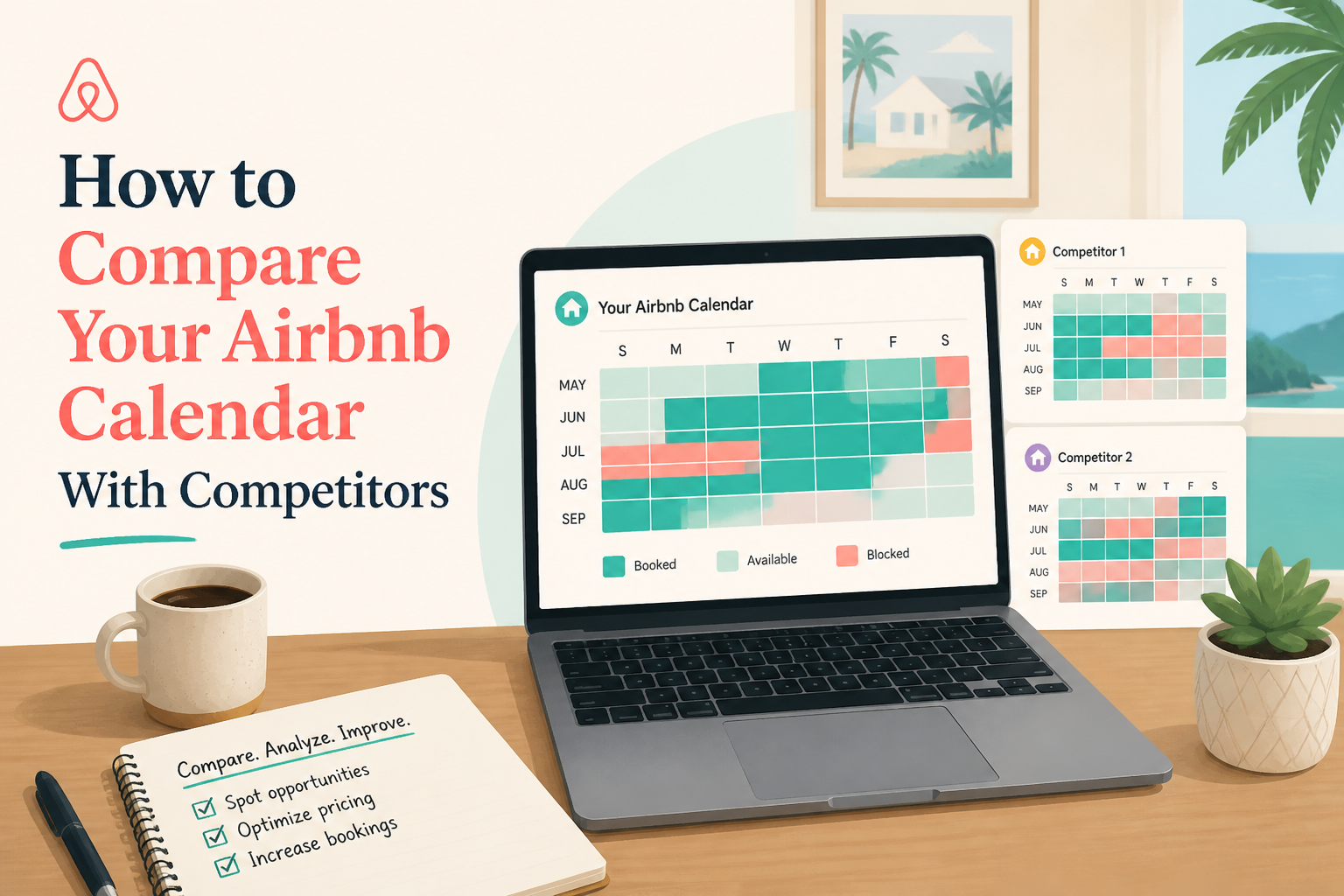 How to Compare Your Airbnb Calendar With Competitors
Looking at competitor calendars can help you understand whether a slow period is specific to your property or happening across your market. But availability does not automatically mean a property is struggling, and blocked dates do not necessarily mean bookings. Here is how I would use competitor calendar data without reading too much into it.
5 min read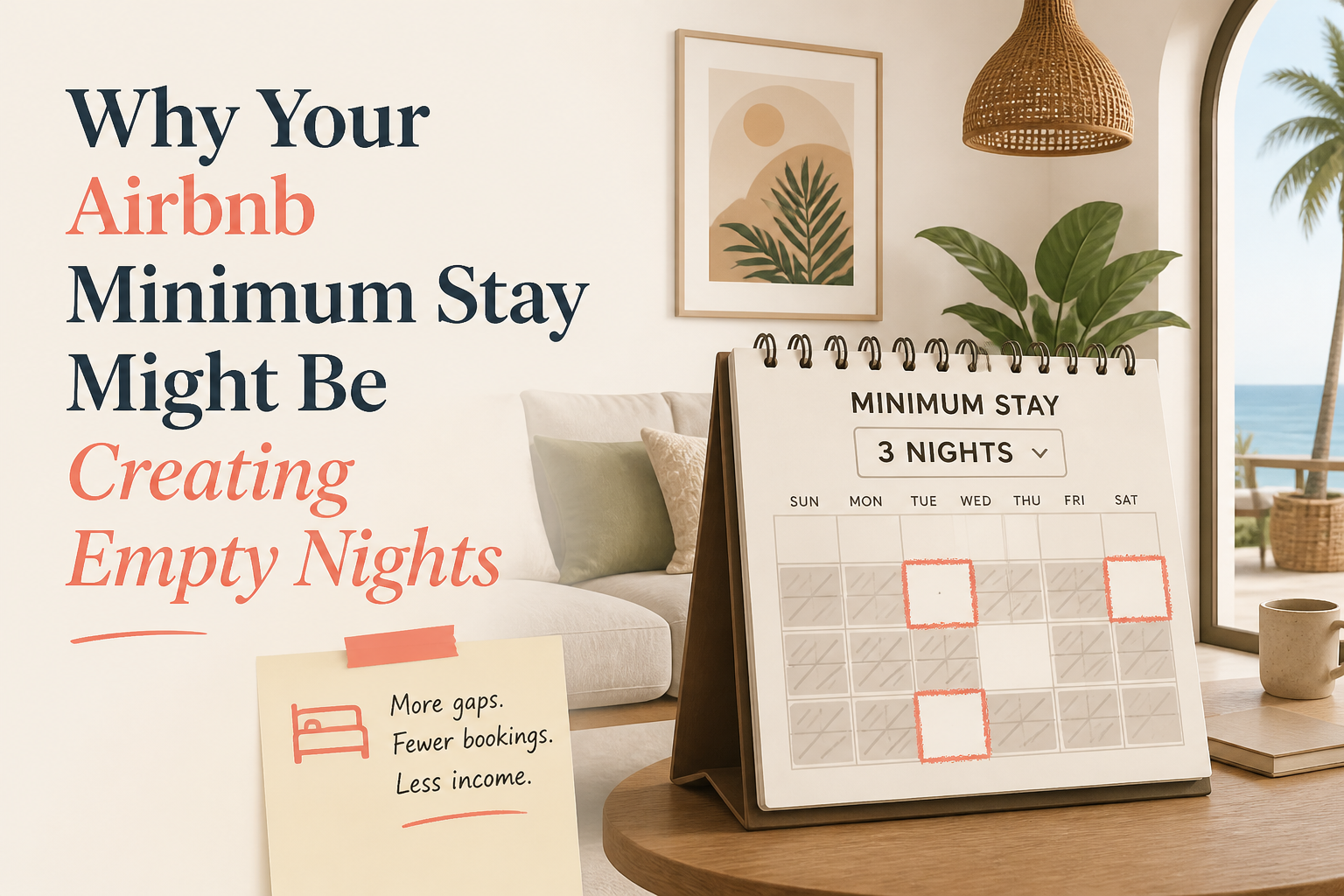 Why Your Airbnb Minimum Stay Might Be Creating Empty Nights
Minimum-stay rules can protect your calendar, reduce turnovers, and help you avoid low-value reservations. But the same rule can also create gaps that become nearly impossible to book. The trick is knowing when to hold your minimum and when the calendar is telling you to adjust it.
5 min read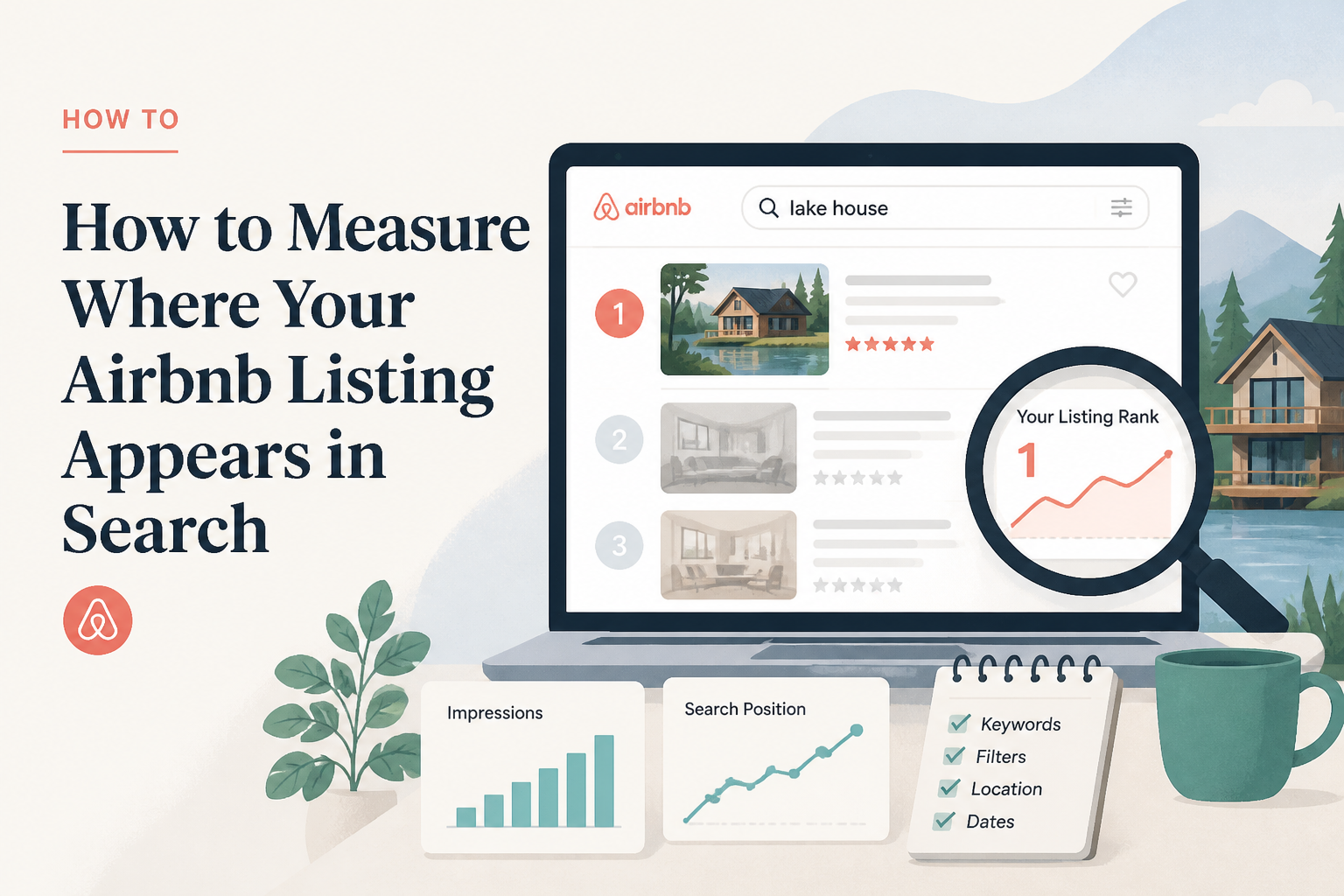 How to Measure Where Your Airbnb Listing Appears in Search
Airbnb search position is not as simple as searching your city and looking for your own property. Results can change based on dates, guest count, filters, location, and personalization. Here is a better way to think about Airbnb search visibility and how to tell whether your listing is improving over time.
5 min read How to Choose the Right Airbnb Competitors to Watch
Competitor research is only useful if you are comparing your property with listings guests might realistically choose instead. A nearby Airbnb is not automatically a competitor. Here is how I would build a smaller, more useful competitor set.
5 min read How Often Should You Update Your Airbnb Listing?
Your Airbnb listing should not be something you publish once and forget about. Properties change, seasons change, Airbnb adds new fields, and guest priorities shift. Here is how often I think hosts should review their listing, what is worth changing, and which type of update actually makes sense.
6 min read