
Vrbo’s New U.S. and UK Terms: What Hosts With Direct Booking Sites Need to Know
Vrbo’s new host terms in the U.S. and UK introduce broad language around pricing, policies, availability, booking conditions, and listing content across other channels. If you also take direct bookings, this is worth reading carefully.
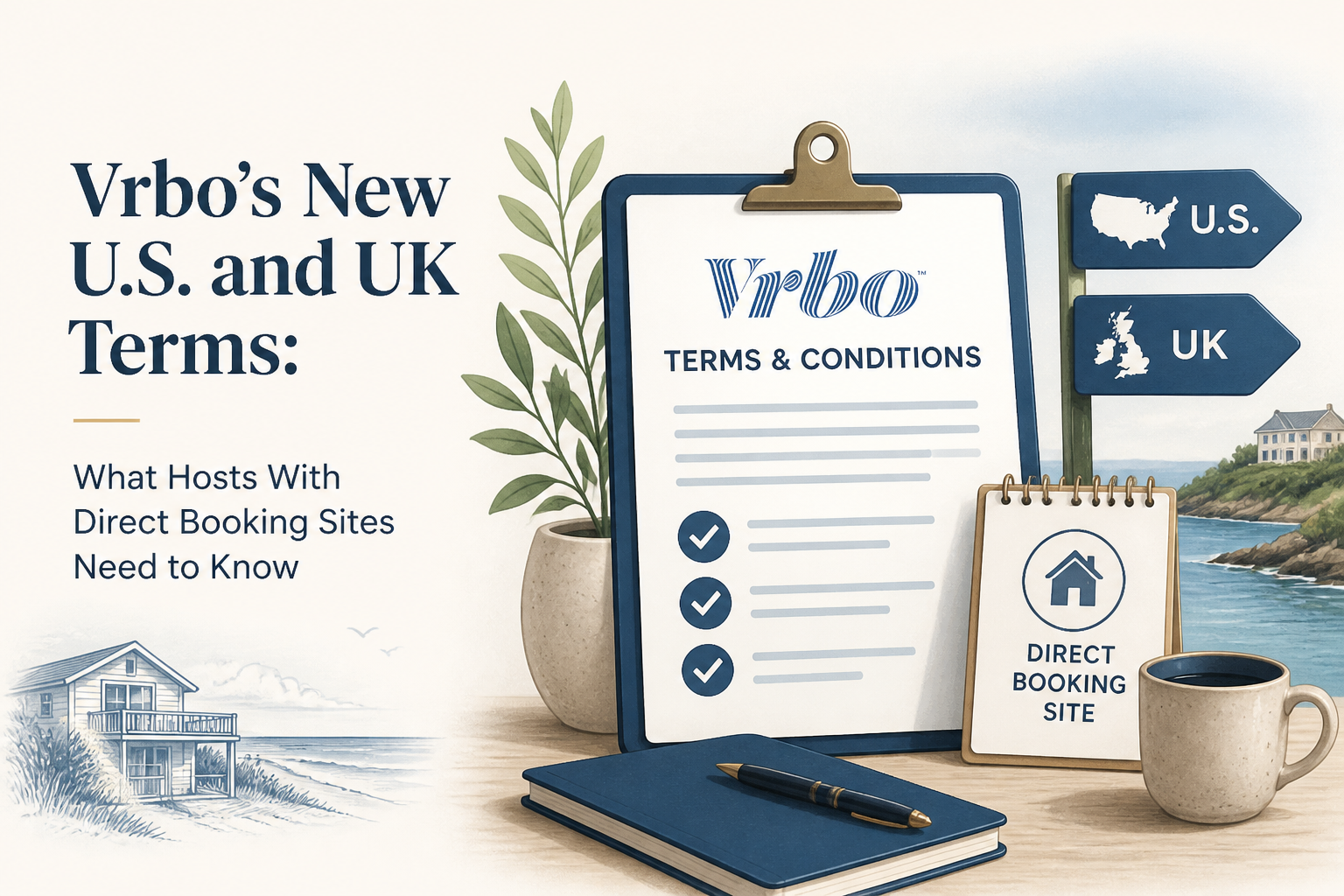
If you list on Vrbo and also take direct bookings, there is language in Vrbo’s new host terms in both the U.S. and UK that deserves your attention.
The updated terms are effective October 29, 2026 in the U.S. and 29 October 2026 in the UK.
Two parts stand out to me:
- How favorable your Vrbo offer must be compared with other channels
- How complete and useful your Vrbo listing must be compared with the content you provide elsewhere
I would not reduce this to a simple statement like:
“Vrbo has banned cheaper direct bookings.”
The wording is broader and more nuanced than that.
What the New Terms Actually Say
Vrbo says that while a property is listed on its service, the content and booking-related information you provide to Vrbo must be at least as complete, accurate, current, detailed, and favorable as what you make available through your own website, booking engine, social media, PMS, APIs, or other channels.
The clause covers things such as:
- Services
- Amenities
- Fees
- Policies
- Rules
- Restrictions
- Availability
- Booking conditions
That is why I think direct-booking operators should pay attention.
Vrbo does not literally say, “You may never offer a cheaper direct rate.”
But the requirement that the Vrbo offer be at least as favorable as what you offer elsewhere is broad enough that hosts should understand how it may apply to direct-booking pricing, fees, cancellation policies, or other advantages.
This Goes Beyond Price
The second part is just as important.
Vrbo also makes it clear that hosts should not provide another channel with materially better or more useful listing content while keeping the Vrbo version limited.
That can include content that is more:
- Complete
- Accurate
- Current
- Structured
- Searchable
- Bookable
- Useful
A lot of hosts understandably put more effort into their own direct-booking site.
Maybe the direct site has:
- More photos
- More detailed property information
- Better amenity descriptions
- More flexible booking options
- More complete policies
- Additional services
Under the new language, hosts should review whether anything important offered elsewhere also needs to be properly represented on Vrbo.
Direct Bookings Still Matter
I still strongly believe hosts should build something they own.
A website.
A recognizable property brand.
Repeat guests.
A direct-booking channel.
Platform dependence is risky.
But building a direct channel does not mean ignoring the contracts you agree to with the platforms you continue using.
If you want the distribution Vrbo provides, you also need to understand what Vrbo is asking in return.
There Is Also an Off-Platform Booking Rule to Watch
The U.S. terms also include language around certain bookings that begin as Vrbo leads but are completed outside the platform.
If a guest first contacts you through Vrbo and then books directly as a result of that lead within the specified window, Vrbo may still treat that booking as attributable to its platform and apply the relevant fee.
The important distinction is that this is about leads originating through Vrbo — not simply every direct booking you ever receive.
What I Would Do If I Used Vrbo and Direct Bookings
I would review three things.
1. Compare Your Vrbo Listing With Your Direct Site
Look at your photos, amenities, descriptions, policies, fees, restrictions, and booking conditions.
Know exactly where the two channels differ.
2. Review Your Direct-Booking Advantages
If your direct site offers lower prices, lower fees, better cancellation terms, extra amenities, or other benefits, look carefully at how those compare with the new “favorable” language.
If the financial impact is meaningful, I would not guess about the interpretation.
3. Keep Your Vrbo Content Complete
This part is straightforward.
If you are going to list on Vrbo, do not leave the listing incomplete while putting all of your best information somewhere else.
Vrbo is making that expectation very clear.
This Is Bigger Than One Clause
The bigger issue for me is what this says about platform dependence.
Platforms can change their rules.
They can change fees.
They can change how they rank listings.
And they can change what they expect from hosts operating on other channels.
That does not mean hosts should abandon Vrbo.
It means hosts should read these agreements carefully and understand exactly what they are accepting.
Your direct-booking business and your platform strategy need to work together.
And when the rules change, you need to know before they affect your business.
Airbnb optimization specialist, Superhost, and founder of one of the largest Airbnb host communities.
Continue Reading
Chosen for you from The Optimization Journal.
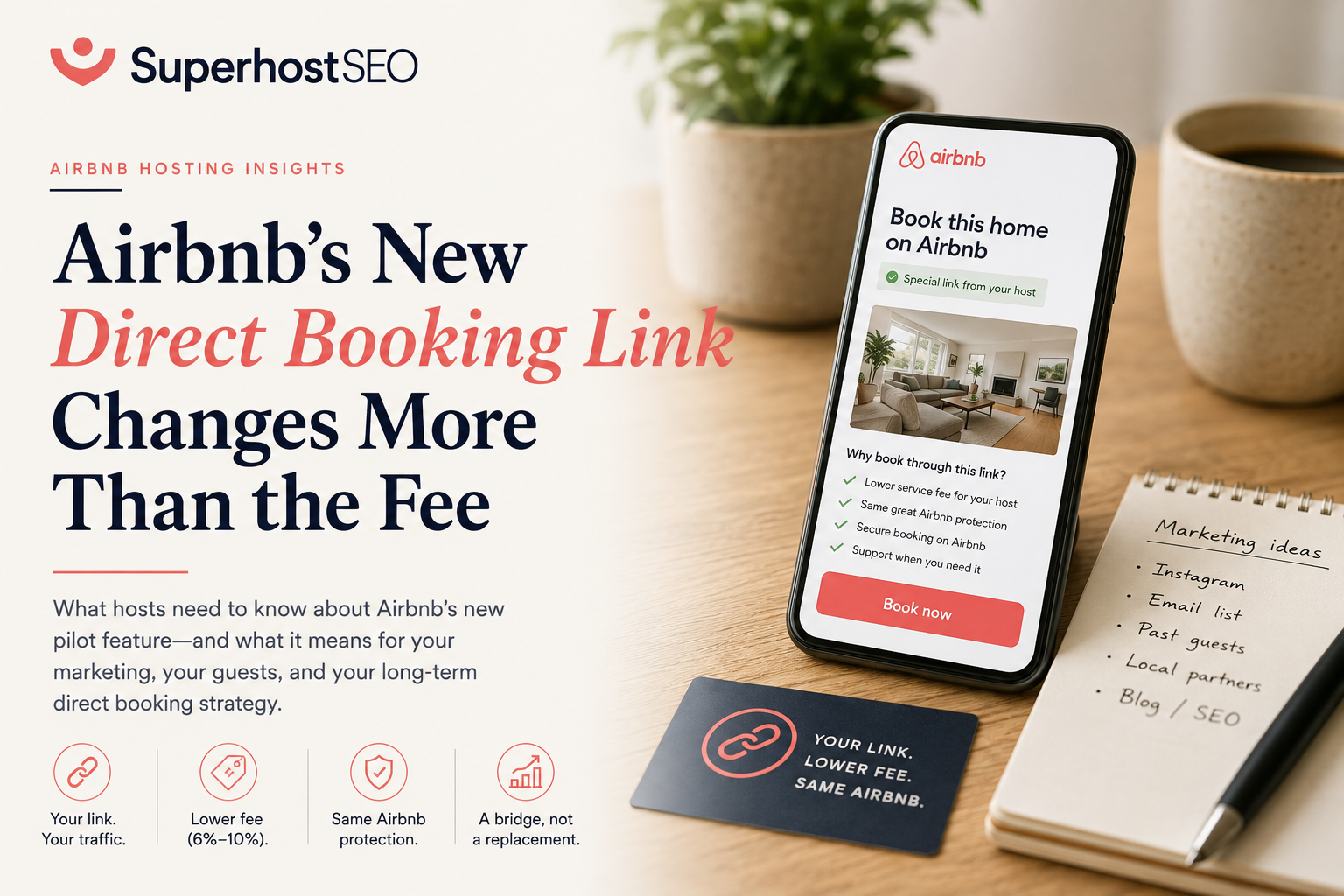 CornerstoneAirbnb's New Direct Booking Link Changes More Than the Fee
Airbnb is testing a new Direct Booking Link that gives some hosts a reduced service fee when they bring the guest themselves. The savings are interesting—but the bigger story is what this feature reveals about the value of your own audience, your brand, and the difference between generating a booking and owning the guest relationship.
9 min read How to Write an Event Policy That Actually Protects Your Vacation Rental
A no-party rule is only as good as how clearly it's communicated. Here's how experienced hosts define, enforce, and occasionally profit from their event policies.
5 min read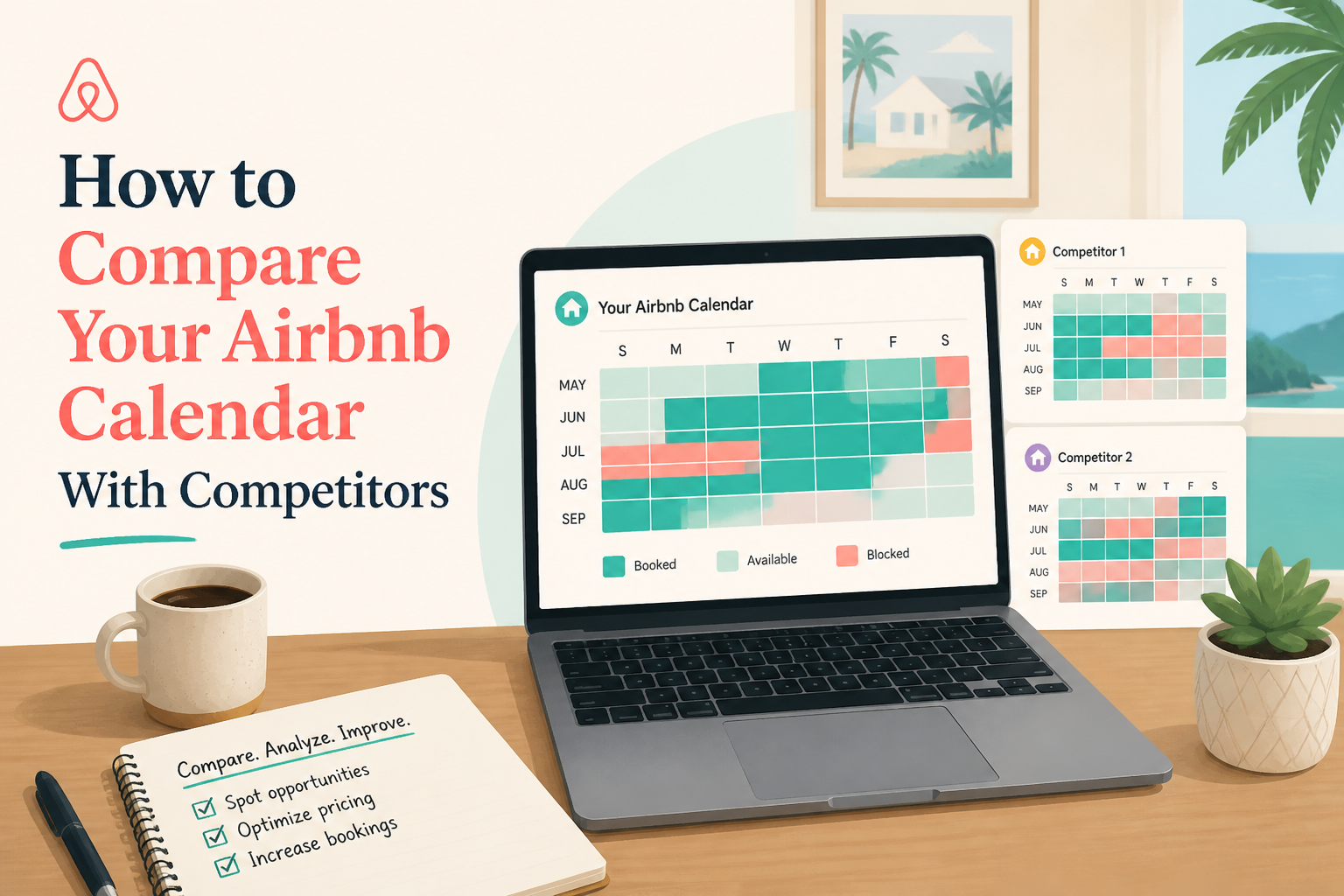 How to Compare Your Airbnb Calendar With Competitors
Looking at competitor calendars can help you understand whether a slow period is specific to your property or happening across your market. But availability does not automatically mean a property is struggling, and blocked dates do not necessarily mean bookings. Here is how I would use competitor calendar data without reading too much into it.
5 min read Parties and Vacation Rentals: Where Hosts Draw the Line
Every host eventually gets a booking that makes them pause. How you respond to that moment — before it becomes a problem — is what separates a clear policy from a costly lesson.
5 min read The Date Change Loophole That Catches Airbnb Hosts Off Guard
A guest inside the cancellation window asks to move their dates. The host agrees. A couple of hours later, the guest cancels from outside the window, penalty-free. It is a known pattern and it has a name.
4 min read