
How to Compare Your Airbnb Calendar With Competitors
Looking at competitor calendars can help you understand whether a slow period is specific to your property or happening across your market. But availability does not automatically mean a property is struggling, and blocked dates do not necessarily mean bookings. Here is how I would use competitor calendar data without reading too much into it.
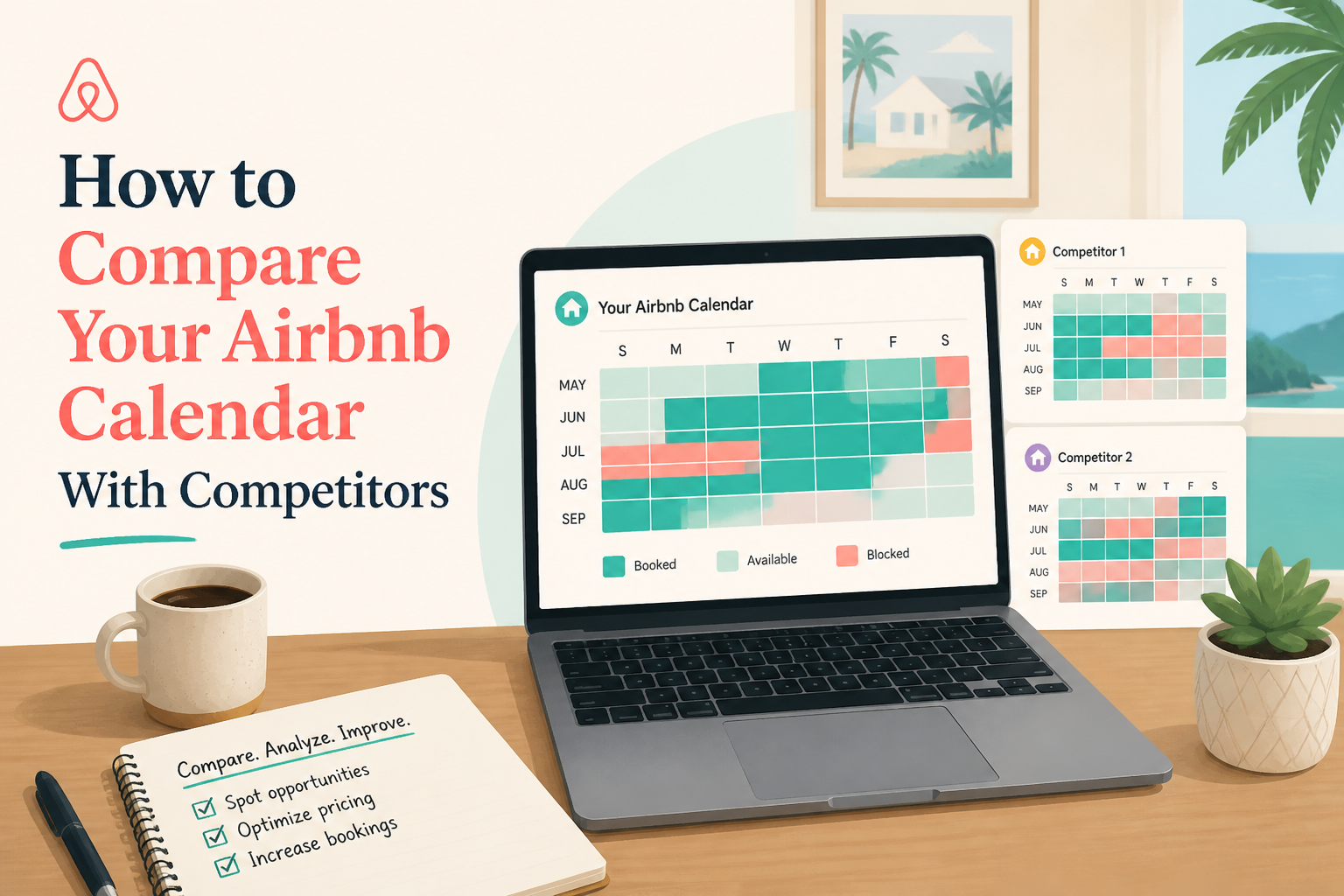
When bookings slow down, one of the first questions I want to answer is whether the problem is specific to my property or whether the market itself is slow.
Your own calendar cannot tell you that.
If you have a lot of availability next month, that might mean your pricing is too high, your listing needs work, or your minimum stay is getting in the way. But it could also mean that many comparable properties around you are sitting open too.
That is where competitor calendar data becomes useful.
The key is knowing what it can tell you and, just as importantly, what it cannot.
Start With the Right Competitors
Before comparing calendars, make sure you are comparing your property with listings that guests might realistically choose instead.
A two-bedroom apartment should not be compared with a five-bedroom luxury villa simply because both are nearby. Their guest type, booking window, pricing, and length of stay may be completely different.
I would look for properties with a similar location, bedroom count, capacity, quality level, amenities, and general guest profile.
You do not need twenty competitors. A few good comparisons are usually more useful than a huge list of properties that have very little in common with yours.
Availability Is a Signal, Not Proof of a Booking
This is probably the most important thing to understand when looking at another Airbnb calendar.
If a date is unavailable, you do not automatically know that it was booked.
The host may have blocked it for personal use. The property may be undergoing maintenance. The owner may have received the reservation through another platform. There may be a calendar restriction you cannot see.
So I would never look at a competitor with a mostly closed calendar and conclude that they are outperforming everyone around them.
You simply do not have enough information to know that.
What you can look for are patterns across several comparable properties.
Look at the Market as a Group
Suppose your next two weekends are completely open.
You check three comparable properties and they are also mostly open.
That tells you something different from checking the same three properties and seeing very little availability anywhere.
In the first situation, the market itself may simply be soft for those dates.
In the second, I would start asking harder questions about my own property. Is my price too high? Is my minimum stay too restrictive? Is my listing showing up in search? Is something creating hesitation after guests click?
Competitor data does not give you the answer by itself, but it gives you context for asking the right question.
Minimum-Stay Patterns Can Be Very Useful
One thing I find especially interesting is how nearby properties manage minimum stays.
Maybe you require three nights on weekends while similar properties allow two.
That does not automatically mean you should copy them. Your cleaning costs, operating model, and revenue goals may be completely different.
But it is information worth knowing.
If a guest searches Friday to Sunday and several competitors qualify while your property requires three nights, you are not simply competing lower in search. You may not be competing in that search at all.
This becomes particularly important around calendar gaps, slower periods, and event weekends.
Do Not Copy Competitors Blindly
I am a big believer in knowing what competitors are doing. I am not a believer in automatically doing the same thing.
You know your property better than they do.
Maybe another host is comfortable accepting one-night stays and you are not. Maybe they have a lower cleaning cost. Maybe they live next door and can handle turnovers easily. Maybe they are intentionally trying to maximize occupancy while you are trying to protect your average nightly rate.
Their strategy may be completely reasonable for them and completely wrong for you.
Competitor information should improve your decisions, not replace them.
Use Competitor Data When Pricing Feels Unclear
Competitor calendars become particularly useful when you are unsure how aggressively to react to a slow period.
If your calendar is open but comparable properties are also wide open, immediately dropping your rates may not solve very much. There simply may not be enough demand yet.
If your calendar is open while similar properties appear to be disappearing from availability around you, then I would investigate further.
Maybe your price needs adjustment. Maybe your listing is not converting. Maybe your minimum stay does not match the demand. Maybe you are not appearing in the searches you expect.
The competitor calendar gives you another piece of the puzzle.
Compare Patterns Over Time
Just like search visibility, I think competitor analysis becomes more useful when you stop treating it as a one-time snapshot.
One calendar check does not tell you much.
But if you repeatedly see certain competitors filling weekends earlier than you, keeping weekdays open longer, or using different minimum stays at certain booking windows, patterns start to emerge.
Those patterns can help you understand how your market behaves.
You may discover that weekends tend to book much earlier than you thought. You may see that three-night requirements become unusual inside 14 days. You may realize that several properties consistently remain open midweek, which tells you that your own empty Tuesdays are not necessarily a listing problem.
This is where competitor data becomes much more useful than simply asking, "Are they booked?"
Why I Built Competitor Intelligence
I built Competitor Intelligence because manually opening the same Airbnb listings and checking their calendars becomes tedious very quickly.
The idea is to choose a small number of properties you genuinely consider competitors and compare their availability and minimum-stay patterns against your own.
It is intentionally focused on information you can actually observe.
It does not pretend that an unavailable night must be booked, because we cannot know that from the outside. It also does not tell you what another host charged for a reservation you cannot see.
I would rather work with limited information honestly than create certainty where there is none.
Combine It With the Other Signals
Competitor Intelligence becomes more useful when you combine it with what is happening on your own listing.
If competitors seem to be filling while you remain open, Search Visibility can help you see whether your listing is appearing under comparable searches.
If visibility looks reasonable but bookings are not following, the Airbnb Listing Audit or Guest Intent Optimization may help identify whether the problem is inside the listing itself.
If competitors are using shorter minimum stays and your calendar has several awkward openings, the Calendar Gap Analyzer can help you see where your own rules may be creating difficult-to-book gaps.
No single tool explains the entire market. Each one answers a different question.
The Question Is Not Whether Your Competitor Is Winning
I would avoid turning competitor analysis into a scoreboard.
You do not know their revenue goals, operating costs, blocked dates, direct bookings, or personal calendar.
The better question is:
What does the surrounding availability tell me about the demand I am currently seeing?
Sometimes it confirms that you should make a change.
Sometimes it tells you the market is simply slow.
And sometimes it shows you a minimum-stay or calendar pattern you had not noticed before.
That is the real value of competitor data: not copying another host, but making your own decisions with more context.
Airbnb optimization specialist, Superhost, and founder of one of the largest Airbnb host communities.
Continue Reading
Chosen for you from The Optimization Journal.
 How to Choose the Right Airbnb Competitors to Watch
Competitor research is only useful if you are comparing your property with listings guests might realistically choose instead. A nearby Airbnb is not automatically a competitor. Here is how I would build a smaller, more useful competitor set.
5 min read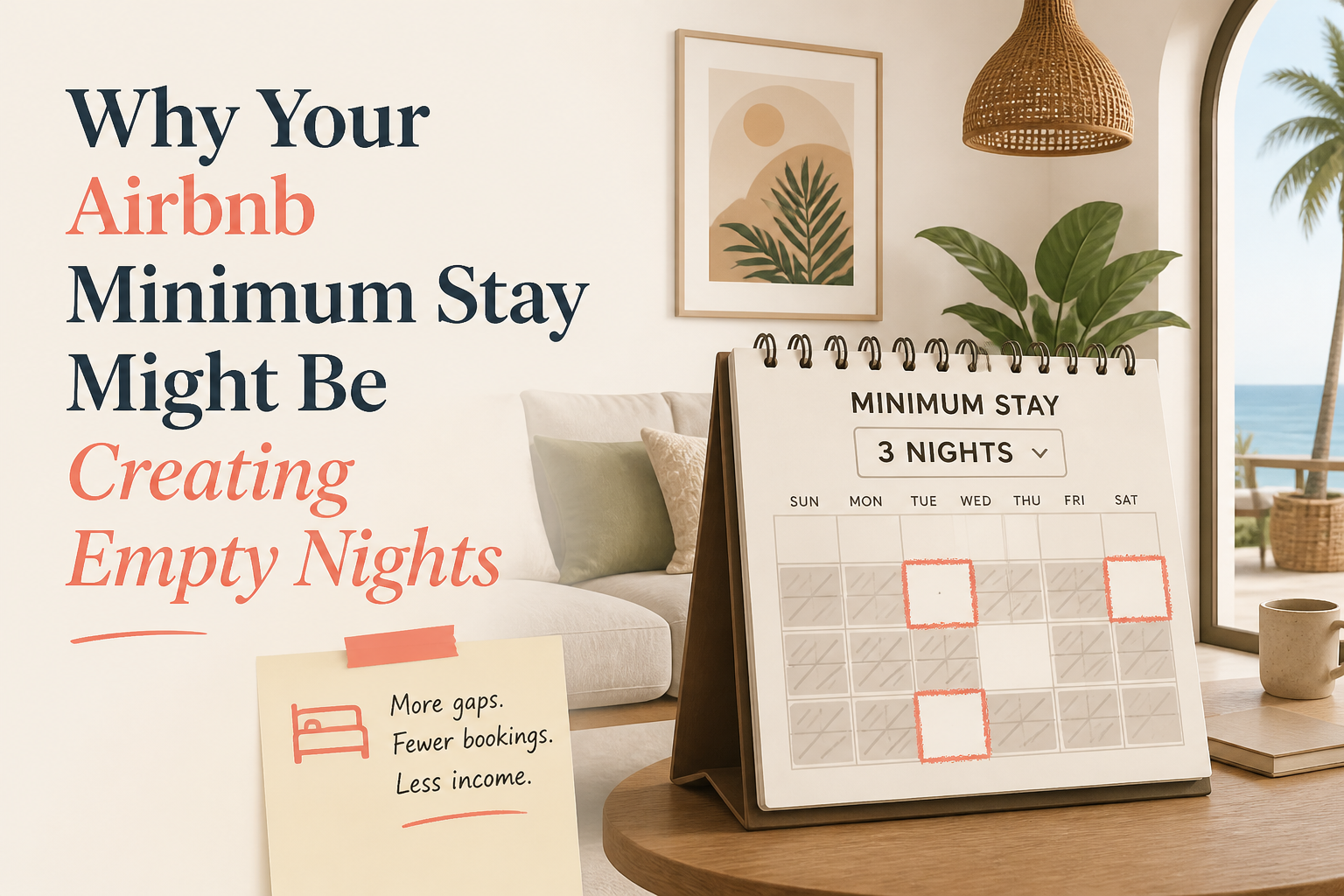 Why Your Airbnb Minimum Stay Might Be Creating Empty Nights
Minimum-stay rules can protect your calendar, reduce turnovers, and help you avoid low-value reservations. But the same rule can also create gaps that become nearly impossible to book. The trick is knowing when to hold your minimum and when the calendar is telling you to adjust it.
5 min read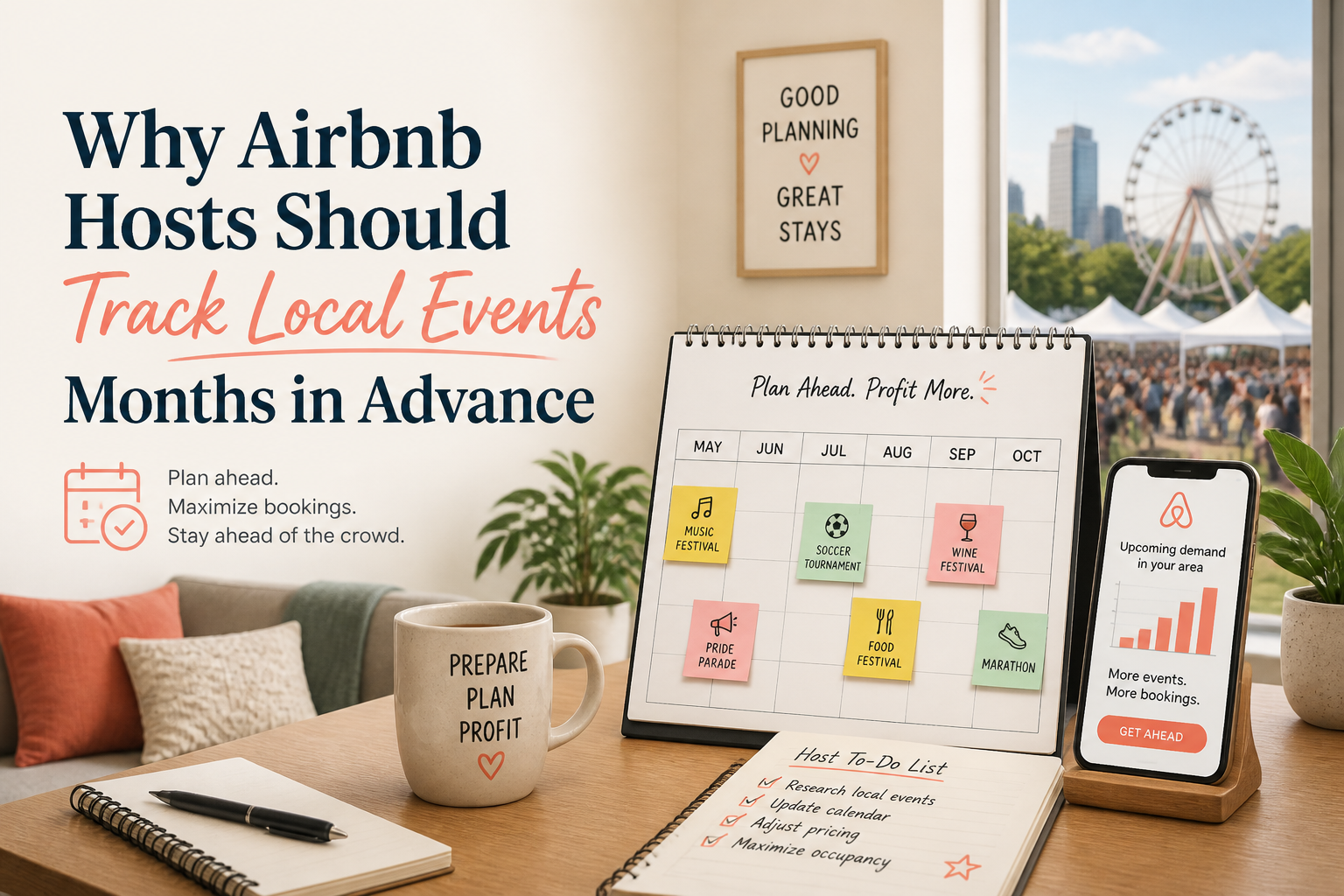 Why Airbnb Hosts Should Track Local Events Months in Advance
By the time a major local event is obviously driving Airbnb demand, some of the best booking opportunities may already be gone. Concerts, festivals, graduations, tournaments, and conferences are much more useful when you know about them early enough to adjust your calendar before guests start booking.
6 min read How to Build an Airbnb Cleaning Schedule From Your Calendar
Cleaning schedules sound simple until you have back-to-back stays, date changes, cancellations, and multiple properties. A good system should make turnovers obvious without forcing cleaners to constantly ask what is happening. Here is how I would organize an Airbnb cleaning schedule directly from the booking calendar.
5 min read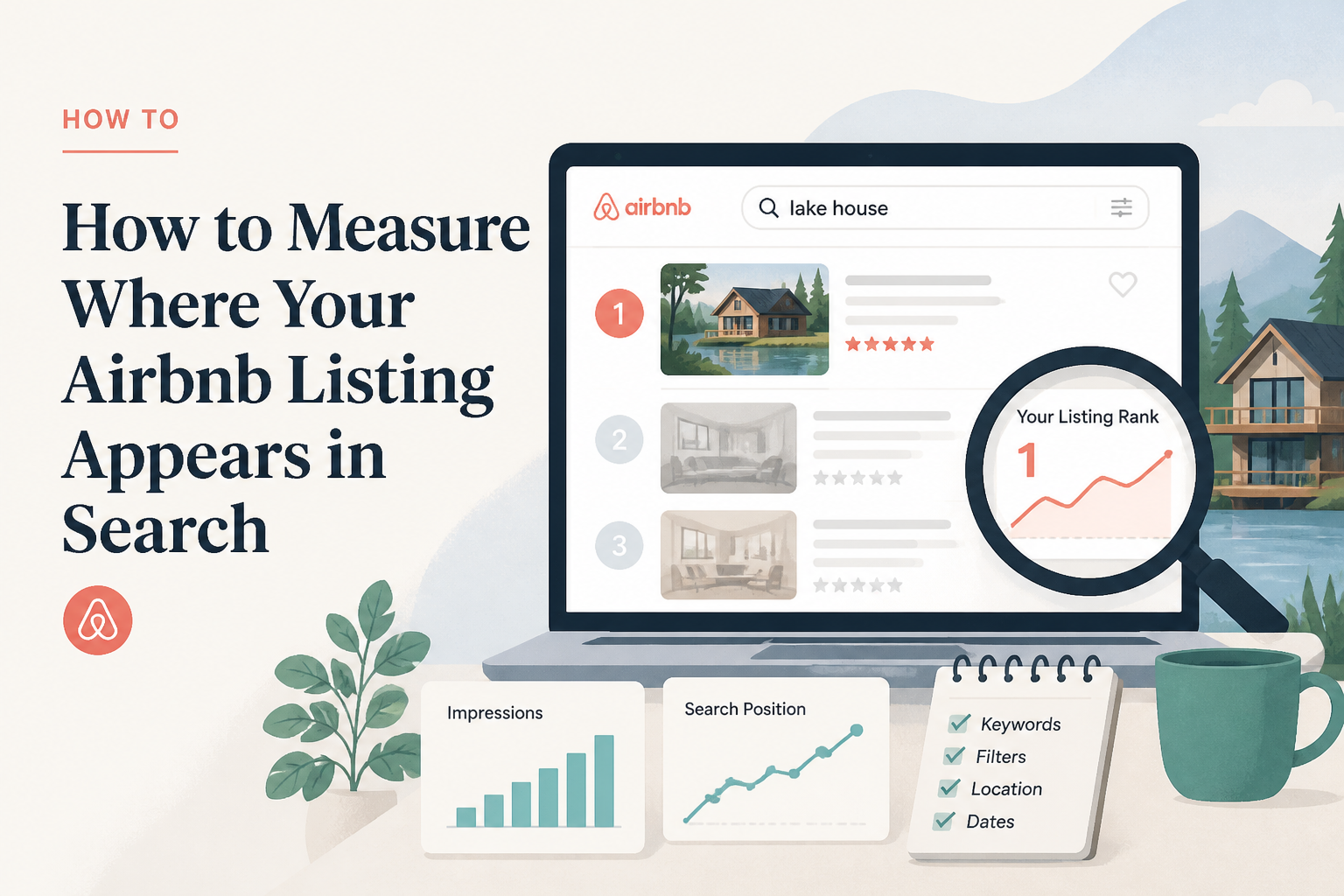 How to Measure Where Your Airbnb Listing Appears in Search
Airbnb search position is not as simple as searching your city and looking for your own property. Results can change based on dates, guest count, filters, location, and personalization. Here is a better way to think about Airbnb search visibility and how to tell whether your listing is improving over time.
5 min read