
How to Write an Airbnb Description That Converts: The Two-Layer Method
Most Airbnb descriptions are either too short or too difficult to scan. Learn the two-layer method for writing a clear, detailed, guest-focused listing description, with examples and a copy-ready template.
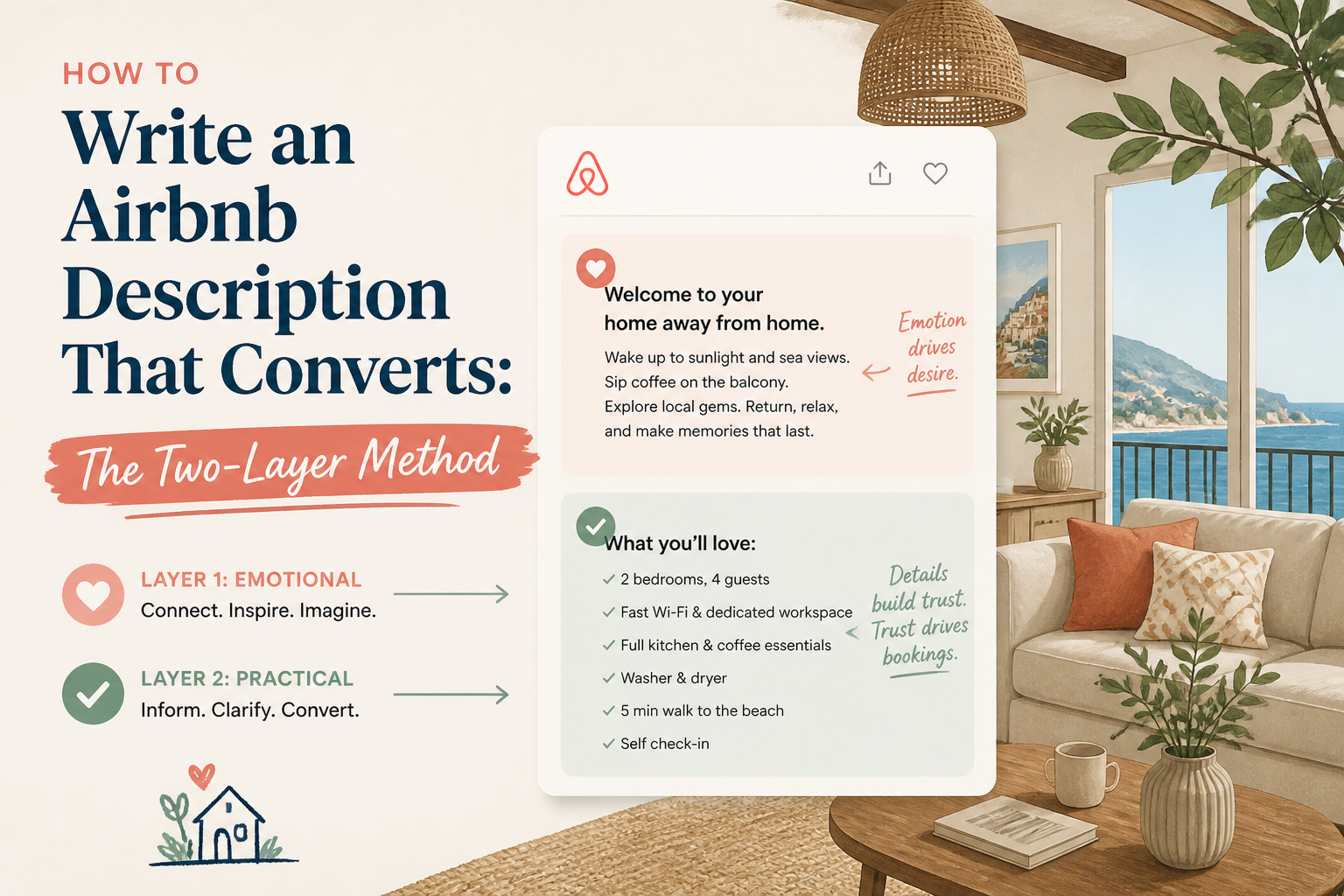
A strong Airbnb description should do two things: help guests quickly understand what your property offers, and give them enough detail to feel confident booking it.
The problem is that guests don't all read listings the same way.
Some scan for the information they need. Others study the photographs, descriptions, and sleeping arrangements before making a decision.
A single block of text often serves neither group particularly well.
After years of working on Airbnb listing optimization, I developed a writing approach that addresses both needs.
I call it the two-layer description method.
The first layer is a concise, organized overview that makes important property details easy to find.
The second is a more complete, room-by-room description that helps guests understand the space, picture their stay, and know what to expect.
This is the framework I teach in The Airbnb Optimization Playbook, and it forms part of the methodology behind SuperhostSEO's listing tools.
Here is how to apply it to your own property.
- Why Most Airbnb Descriptions Don't Work as Well as They Could
When I review Airbnb listings, I regularly encounter two very different problems.
The first is a description that barely tells the guest anything.
It might say:
"Welcome to our beautiful home! Enjoy a relaxing stay with everything you need. Perfect for families and friends."
The host probably spent time decorating, furnishing, photographing, and preparing the property.
Yet the description could apply to almost any vacation rental.
It doesn't explain the layout.
It doesn't tell guests how the bedrooms are arranged.
It doesn't identify the property's strongest features.
And it doesn't help someone decide whether the space is right for their trip.
The second problem is almost the opposite.
The host includes a tremendous amount of useful information, but puts everything into one enormous paragraph.
The description covers the kitchen, bedrooms, parking, patio, neighborhood, and check-in process without clear sections.
The information exists.
Finding it is the problem.
Guests are comparing properties. They want answers without having to work through a difficult block of text.
The solution is not simply to write more.
It is to organize the information around how people actually make booking decisions.
- Understand Airbnb's Different Description Sections
Before explaining the two-layer method, we need to distinguish the short listing summary from the longer property description.
They have different jobs.
The short Airbnb summary
Airbnb's introductory listing description is limited to 500 characters.
This section is your opportunity to introduce the property, identify its strongest benefits, and communicate what kind of stay it offers.
Think of it as the introduction to the full description.
It should create interest without trying to explain every room.
The longer "Your Property" or "The Space" section
This is where you provide the detailed information guests need.
Airbnb gives hosts additional space to explain their rooms, layout, facilities, and the experience of staying at the property.
Unfortunately, some hosts write a short summary and leave the longer property description mostly empty.
Others fill it with text that is difficult to navigate.
This is where the two-layer method comes in.
The short summary introduces the stay. The two layers inside your longer property description help guests understand it.
Airbnb also provides separate areas for Guest Access, Other Things to Note, and other important information.
Each section should serve its own purpose rather than repeating the same details unnecessarily.
- Start With a Strong 500-Character Airbnb Summary
Before building the two-layer description, write your short introduction.
In The Airbnb Optimization Playbook, I use a simple structure built around five elements:
- An opening experience hook
- The intended audience or type of stay
- Two or three important property benefits
- A relevant location advantage
- A closing line that reinforces the experience
You don't need to label these elements in your finished summary.
They should flow naturally.
Weak Airbnb summary example
"Welcome to our cozy cabin. We have everything you need for a wonderful vacation. Enjoy a comfortable stay surrounded by beautiful scenery. We look forward to hosting you!"
The wording is friendly, but it does very little to help a guest evaluate the property.
What makes this cabin different?
How many people can stay?
What amenities are included?
What kind of experience does it offer?
Improved Airbnb summary example
"Escape to a peaceful two-bedroom mountain cabin designed for couples and small families. Relax in the private hot tub, enjoy morning coffee on the covered deck, and explore nearby hiking trails. Inside, you'll find a comfortable living area, equipped kitchen, and dedicated workspace. A quiet retreat with the essentials for a relaxing getaway."
This example provides much more useful information.
It identifies the property type.
It communicates who might enjoy the stay.
It highlights distinctive features.
And it helps guests picture what they would do there.
The example is fictional. Only use amenities and location details that accurately describe your own property.
A useful summary communicates benefits and experience without becoming a generic list of adjectives.
Use the available character space deliberately, but don't add filler merely to reach the limit.
- Layer One: Create a Skimmable Property Overview
Now we move into the longer Airbnb description.
The first layer should be organized for the guest who scans.
Instead of writing several paragraphs immediately, begin with clear categories and short bullet points.
A guest should be able to identify important information in seconds.
Example: Layer One for a Two-Bedroom Mountain Cabin
THE SPACE
- Single-level, two-bedroom cabin
- Sleeps up to four guests
- Comfortable living area with mountain views
- Dedicated workspace and Wi-Fi
- Private covered deck and outdoor hot tub
KITCHEN & DINING
- Kitchen with cookware and essential appliances
- Coffee maker, refrigerator, oven, and microwave
- Dining table seating four guests
BEDROOMS
- Bedroom 1: Queen bed
- Bedroom 2: Double bed
- Fresh bedding and storage space in each room
BATHROOM
- One full bathroom with a walk-in shower
- Bath towels and basic toiletries provided
OUTDOOR SPACE
- Private deck with outdoor seating
- Hot tub for guest use
- Parking for two vehicles
GOOD TO KNOW
- Single-level interior
- Quiet mountain setting
- Car recommended for exploring the surrounding area
Notice how much information a guest can absorb without reading a long paragraph.
The structure immediately answers practical questions.
How many bedrooms are there?
What size are the beds?
Is the outdoor space private?
Can guests park?
Does the property offer a workspace?
This layer isn't intended to replace the longer description.
Its job is to make the most important information accessible.
Why the bullet summary works
A skimmable overview reduces the effort required to evaluate the property.
It also creates a structure that guests can revisit when comparing your listing against another.
Someone traveling with children may focus on the sleeping arrangements.
A remote worker may look for the workspace and Wi-Fi.
A couple planning a relaxing weekend may be interested in the hot tub and private deck.
The same information serves different guests without making everyone read the entire description.
- Layer Two: Write the Complete Property Description
Once the bullet summary is finished, it's time to write the longer description.
This is where hosts can explain the property more naturally and give guests a fuller understanding of the experience.
In my optimization framework, the long description has five parts:
- The opening hook
- The property overview
- The room-by-room walkthrough
- The neighborhood
- The closing experience
Each section serves a different purpose.
Part One: The opening hook
Start by introducing the property and the experience it offers.
You don't need exaggerated language.
Use a warm, specific introduction that helps the guest understand the setting.
For our fictional cabin, that might be:
"Set in a quiet mountain setting, this two-bedroom cabin offers a comfortable base for exploring nearby trails and enjoying time away from busy city life. Spend the morning on the covered deck, return from an afternoon outdoors, and unwind in the private hot tub before settling in for a relaxed evening."
This paragraph introduces the stay without repeating every amenity in the bullet summary.
Part Two: The property overview
Next, explain how the property is arranged.
A guest should understand the basic layout before reading about individual rooms.
For example:
"The cabin is arranged on a single level, with the living room, dining space, and kitchen connected in an open-plan layout. Both bedrooms and the bathroom are accessible from the main hallway. The covered deck extends from the living area, creating an additional space for relaxing outdoors."
This is practical information.
It helps guests picture the physical property rather than relying entirely on photographs.
Part Three: The room-by-room walkthrough
Now describe each space in detail.
I recommend following the same general sequence as your photo gallery.
If the photographs begin in the living room, move into the kitchen, and then show the bedrooms, let the written walkthrough follow a similar path.
That way, the photographs and description reinforce each other.
LIVING ROOM
"The living room offers comfortable seating, a television, and windows overlooking the surrounding mountain scenery. The open-plan layout connects directly to the kitchen and dining area, making it easy for guests to spend time together."
KITCHEN & DINING
"The kitchen includes an oven, refrigerator, microwave, coffee maker, and essential cookware for preparing meals. A dining table seats four, with the kitchen and living spaces close enough for everyone to remain connected while cooking or relaxing."
BEDROOMS
"The primary bedroom has a queen bed and storage space for clothing and luggage. The second bedroom has a double bed and is located across the hallway. Both rooms are on the same level as the main living area."
BATHROOM
"The full bathroom includes a walk-in shower, sink, and toilet. Bath towels and basic toiletries are provided for guests."
OUTDOOR SPACE
"The covered deck offers outdoor seating and access to the private hot tub. Guests can enjoy the mountain setting without leaving the property, whether starting the morning with coffee or relaxing after a day outdoors."
These paragraphs expand on the bullet summary.
They don't simply repeat it.
They help the guest understand how the spaces function and what using them would be like.
Part Four: The neighborhood
Once you've described the property, provide enough location context for guests to understand the surrounding area.
For example:
"The cabin is located in a quiet mountain area within driving distance of local hiking trails, restaurants, and everyday essentials. A vehicle is recommended for exploring the region. The setting is well suited to guests who prefer a quieter stay over a busy town-center location."
This is more useful than saying:
"Close to everything!"
Be realistic.
If the property requires a car, explain that.
If restaurants and shops are within walking distance, mention the practical advantage accurately.
Location information helps guests decide whether your property matches the trip they're planning.
Part Five: The closing experience
Finish with a short paragraph that brings the property together.
For example:
"Whether you're planning a weekend outdoors, a quiet working getaway, or a few days to reconnect with family, the cabin offers a simple, comfortable place to settle in and enjoy the surrounding mountains."
The closing paragraph should reinforce the property's genuine strengths.
It does not need to promise an unforgettable or perfect stay.
The goal is to help guests imagine the experience accurately.
- Why the Two Layers Work Better Together
Each layer solves a different problem.
Layer One provides quick answers.
It allows guests to find essential information without having to read several paragraphs.
Layer Two provides understanding.
It adds context, explains the layout, and helps guests picture themselves using the space.
Imagine a family comparing two vacation rentals.
One listing says:
"Spacious family home with everything you need."
The other provides a clear overview of bedroom arrangements, kitchen facilities, parking, outdoor space, and access, followed by a logical walkthrough.
The second listing gives the family more information to make a decision.
That doesn't guarantee a booking.
But it removes unnecessary questions and reduces the risk of misunderstandings.
The two-layer method is designed to make the listing easier to use, not simply longer.
This distinction is important.
Airbnb has not published a rule stating that longer descriptions or this particular structure automatically earn higher search rankings.
What we can say is that Airbnb recommends accurate, informative descriptions that help set guest expectations.
A well-organized description is a practical way to follow that guidance.
- Don't Forget the Sections Outside Your Main Description
A good two-layer description is not a substitute for completing the rest of your Airbnb listing.
Some information belongs in dedicated sections.
Guest Access
Explain exactly which areas guests can use.
For example:
- Is the entire property private?
- Is the hot tub shared?
- Is the garage available?
- Are there locked storage areas?
- Is access through a private or shared entrance?
Other Things to Note
Use this section for important conditions that could influence a guest's decision.
Examples include:
- Stairs or accessibility limitations
- Potential road or neighborhood noise
- Seasonal restrictions
- Unusual parking arrangements
- Shared outdoor spaces
- Limitations on particular amenities
A strong listing sets clear expectations before guests arrive.
Don't hide relevant limitations in order to make the property appear more attractive.
Unexpected problems after check-in are often more damaging than honest disclosures before booking.
Amenities
Make sure the features mentioned in your description are also selected accurately in Airbnb's amenity settings.
A description mentioning a dedicated workspace does not necessarily replace selecting the appropriate amenity in the listing editor.
Your photographs, description, structured details, and amenities should all communicate a consistent picture of the property.
- Seven Common Airbnb Description Mistakes
Even a detailed description can underperform if it is written poorly.
Here are seven mistakes I recommend avoiding.
Mistake 1: Using generic opening phrases
"Welcome to our beautiful property" says very little.
Lead with a real benefit or a meaningful description of the stay.
Mistake 2: Writing everything in one paragraph
A wall of text makes useful information harder to find.
Use clear sections and short paragraphs.
Mistake 3: Repeating the title
Your title, summary, and full description should build on each other rather than repeat exactly the same information.
Mistake 4: Describing amenities without context
"Fully equipped kitchen" is vague.
Explain the important equipment actually available, especially when it matters to your target guests.
Mistake 5: Leaving sleeping arrangements unclear
A property that sleeps eight might have four double beds, a combination of bedrooms and sofa beds, or another configuration entirely.
Guests should not have to guess.
Mistake 6: Making claims your photographs don't support
If you promote a private outdoor area, guests should be able to understand its privacy and layout from your listing.
Descriptions and photographs should tell the same accurate story.
Mistake 7: Trying to appeal to everyone
A romantic cabin, a downtown apartment for business travelers, and a large family vacation home serve different needs.
Write around the genuine strengths of your property rather than promising it is perfect for every type of guest.
- A Copy-Ready Airbnb Description Template
If you're rewriting your Airbnb listing, use the following structure as your starting point.
Replace the placeholders with accurate property details.
SHORT SUMMARY — UP TO 500 CHARACTERS
"Discover a [property type] in [setting], ideal for [guest type]. Enjoy [top benefit], [important amenity], and [distinctive feature]. Located [accurate location advantage], the property offers [specific experience or practical benefit]."
THE SPACE — LAYER ONE
PROPERTY OVERVIEW
- Property type: [type]
- Bedrooms: [number]
- Bathrooms: [number]
- Maximum guests: [number]
- Key features: [main strengths]
LIVING AREA
- [Seating and entertainment]
- [Layout and important details]
KITCHEN & DINING
- [Important appliances]
- [Cooking facilities]
- [Dining capacity]
BEDROOMS
- Bedroom 1: [bed type and details]
- Bedroom 2: [bed type and details]
- Additional sleeping arrangements: [if applicable]
BATHROOMS
- [Bathroom configurations]
- [Facilities and essentials]
OUTDOOR AREAS
- [Outdoor features]
- [Privacy and access]
- [Seasonal limitations]
GOOD TO KNOW
- [Parking]
- [Accessibility or stairs]
- [Important guest information]
THE SPACE — LAYER TWO
WELCOME & EXPERIENCE
[Introduce the setting, type of stay, and strongest genuine benefits.]
PROPERTY OVERVIEW
[Explain the layout, number of levels, and how the main spaces connect.]
LIVING ROOM
[Describe seating, atmosphere, entertainment, and how the room is used.]
KITCHEN & DINING
[Explain cooking facilities, appliances, dining arrangements, and practical details.]
BEDROOMS & BATHROOMS
[Explain the sleeping configurations, room locations, and bathroom facilities.]
OUTDOOR AREAS
[Describe outdoor amenities, seating, privacy, access, and any important restrictions.]
NEIGHBORHOOD
[Describe the local setting, nearby attractions, transportation, and practical location advantages.]
THE EXPERIENCE
[Close with a specific description of the type of stay the property supports.]
This template is not a script that every Airbnb host should copy word for word.
It is a framework for organizing accurate information.
Your property's unique details are what make the final description valuable.
- How SuperhostSEO Helps You Improve Your Airbnb Description
Writing a complete description from scratch can be time-consuming, especially if you're managing several properties.
But editing without first understanding what is missing can be just as inefficient.
That is why the SuperhostSEO toolkit separates diagnosis from implementation.
Start with the free Airbnb Listing Audit
The "SuperhostSEO Airbnb Listing Audit" (https://www.superhostseo.com/audit/) evaluates your existing listing across nine weighted categories.
It gives particular attention to your title, short summary, and main property description.
The report identifies weaknesses and provides prioritized recommendations so you can understand what deserves attention first.
The audit itself does not rewrite or publish your listing.
Its job is to tell you what needs improvement.
Use the Airbnb Listing Workshop
For an existing listing that needs substantial revision, the Listing Workshop helps you work through your content section by section.
Rather than replacing everything with a generic AI-generated paragraph, the process is designed to improve your listing's organization and presentation.
Build a new listing with Listing Studio
If you are starting with a new property, Listing Studio guides you through a structured property profile before generating listing text.
The goal is to gather the information needed for a detailed, accurate presentation instead of starting with a blank text box.
The generated material remains under your control.
You review it and decide what to copy into Airbnb.
These tools are built around the same principle as the two-layer method:
A good description begins with complete property information, then organizes it around the questions guests need answered.
Frequently Asked Questions
How do I write a good Airbnb listing description?
Start with a short introduction highlighting the property type, strongest benefits, and intended experience. Then use a structured longer description to explain the layout, rooms, amenities, neighborhood, and practical guest information. Keep everything accurate and easy to scan.
How long should an Airbnb description be?
Airbnb's introductory listing description is limited to 500 characters. Additional sections, such as Your Property or The Space, provide room for more detailed explanations. Use enough detail to answer important guest questions without adding unnecessary repetition.
What should I include in the Airbnb "The Space" section?
Include the property layout, living areas, kitchen facilities, sleeping arrangements, bathrooms, outdoor spaces, and other useful details. A short bullet overview followed by a room-by-room description makes the information easier to navigate.
Should I use bullet points in my Airbnb description?
Yes, when they make important information easier to find. Bullet points are useful for amenities, bed configurations, layouts, and practical details. They work especially well alongside descriptive paragraphs that provide more context.
Does a longer Airbnb description improve search rankings?
Airbnb does not guarantee higher rankings for longer descriptions. The platform considers many factors when generating search results. Clear, accurate, complete information can make a listing more useful to guests, but adding words solely to increase length is not a reliable ranking strategy.
Can I use AI to write my Airbnb listing description?
AI can help organize property information and draft clearer text, but the output should be carefully reviewed. Do not publish invented amenities, inaccurate travel times, misleading descriptions, or details that do not match the property. The host should approve the final content.
What's the difference between an Airbnb summary and The Space?
The short summary introduces the property's main benefits within a limited character count. The Space provides a more complete explanation of the layout, rooms, facilities, and guest experience.
How can I check whether my Airbnb description needs improvement?
Read it as someone who has never visited the property. Look for unanswered questions, missing room information, unclear amenities, and contradictions between the text and photographs. You can also "run a free Airbnb Listing Audit" (https://www.superhostseo.com/audit/) to receive a structured assessment of your existing listing.
Final Thoughts: Help Guests Understand the Stay
The best Airbnb descriptions aren't necessarily the longest or the most creative.
They're the ones that make the property easy to understand.
Guests should be able to scan for essential details, read deeper when they need more information, and picture how the property will work for their trip.
That is the purpose of the two-layer method.
First, give guests a clear overview.
Then help them walk through the property in their minds.
Use specific details instead of vague marketing language.
Make the photographs and written information reinforce each other.
And remove the unanswered questions that create hesitation.
A property doesn't need to be perfect for every guest.
It needs to be clearly presented to the guests who are right for it.
Want to find out whether your Airbnb description is missing important information?
"Run your free Airbnb Listing Audit with SuperhostSEO" (https://www.superhostseo.com/audit/) and receive a scored assessment with prioritized recommendations for improving your listing.
Written by Elie Parienti, founder of SuperhostSEO and author of The Airbnb Optimization Playbook and The Airbnb Tools Playbook. The two-layer description framework is drawn from The Airbnb Optimization Playbook, Revised & Expanded, Chapters 5 and 6.
Further Reading
- "Airbnb: Writing an Effective Listing Description" (https://www.airbnb.com/resources/hosting-homes/a/writing-an-effective-listing-description-13)
- "The Airbnb Section Most Hosts Leave Blank" (https://www.superhostseo.com/blog/airbnb-your-property-section)
- "Why Airbnb Guests Skip Long Descriptions" (https://www.superhostseo.com/blog/airbnb-description-wall-of-text)
- "How to Write an Airbnb Listing That Actually Converts" (https://www.superhostseo.com/blog/how-to-write-an-airbnb-listing-that-converts)
Airbnb optimization specialist, Superhost, and founder of one of the largest Airbnb host communities.
Continue Reading
Chosen for you from The Optimization Journal.
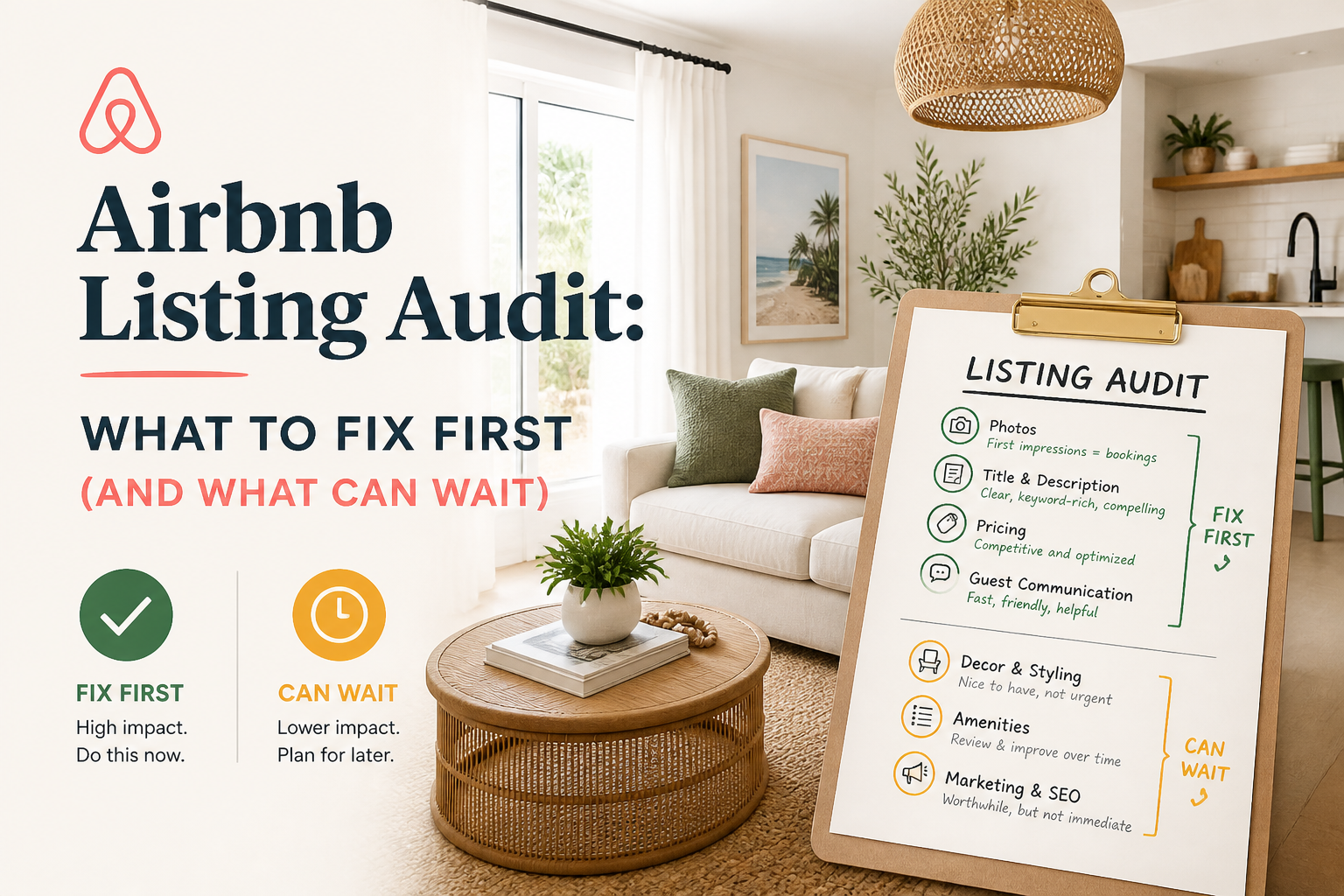 CornerstoneAirbnb Listing Audit: What to Fix First (And What Can Wait)
Not every weakness in your Airbnb listing deserves the same attention. Learn how to read an Airbnb listing audit, identify high-impact problems, and prioritize improvements that actually matter to guests.
14 min read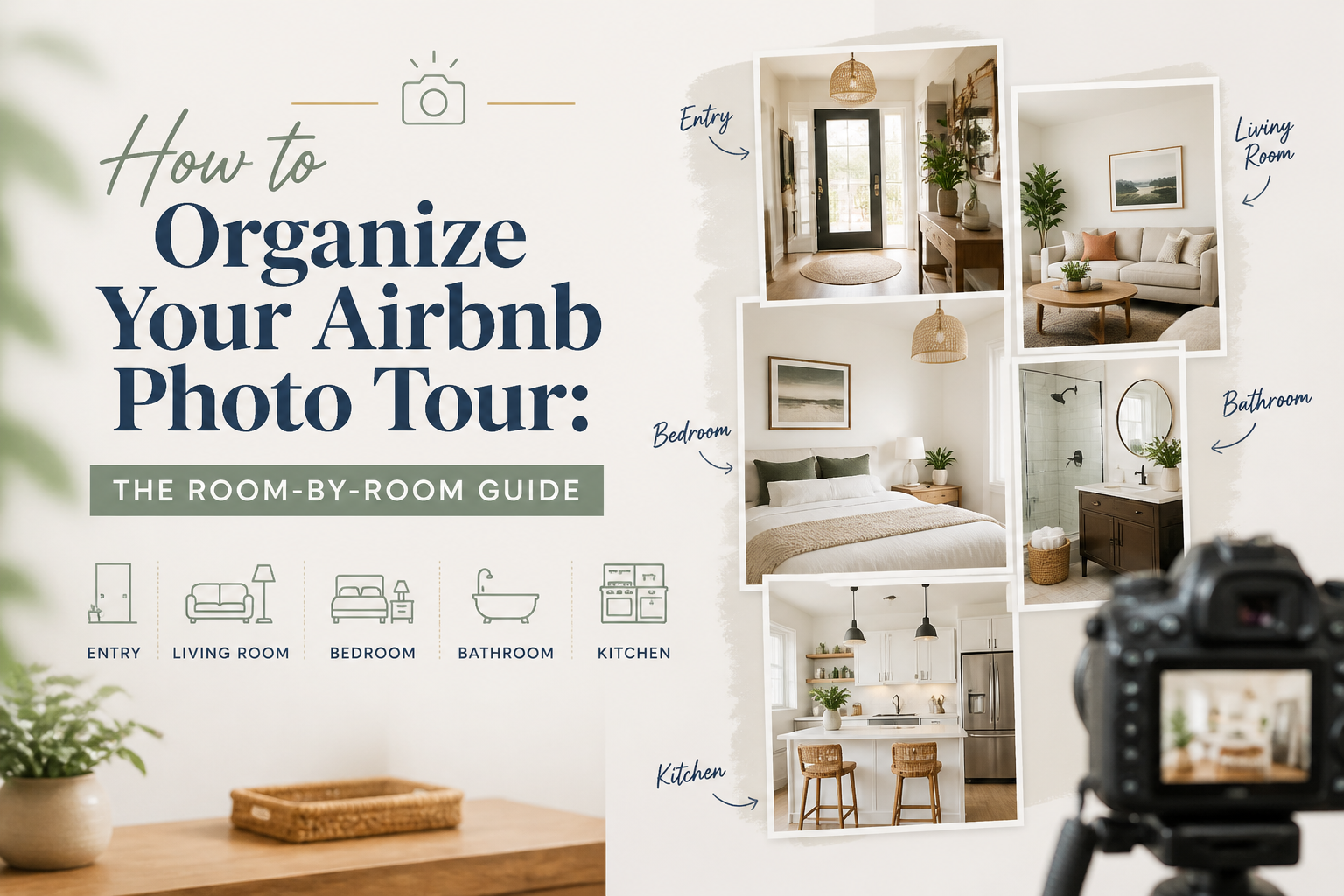 CornerstoneHow to Organize Your Airbnb Photo Tour: The Room-by-Room Guide
Your Airbnb photos might be beautiful, but is your Photo Tour helping guests understand the property? Learn how to organize every room, correct misplaced photos, improve room details, and build a gallery that creates booking confidence.
18 min read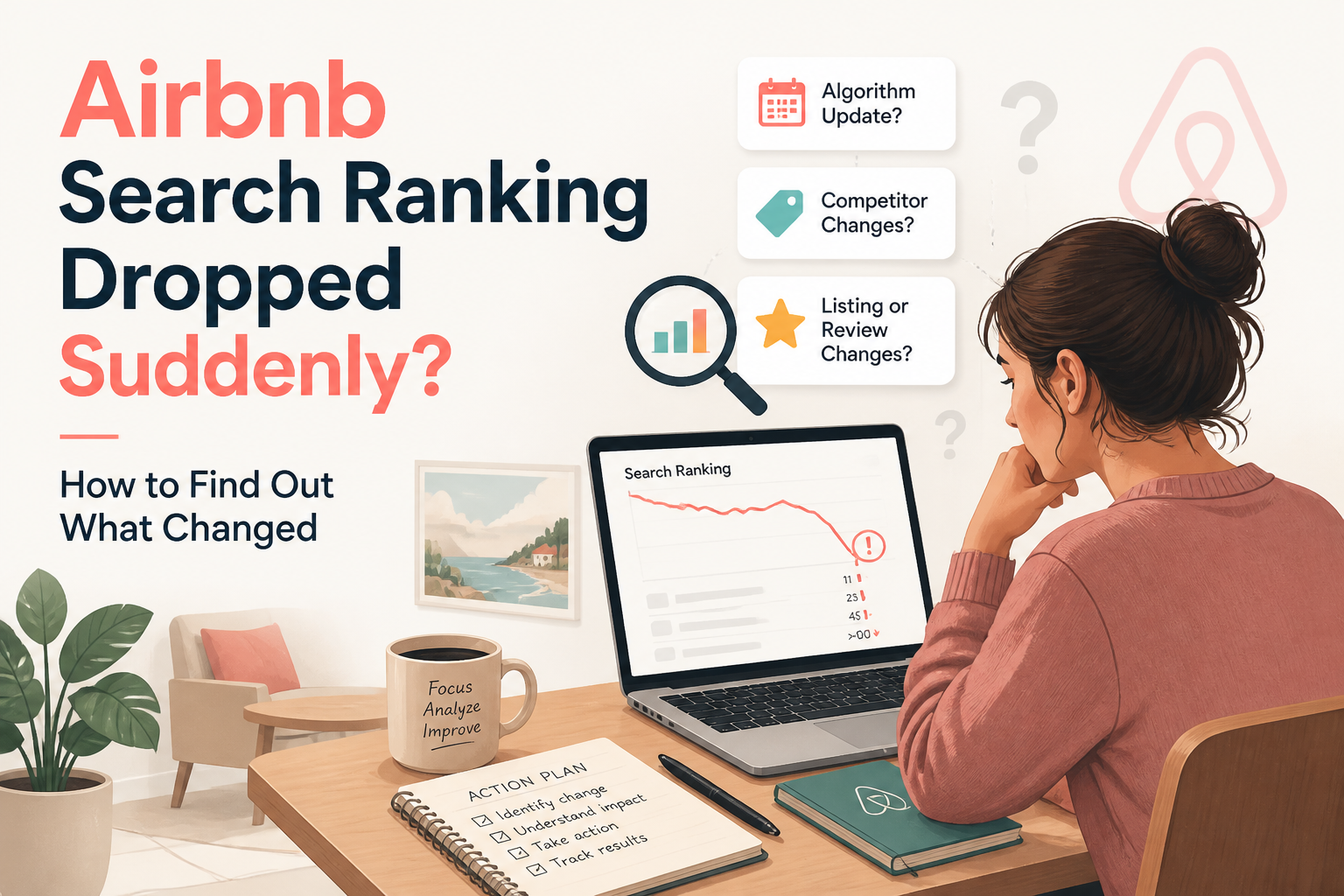 CornerstoneAirbnb Search Ranking Dropped Suddenly? How to Find Out What Changed
Did your Airbnb listing suddenly lose views or search visibility? Learn how to diagnose ranking changes, check availability and pricing, compare market conditions, and identify what to fix before rewriting your listing.
19 min read CornerstoneAirbnb Amenities Checklist: Missing Settings That Can Cost You Search Visibility
Your Airbnb may have amenities guests are searching for, but are they selected in your listing settings? Use this room-by-room checklist to find missing amenities, avoid filtered-search visibility problems, and improve your listing's accuracy.
19 min read CornerstoneWhy Is My Airbnb Listing Not Getting Bookings in 2026? How to Find the Real Problem
When Airbnb bookings slow down, lowering your price is not always the solution. Learn how to identify whether your listing has a visibility problem, a conversion problem, or a market-demand problem—and what to fix first.
12 min read