
What Guests Look for Before Booking an Airbnb
Guests do not read an Airbnb listing from top to bottom like a brochure. They scan, compare, hesitate, and decide. Understanding what they look for first can help you make the listing easier to trust and easier to book.
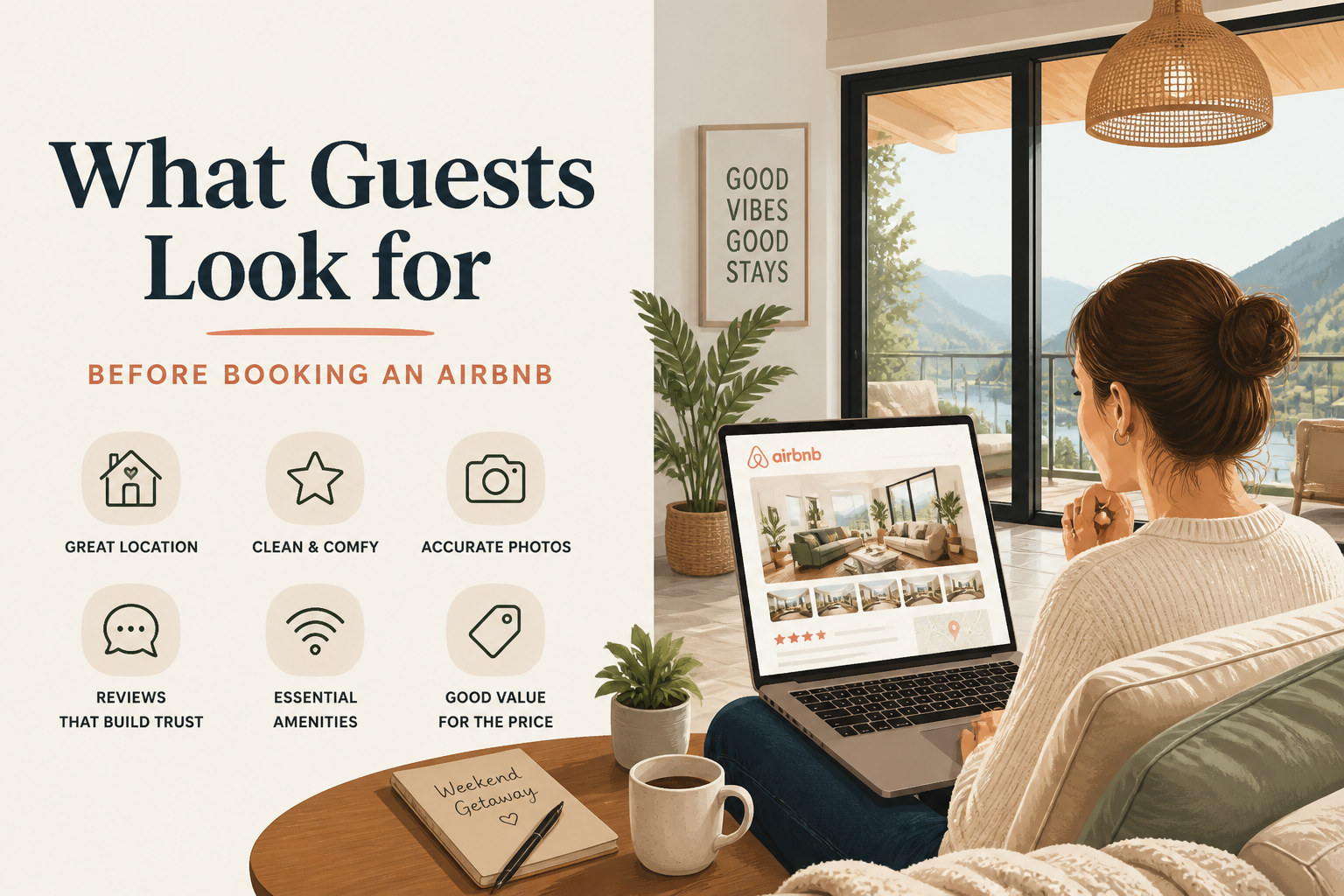
Hosts know their property in great detail.
Guests do not.
They arrive at your listing with a handful of photos, a price, some reviews, and a trip they are trying to organize. In a relatively short amount of time, they have to decide whether your property feels like the right choice.
That is why I think it helps to stop looking at the listing as the host for a moment and look at it as a decision.
What does the guest need to see before they are comfortable clicking Reserve?
Not every guest follows exactly the same process, but there are a few things I would expect most of them to work through.
First: Does This Property Look Like It Fits My Trip?
This happens very quickly.
The guest sees the cover photo, property type, location, price, rating, and title in search results.
Before they know anything else about the property, they are already making a basic judgment.
Does this look like somewhere I would stay?
If they are traveling with children, does it look family-friendly?
If they are planning a romantic weekend, does it feel private?
If they are traveling with six people, does it look large enough?
The goal of the first impression is not to explain everything. It is to give the right guest enough reason to click and learn more.
Then: Does the Price Make Sense?
Guests do not evaluate price in isolation.
They compare it with the property they see.
A higher price may feel completely reasonable if the home looks exceptional, the location is strong, the reviews are excellent, and the amenities justify it.
A lower price can still feel expensive if the listing creates uncertainty.
This is why I do not like treating pricing and listing quality as completely separate subjects.
The guest is looking at both at the same time.
They are effectively asking: Does what I am seeing feel worth what I am being asked to pay?
Next: What Am I Actually Getting?
This is where guests usually start digging into the listing.
They want to understand the physical property.
How many bedrooms are there?
What size are the beds?
Is the living room separate?
Is there a real dining space?
Is the outdoor area private?
Does the kitchen look usable?
For larger groups, sleeping arrangements become especially important. A listing may technically sleep eight, but guests want to know what that means.
Eight people across four bedrooms is very different from six people in bedrooms and two on a sofa bed in the living room.
The clearer you make the setup, the less work the guest has to do.
Photos Are Doing More Than Showing the Property
Guests use the gallery to answer questions.
They are not only admiring the design.
They are trying to understand the layout, condition, privacy, space, and whether anything important seems to be missing.
If there is only one photo of the bathroom, they may wonder why.
If the listing mentions a view but the view barely appears in the gallery, they may question how significant it really is.
If the pool looks beautiful but they cannot tell whether it is shared, that uncertainty starts building.
A good photo gallery helps the guest mentally walk through the stay.
Then They Check the Location More Carefully
“Great location” is not enough for most guests.
They want to understand the location in relation to their trip.
How far is the beach?
How long does it take to reach downtown?
Can they walk to restaurants?
Will they need a car?
Is parking easy?
If they are attending an event, how far is the venue?
If the listing makes these answers difficult to find, the guest may leave and open another property where the location feels easier to understand.
Reviews Become the Reality Check
The host tells the guest what the property is supposed to be.
The reviews tell them what previous guests actually experienced.
This is why reviews can confirm the listing or quietly undermine it.
If the listing says the home is peaceful and several reviews mention road noise, the guest notices.
If the listing barely mentions the host's communication but reviews repeatedly praise how responsive the host is, that becomes part of the value of the property.
Guests are often looking for consistency.
Do the photos, description, and reviews all tell roughly the same story?
When they do, confidence increases.
Small Practical Details Can Become Big Decision Factors
This part depends heavily on the guest.
A family may care about laundry.
A road-trip guest may care about parking.
A remote worker may care about Wi-Fi and workspace.
An older guest may care about stairs.
A group may care about the number of bathrooms.
A pet owner may care about the yard.
A guest arriving late at night may care about how check-in works.
The difficult part is that what feels like a small detail to the host can be the deciding factor for the guest.
You do not need to make every detail equally prominent. But the important practical information should be easy to find.
Guests Also Look for Reasons Not to Book
This is something hosts sometimes underestimate.
Once a guest likes a property, part of the decision becomes risk reduction.
They start looking for the catch.
Is parking actually difficult?
Is the pool really private?
Are there hidden stairs?
Is the neighborhood noisy?
Are there strict rules they did not expect?
Does the layout work for the group?
Is the listing vague about something important?
The goal is not to hide negatives so the guest never sees them.
I would rather explain a limitation clearly than allow the guest to imagine something worse.
Clarity reduces risk.
This Is Why Completeness Alone Is Not Enough
A listing can have every Airbnb field completed and still make the guest work too hard.
The information may be there, but in the wrong place.
The strongest benefit may be buried.
An important limitation may be vague.
The photos may leave questions unanswered.
The reviews may be revealing a strength that the description does not mention.
This is the gap between listing completeness and guest confidence.
How I Use Guest Intent Optimization
This is the problem Guest Intent Optimization is designed to look at.
Instead of only asking whether the listing is complete, it looks at how the photos, copy, and real guest reviews work together.
The idea is to identify where a guest may hesitate, what they may not understand quickly enough, and which strengths are not being communicated clearly.
I usually think of it as the step after the basic listing structure is in good shape.
The Airbnb Listing Audit helps identify structural weaknesses.
Guest Intent helps ask a different question:
What might still make a guest hesitate before booking?
Review Your Listing in the Order a Guest Experiences It
If you want to do this manually, I would not start by editing the description.
Start in search results.
Look at the cover photo, title, price, rating, and what appears around your property.
Then open the listing and go through it in order.
Look at the first five photos.
Read the summary.
Scan the sleeping arrangements.
Look at the amenities.
Read the location information.
Then read the reviews.
At each stage, ask:
What question would I have right now if I did not already know this property?
That question is much more useful than simply asking whether you like your own listing.
The Guest Is Trying to Reach Confidence
I do not think most guests are searching for the perfect Airbnb.
They are searching for a property that fits the trip, feels worth the price, and does not create unnecessary uncertainty.
Your job is to help them understand those things quickly.
Show the strongest reasons to choose the property.
Explain the practical details that matter.
Make the sleeping setup easy to understand.
Be clear about location and access.
Use reviews as feedback about what guests notice after arrival.
And remove the small points of uncertainty that make another listing feel safer.
Guests book when they understand what they are getting and feel comfortable that the experience will match the promise.
Airbnb optimization specialist, Superhost, and founder of one of the largest Airbnb host communities.
Continue Reading
Chosen for you from The Optimization Journal.
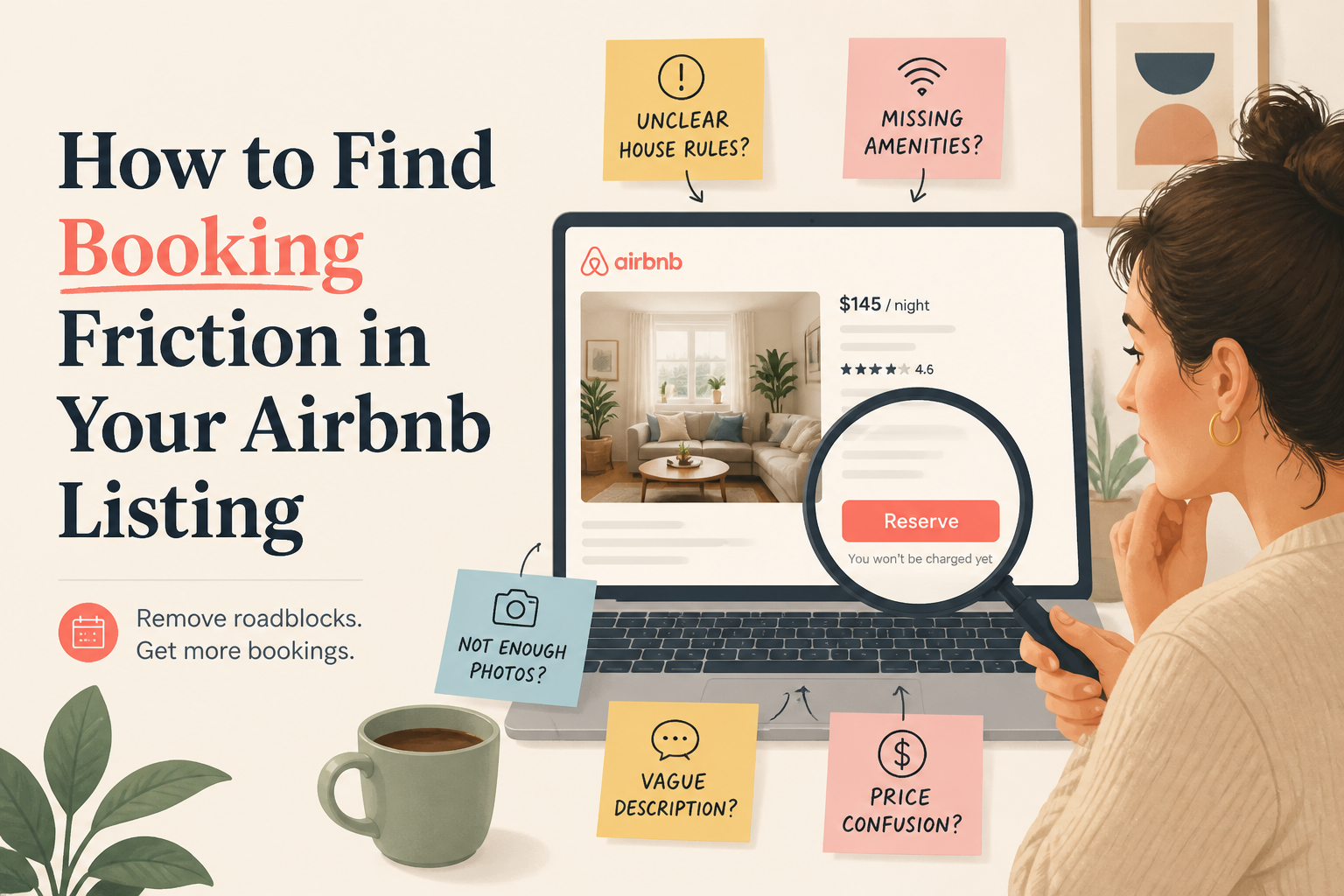 How to Find Booking Friction in Your Airbnb Listing
Sometimes an Airbnb listing looks complete, the price seems reasonable, and guests are still not booking. The problem may be small points of friction that create doubt as guests move through the listing. Here is how I look for them.
5 min read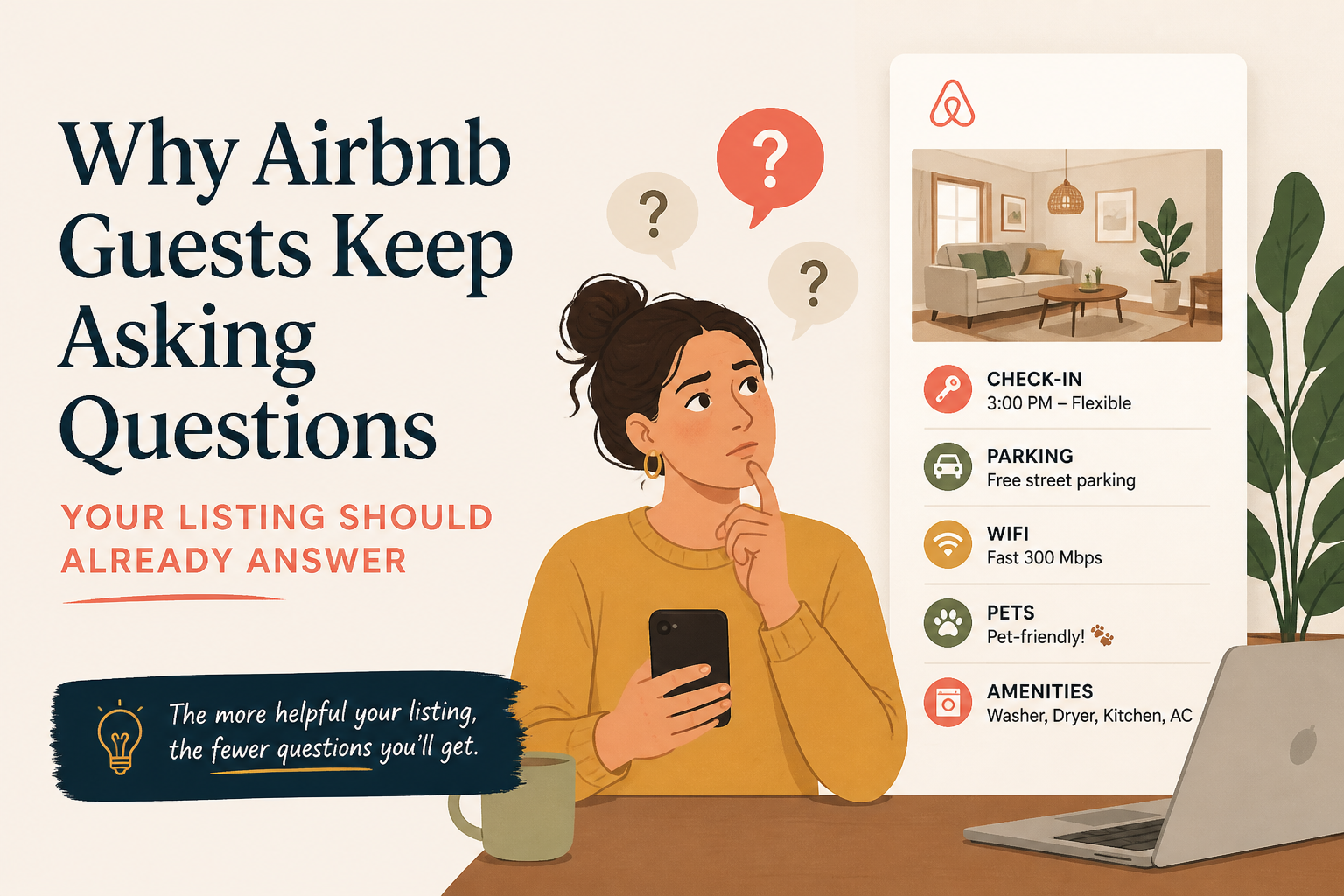 Why Airbnb Guests Keep Asking Questions Your Listing Should Already Answer
Repeated guest questions are often a sign that your Airbnb listing is not making important information easy enough to find. Instead of answering the same message over and over, use those questions to improve the listing itself.
5 min read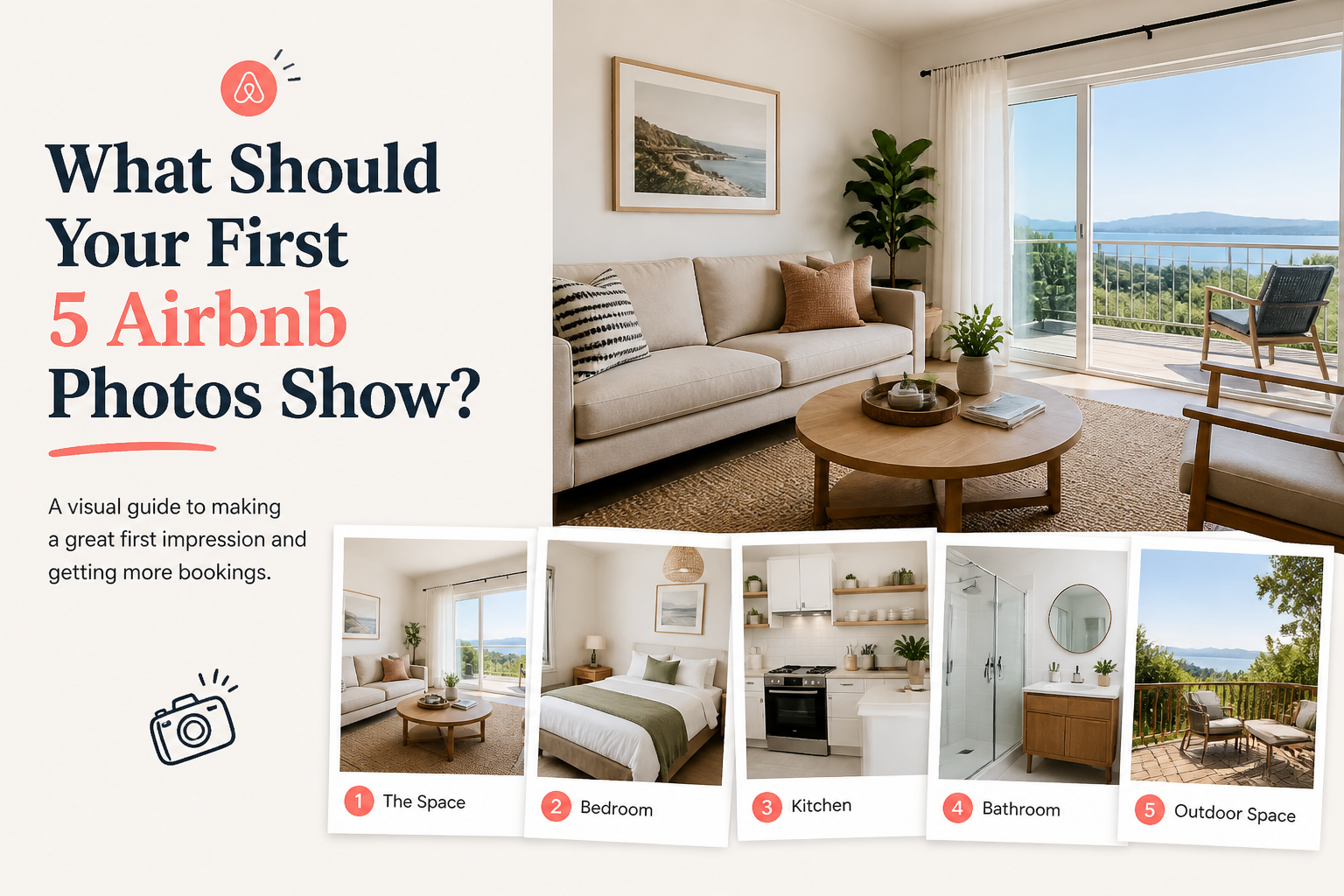 What Should Your First 5 Airbnb Photos Show?
The first five photos on your Airbnb listing should do more than look good. They should quickly show guests what the property is, why it stands out, and whether it fits the trip they are planning.
6 min read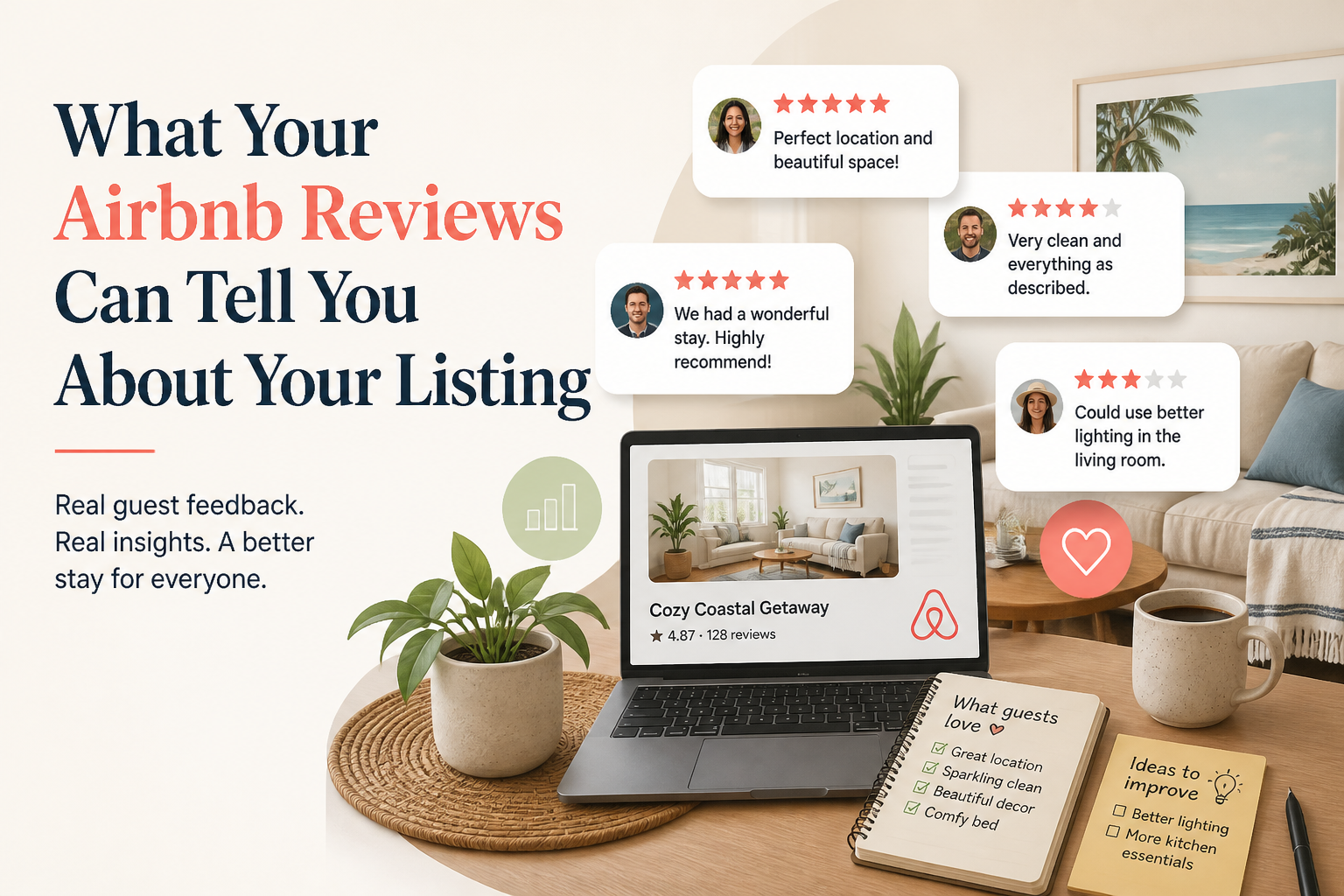 What Your Airbnb Reviews Can Tell You About Your Listing
Airbnb reviews are more than social proof. They can show you what guests value, what confuses them, what keeps getting mentioned, and where your listing may be setting the wrong expectations.
6 min read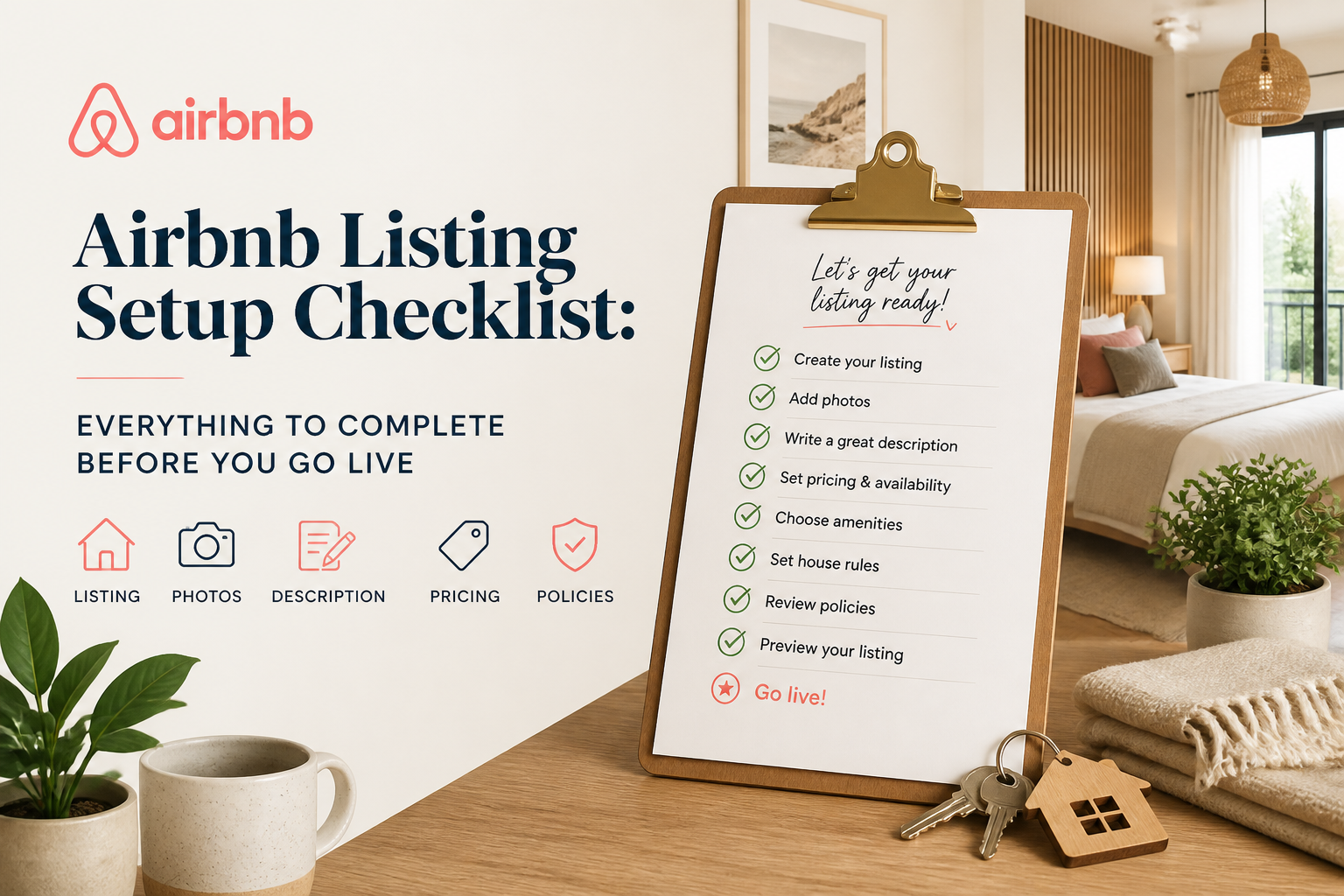 Airbnb Listing Setup Checklist: Everything to Complete Before You Go Live
A strong Airbnb listing starts before the first guest ever sees it. Before you publish, make sure the property is complete, clear, and easy to understand. Here is the checklist I would work through before going live.
7 min read