
How to Audit Your Airbnb Listing Before Changing Your Price
When bookings slow down, many hosts immediately lower the rate. Sometimes that is the right move, but sometimes the problem is somewhere else in the listing. Before discounting, I prefer to figure out whether the issue is visibility, conversion, or actually price.
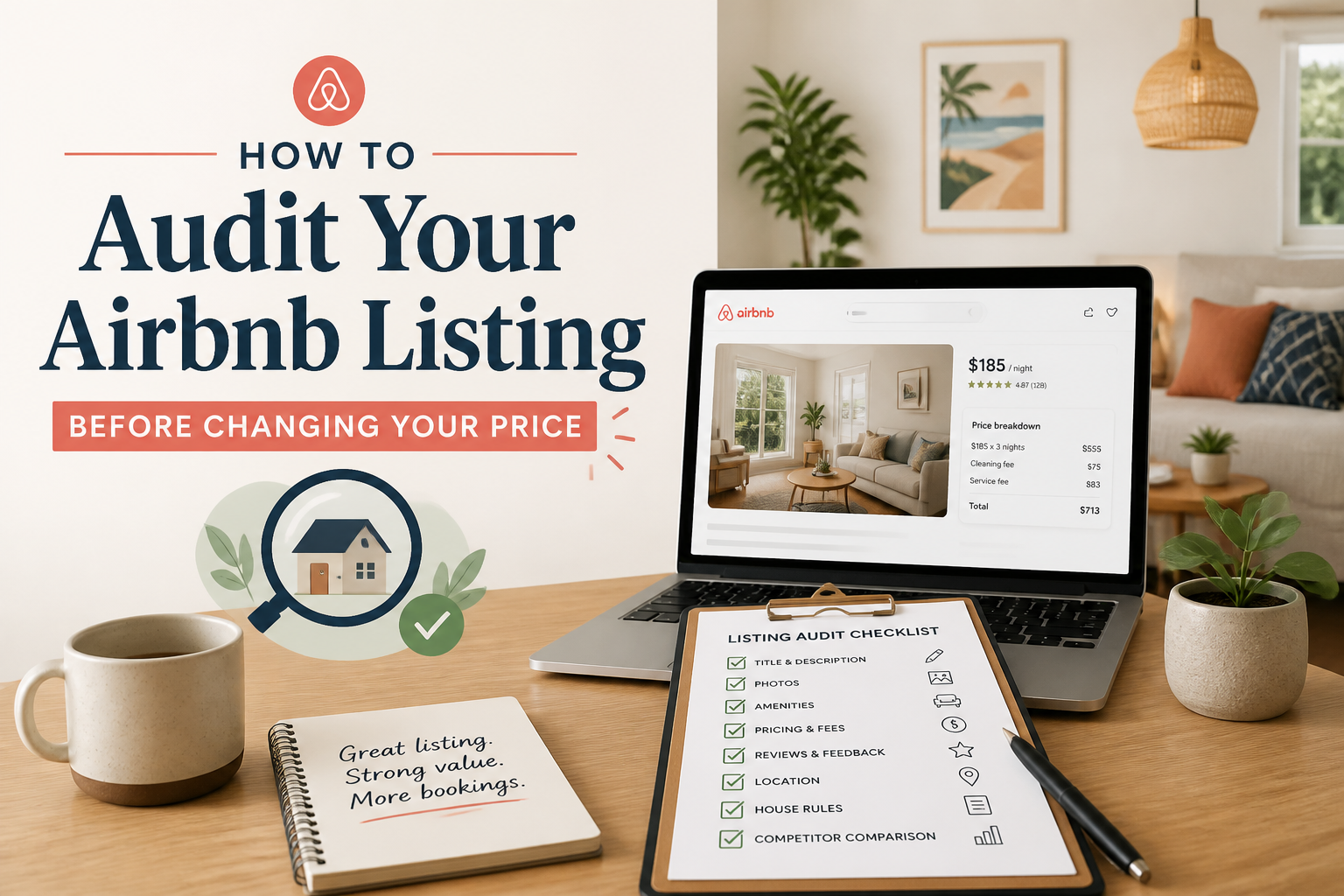
When bookings slow down, price is usually the first thing hosts look at. I understand why. Pricing is easy to change, and when you see empty dates on the calendar, lowering the rate feels like the most obvious way to create demand.
Sometimes that is exactly what you should do. But before changing the price, I think there is a more important question to answer: is price actually the problem?
A listing can underperform for many reasons. The cover photo may not be getting enough attention. The title may not communicate what makes the property special. The description may leave important questions unanswered. Amenities may be missing from the listing. Your minimum stay or availability settings may be reducing the number of searches you can appear in. Or guests may be clicking the listing but not feeling confident enough to book.
If one of those is the real problem, lowering the price may help temporarily, but you have not actually fixed anything.
Start With the Problem, Not the Solution
One of the hardest things about optimizing your own Airbnb listing is that you know the property too well. You know how the rooms connect, where guests park, what the neighborhood is like, which bedroom has the best view, and what every photo is supposed to show.
A guest seeing the property for the first time knows none of that. They only know what the listing communicates.
This is why I prefer to diagnose the listing before making major changes. If bookings are slow, I want to know whether guests are not finding the property, whether they are finding it but not clicking, or whether they are clicking and then deciding not to book.
Those are three different problems, and lowering the price is not automatically the right solution for all three.
First, Look at Visibility
If your listing is getting very few views, start there. Something may be limiting how often you appear in searches or how often guests choose to open your listing when they see it.
Check your availability, minimum stay requirements, booking window, amenities, title, cover photo, and general price position. A three-night minimum, for example, can remove you from searches where someone only needs two nights. A missing amenity can do the same thing when a guest uses a filter.
Price can absolutely affect visibility too, especially if you are far above similar properties. But it should be looked at together with everything else instead of becoming the automatic answer.
Then Look at Conversion
If guests are seeing the listing and opening it, but the bookings are not following, I would look at conversion next.
Does the rest of the photo gallery support the promise made by the cover photo? Does the title accurately describe one of the strongest reasons to stay? Does the description clearly explain the property, or does it use a lot of nice words without giving the guest much useful information?
I would also look at your reviews. Hosts tend to read reviews as individual comments because we see them arrive one at a time. A future guest may read ten of them in a few minutes. That makes repeated comments much easier to notice.
If several guests mention noise, difficult parking, uncomfortable beds, confusing check-in instructions, or anything else repeatedly, that can create hesitation even if your overall rating is good.
This is why I do not like changing the price before looking at the entire booking experience. You want to understand what the guest is reacting to.
What I Check Before Lowering the Rate
I would start with the areas that have the biggest influence on how the property is understood.
The cover photo and opening photos: Do they immediately show the best reasons to book the property? Can a guest understand the space without having to scroll through the entire gallery?
The title: Is it specific? Does it tell the guest something useful about the property, or could the same title describe hundreds of listings in your market?
The summary and description: Do they answer real booking questions? Guests want to understand the layout, sleeping arrangements, important amenities, location advantages, access, and anything else that could affect their stay.
The amenities: Make sure the amenities the property actually offers are selected inside Airbnb. Mentioning an amenity in your description is not the same as selecting it in the appropriate field.
The booking settings: Look at minimum stays, advance notice, booking window, check-in restrictions, and calendar availability. Sometimes the problem is not the nightly rate at all. The listing is simply too difficult to book.
The reviews: Look for patterns rather than individual complaints. If the same issue appears repeatedly, future guests are likely seeing it too.
Do Not Use Price to Compensate for a Weak Listing
A lower price can make almost any property more attractive. That does not necessarily mean the new price is correct.
Imagine two similar properties. One has clear photos, a strong title, a complete description, and makes the guest immediately understand what they are booking. The other property leaves several questions unanswered.
The second host may need to be cheaper to get the same guest.
That is the part I want to avoid.
If a listing weakness is forcing you to discount more heavily than necessary, fixing the listing can be more valuable than simply reducing the price again.
This does not mean you should never lower your rate. It means you should know why you are doing it.
Sometimes the Price Really Is Too High
After reviewing the listing, you may come to the conclusion that everything looks good and the price is still too high for the current market. That is perfectly reasonable.
Maybe similar properties are booking for less. Maybe your booking pace is behind where it normally is. Maybe demand softened. Maybe you are approaching the stay date with too much availability left.
In those situations, lowering the price can be the right decision. The difference is that now you are making that decision after eliminating some of the other possibilities.
That is very different from seeing a few empty nights and immediately discounting them.
Audit First, Then Decide
This is one of the reasons I built the Airbnb Listing Audit. It gives you another way to look at the listing before you start changing things randomly. The goal is not to tell you that every slow period is caused by your listing. It is to help you identify obvious weaknesses so you can make a better decision about what to change first.
You can run the first Airbnb Listing Audit free at SuperhostSEO.com/audit.
Before lowering your price, ask yourself one question: is the price really the problem, or is something else in the listing making that price harder for the guest to justify?
If you can answer that first, your pricing decisions become a lot easier.
Airbnb optimization specialist, Superhost, and founder of one of the largest Airbnb host communities.
Continue Reading
Chosen for you from The Optimization Journal.
 Why Your Airbnb Listing Gets Views but Not Bookings
If guests are finding your Airbnb listing but not booking it, the problem may not be visibility. It may be what happens after the click. Here are the most common reasons listings lose guests before they book.
2 min read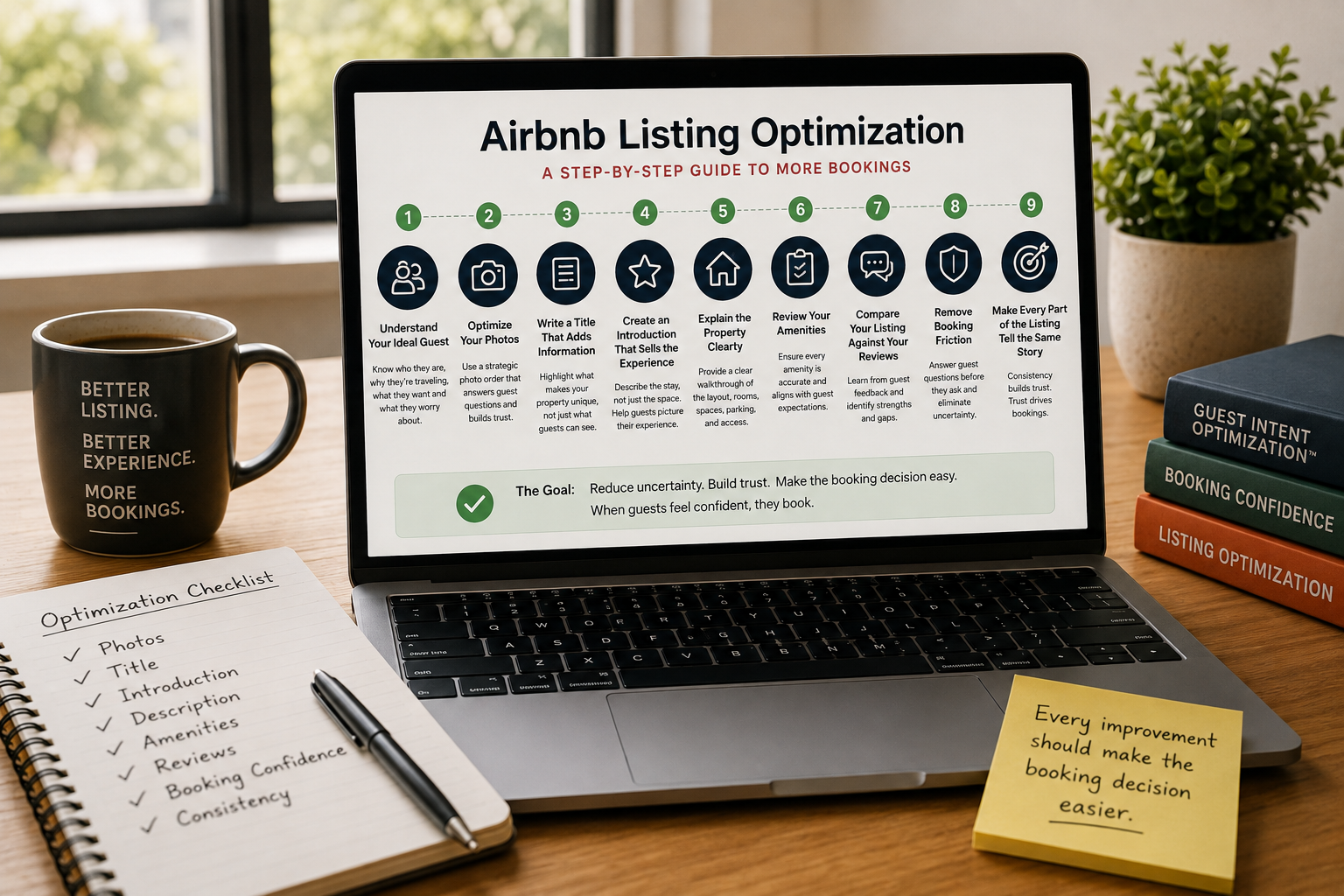 CornerstoneHow to Optimize an Airbnb Listing: A Complete Step-by-Step Guide
Most Airbnb hosts optimize their listing randomly. This guide explains the exact process professionals use to improve booking confidence, reduce booking friction, and increase conversions. ---
3 min read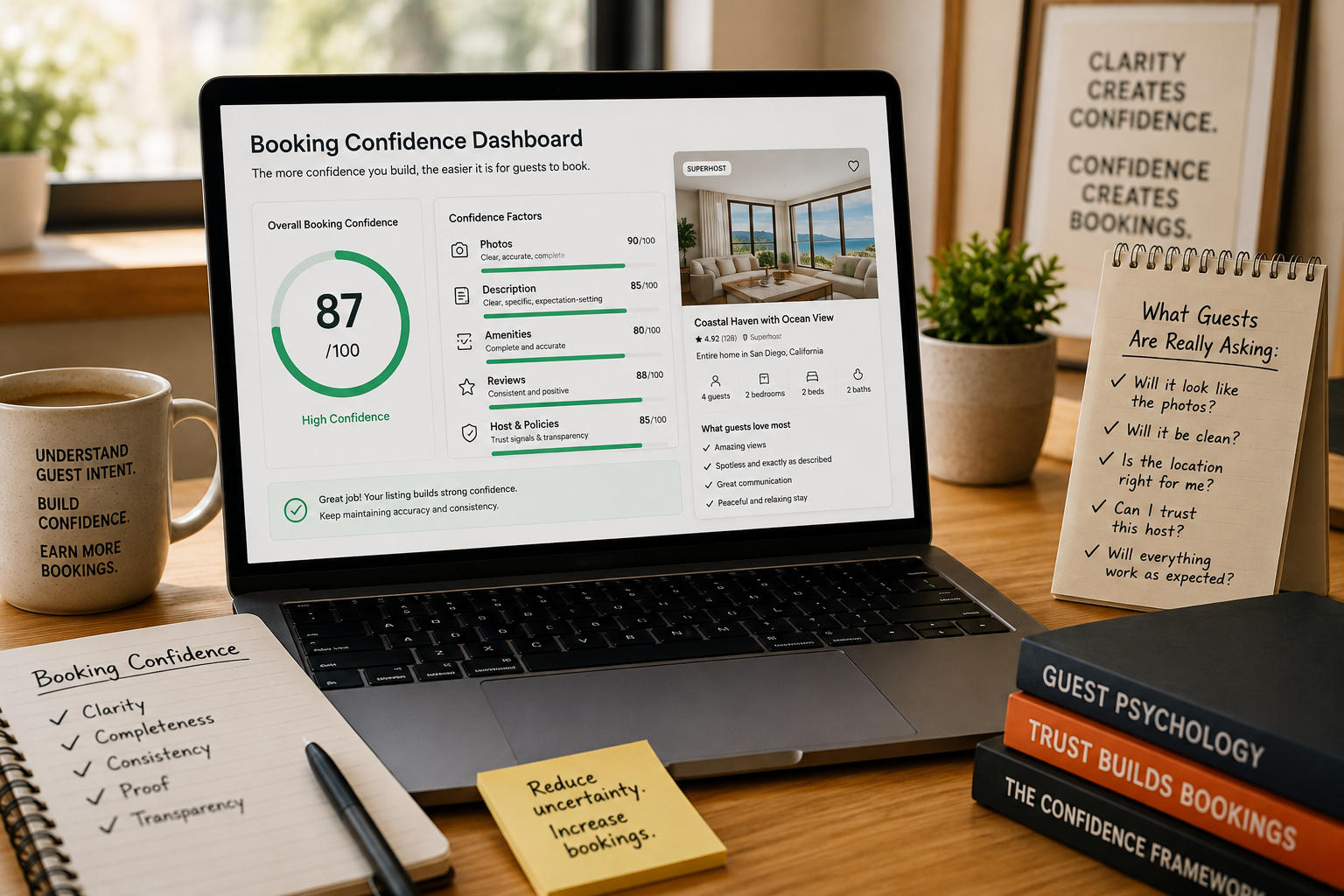 CornerstoneBooking Confidence: The Hidden Metric Behind More Airbnb Bookings
Discover how booking confidence shapes every Airbnb decision—and how your photos, descriptions, amenities, and reviews can either strengthen trust or quietly create hesitation.
8 min read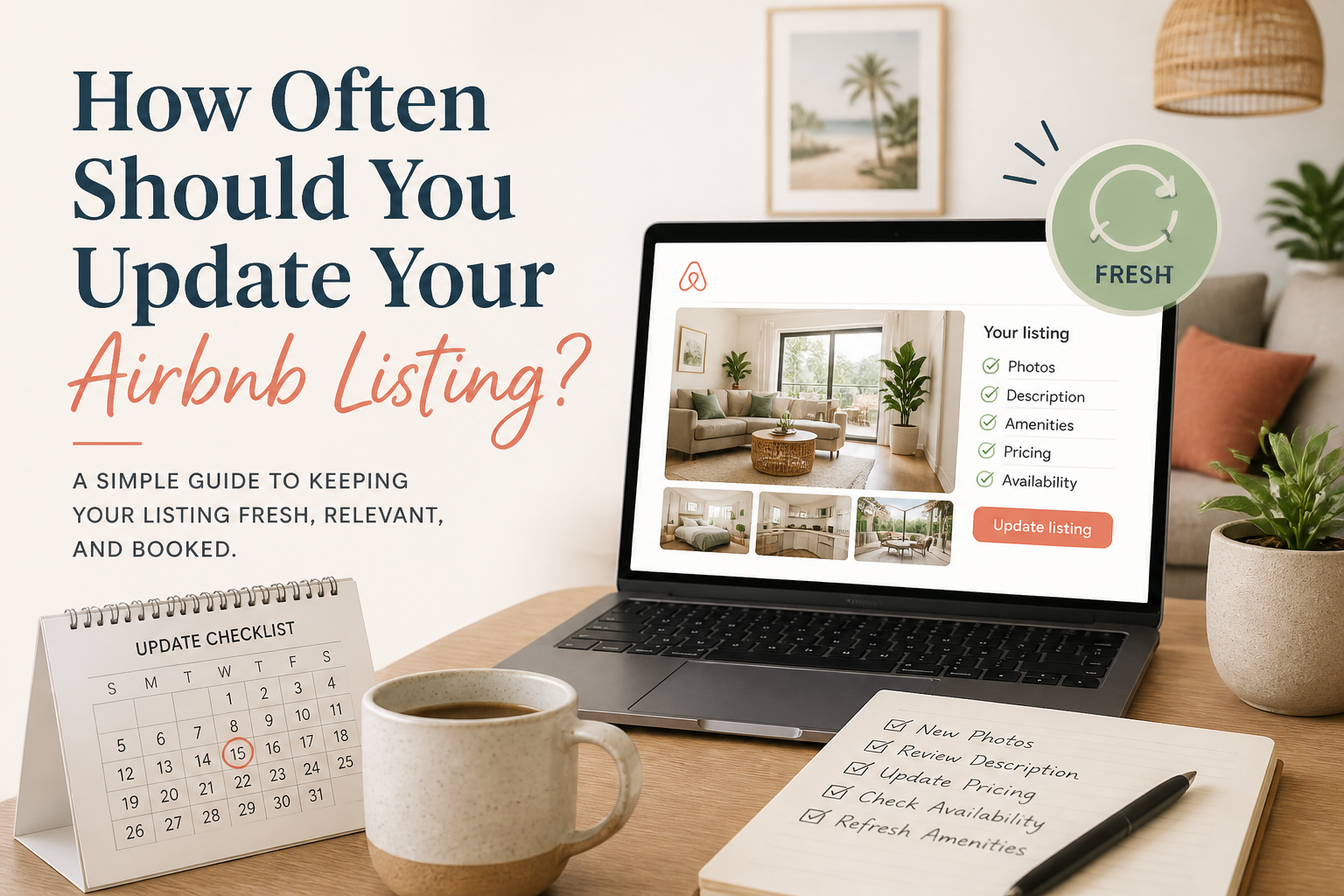 How Often Should You Update Your Airbnb Listing?
Your Airbnb listing should not be something you publish once and forget about. Properties change, seasons change, Airbnb adds new fields, and guest priorities shift. Here is how often I think hosts should review their listing, what is worth changing, and which type of update actually makes sense.
6 min read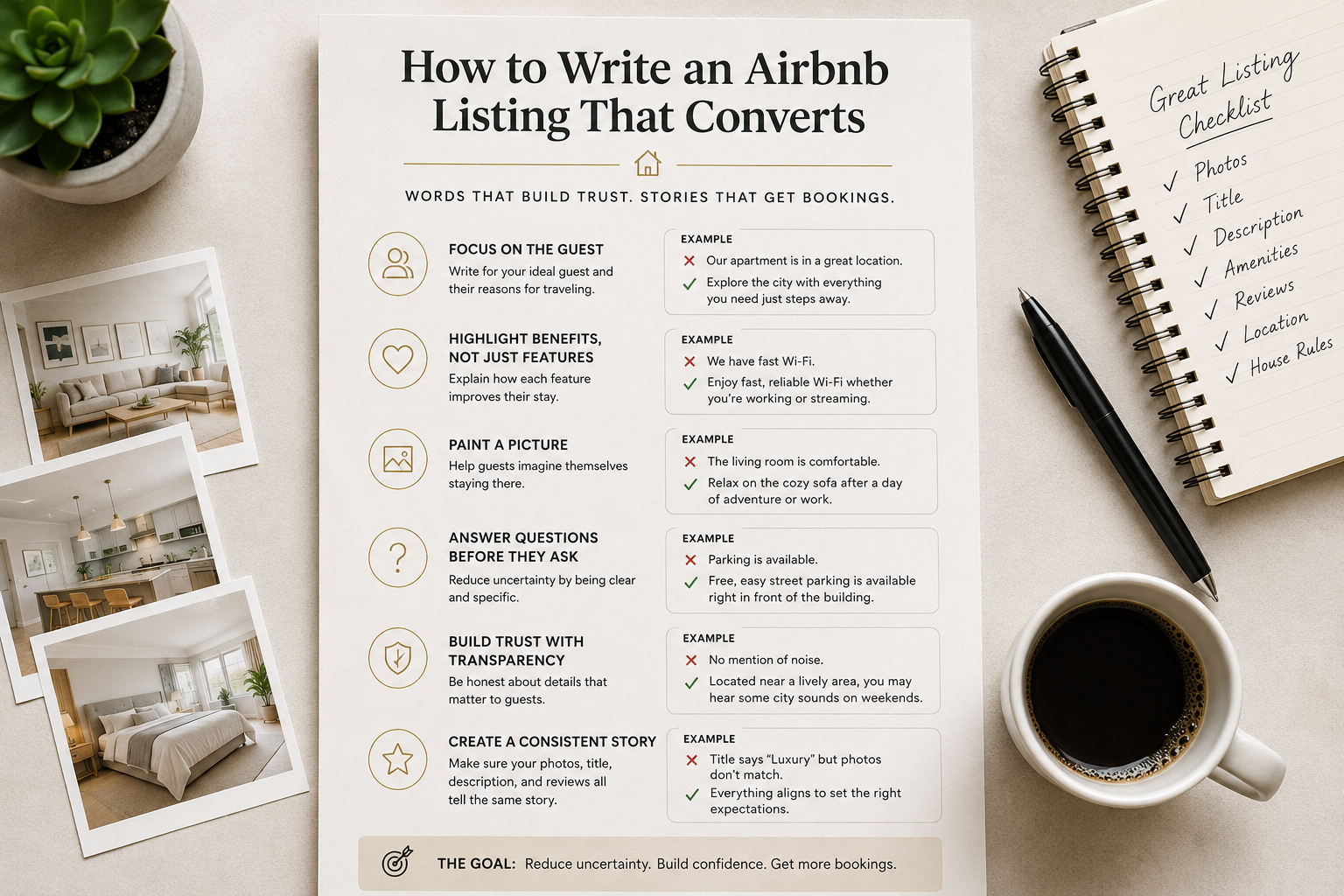 CornerstoneHow to Write an Airbnb Listing That Actually Converts
Most Airbnb listings describe a property. The best listings help guests picture their stay. Here's how to write descriptions that build trust, answer questions, and increase bookings. ---
2 min read