
What to Do When Your Vacation Rental Calendar Is Slow Besides Cutting Rates
The instinct when bookings slow down is to lower the price. The more experienced response is to ask what is actually causing the slowdown and address that instead.
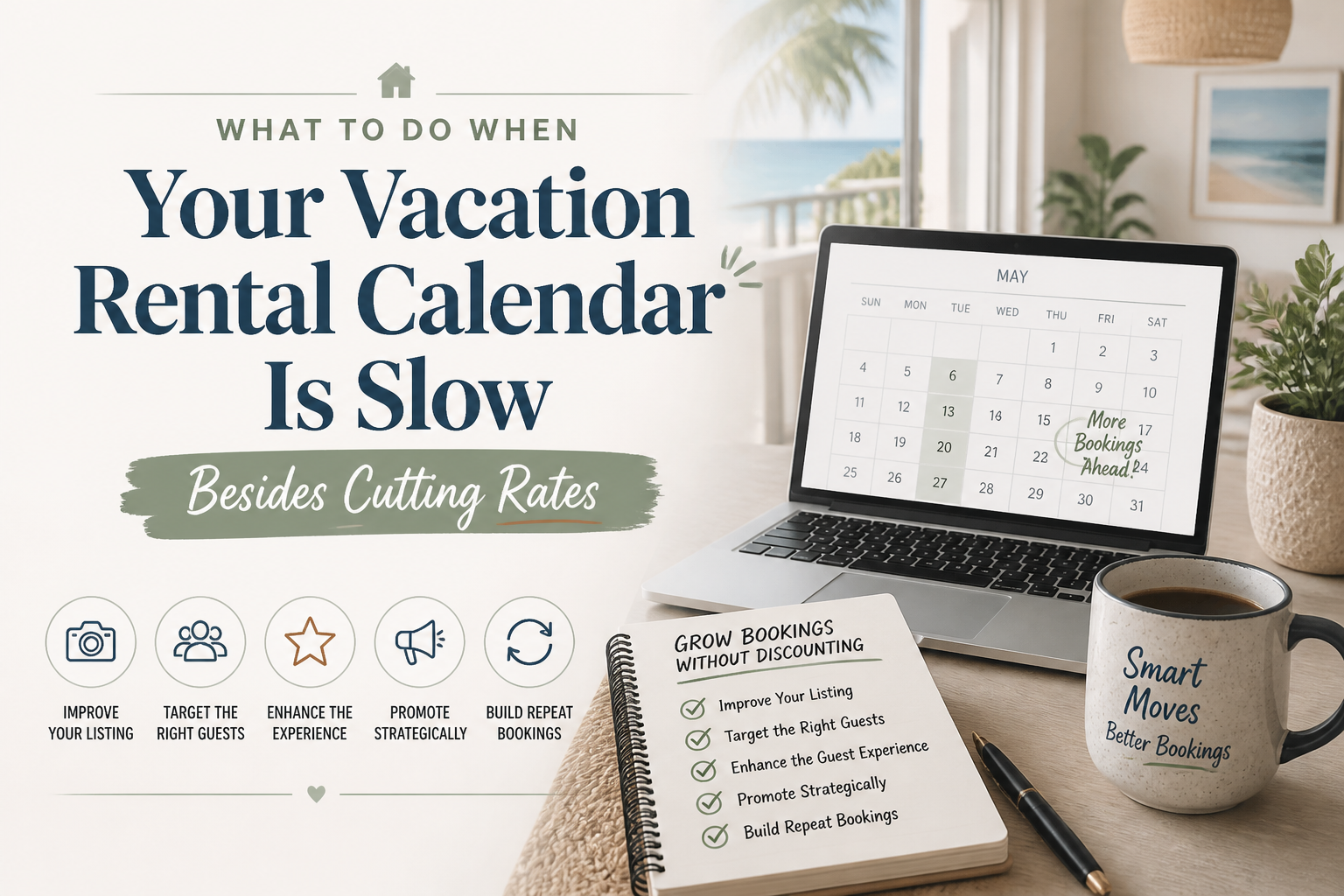
Key takeaways
- Calculate your nightly break-even rate before making price adjustments.
- Review your listing photos and description before lowering your price.
- Check whether slower bookings affect comparable nearby listings before deciding how to respond.
- Consider seasonal promotions that add value without reducing your nightly rate.
Before you change the price, change the question. Instead of asking how much lower can I go, ask why is the calendar slow and what can I actually do about that. The first question has an easy answer that often makes things worse. The second question has harder answers that tend to produce lasting improvement.
Set a rate floor before you start adjusting
The most important thing you can do before a slow period arrives is to know your floor: the rate below which a booking does not cover your actual costs. Calculate your cleaning cost, utilities, supplies, and the time you spend managing the stay. Add your fixed property costs divided by the number of nights you expect to rent. The resulting number is your real break-even point per night.
Any rate below that break-even is not revenue. It is a loss that looks like a booking. Knowing your floor prevents panic pricing and gives you a principled basis for how far, if at all, a rate adjustment makes sense.
Look at your listing before you look at your price
When bookings slow, the most common assumption is that the price is wrong. The more useful first assumption is that the listing may not be communicating its value clearly enough. Before you adjust anything financially, spend thirty minutes looking at your listing as a guest would.
Are your lead photos the best images of your property? Is the thumbnail photo the one that generates the most curiosity? Does your listing description lead with your strongest differentiator, or does it begin with generic information about bedrooms and bathrooms? Are your reviews recent, or does the listing show a gap in guest activity that might signal something to a browsing guest?
Small listing improvements can have significant occupancy effects without touching your price. A better thumbnail photo alone has changed conversion rates for many hosts. A description that leads with the view rather than the bedroom count tells a different story to someone browsing quickly.
Expand your platform presence
If you list exclusively on one platform and bookings slow there, you are working with a limited audience. Adding a listing on a second platform, or a direct booking site if you manage that level of complexity, expands the audience that can find you.
Multiple listings also create a small additional search visibility effect: your property appears in more places, which means it is seen by more potential guests. In slow periods, this can make a meaningful difference to how often your property appears in searches even if the underlying demand in your market is genuinely lower than usual.
Managing multiple platforms requires a calendar synchronization system to prevent double-bookings. Most property management systems handle this automatically. The initial setup takes time, but the ongoing overhead is typically modest.
Reach out to past guests
Guests who have stayed before and had a good experience are the most likely people to book again or to recommend your listing to someone else. In a slow period, a brief, friendly message to past guests through the platform reminding them the property is available and mentioning any updates or improvements since their last stay can generate bookings that would not have appeared otherwise.
Keep the message specific and genuine rather than generic. A note that mentions something specific about their stay, or that references an improvement you made based on guest feedback generally, feels personal rather than promotional. Guests are much more likely to respond to something that reads like a host they remember reaching out than to something that reads like a marketing email.
Consider seasonal promotions that add value rather than reduce price
Instead of reducing the nightly rate, some hosts create seasonal packages that add genuine value to a stay without changing the headline price. A welcome basket, a partnership with a local experience provider, a complimentary bottle of wine, a late checkout during a period when the calendar allows it. These additions can differentiate your listing in search results during a competitive slow period without reducing what the rate signals about the quality of the experience.
This approach requires more thought than a pricing change but tends to preserve your positioning. Guests who book during a promotional period because you added something attractive are different from guests who book because you were the cheapest option in the search results.
Assess what is actually happening in your market
Before concluding that your listing has a problem, verify whether the slow period is specific to your property or shared across your market. If comparable listings near you are also experiencing slower booking periods, the issue may be broader than anything a listing optimization or price adjustment can fix.
Seasonal demand patterns, local economic conditions, new supply entering your market, changes to local attractions or events: all of these can reduce demand across an entire area simultaneously. Knowing whether your slowdown is market-wide or property-specific tells you whether the response should be internal, better listing, different pricing, more platforms, or external, patience while market conditions normalize.
The hosts who navigate slow periods most calmly tend to be the ones who have done this market diagnosis before they start making changes. The ones who change their price reactively without understanding the cause tend to find that the price change did not solve the problem and may have created a new one.
Keep reading
Airbnb optimization specialist, Superhost, and founder of one of the largest Airbnb host communities.
Continue Reading
Chosen for you from The Optimization Journal.
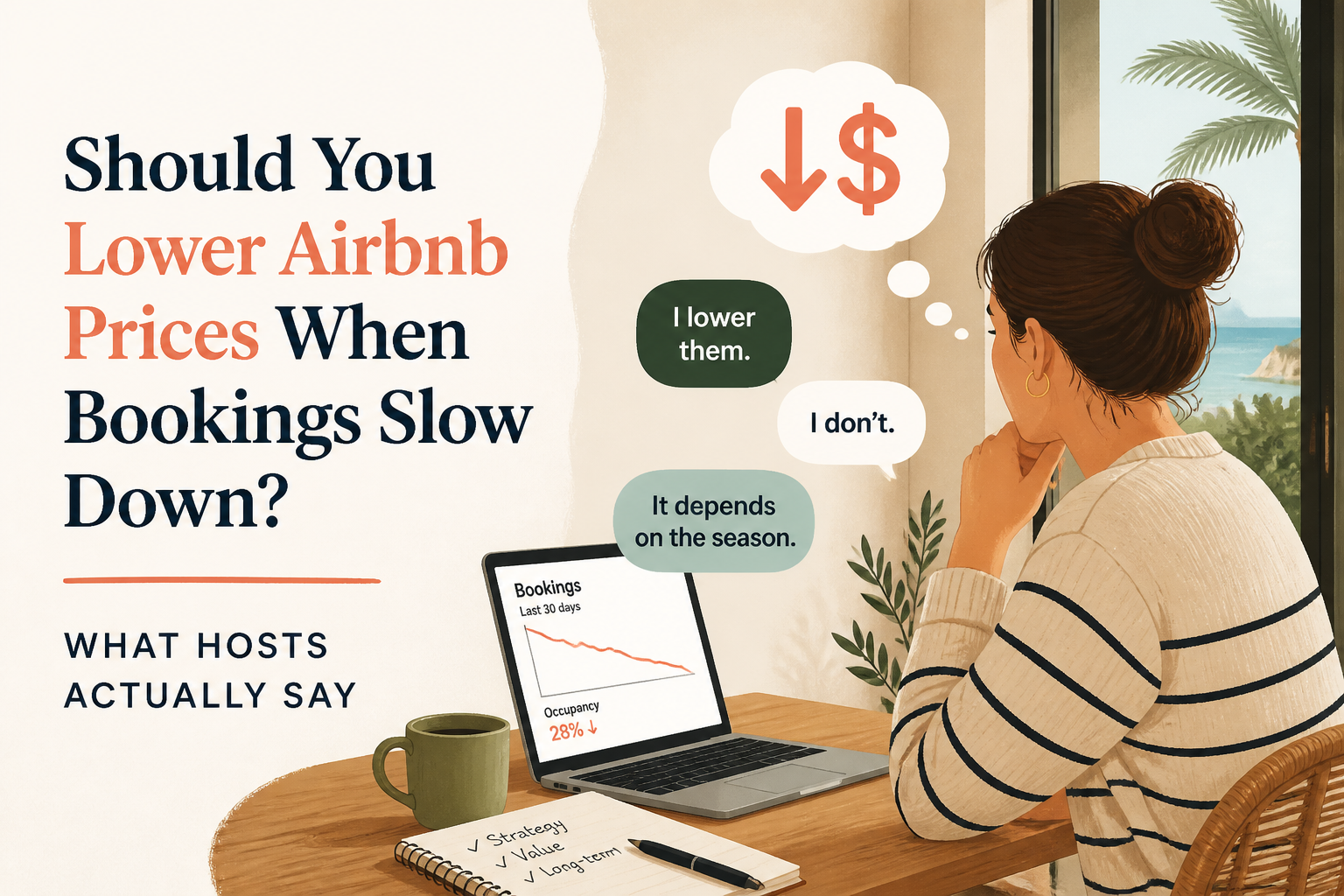 CornerstoneShould You Lower Airbnb Prices When Bookings Slow Down? What Hosts Actually Say
When Airbnb bookings slow down, should you lower your nightly rate or hold firm? Discover what experienced hosts reported, why some regret discounting, and how to make smarter pricing decisions.
15 min read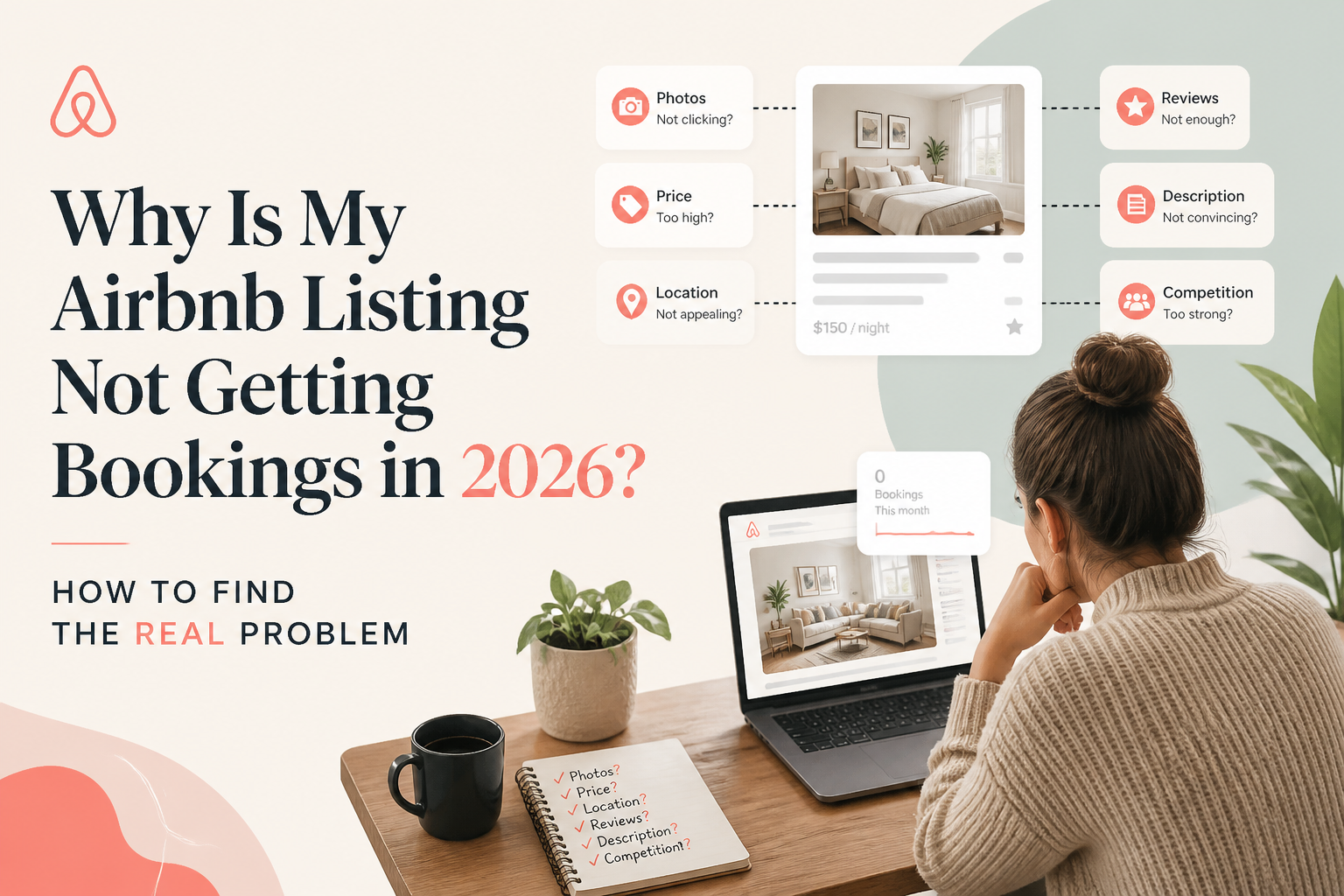 CornerstoneWhy Is My Airbnb Listing Not Getting Bookings in 2026? How to Find the Real Problem
When Airbnb bookings slow down, lowering your price is not always the solution. Learn how to identify whether your listing has a visibility problem, a conversion problem, or a market-demand problem—and what to fix first.
12 min read Airbnb Bookings Dropped? Check These 7 Things Before Cutting Your Price
If your Airbnb calendar suddenly looks empty, price may not be the problem. Before discounting, check these seven areas that can quietly reduce visibility and bookings.
4 min read How to Audit Your Airbnb Listing Before Changing Your Price
When bookings slow down, many hosts immediately lower the rate. Sometimes that is the right move, but sometimes the problem is somewhere else in the listing. Before discounting, I prefer to figure out whether the issue is visibility, conversion, or actually price.
5 min read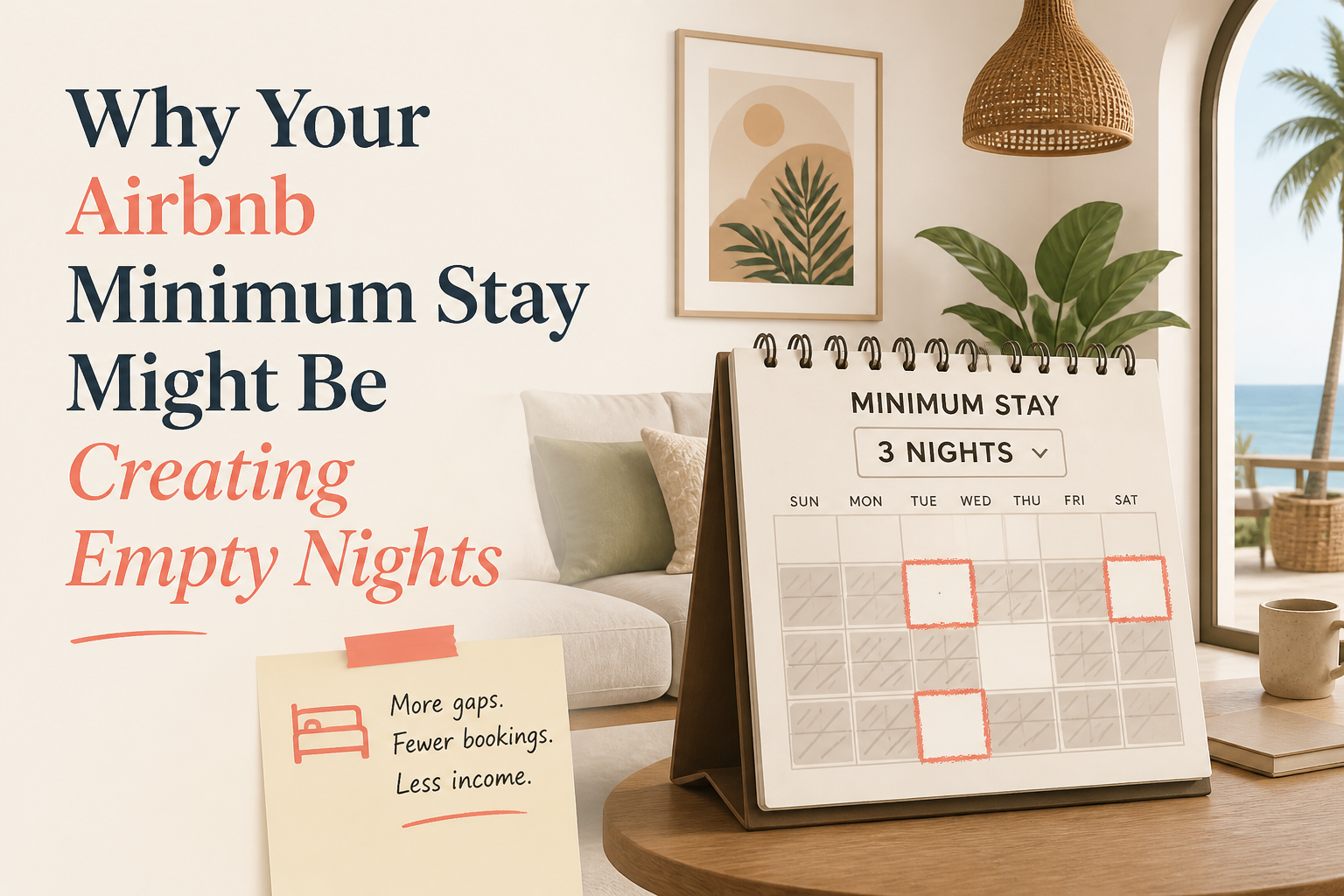 Why Your Airbnb Minimum Stay Might Be Creating Empty Nights
Minimum-stay rules can protect your calendar, reduce turnovers, and help you avoid low-value reservations. But the same rule can also create gaps that become nearly impossible to book. The trick is knowing when to hold your minimum and when the calendar is telling you to adjust it.
5 min read